What to know about bedtime ingredients if you wake up at night with racing thoughts
Wake up at 2 a.m. with racing thoughts? A plain look at common bedtime ingredients, what to check on the label, and habits for a calmer wind-down.
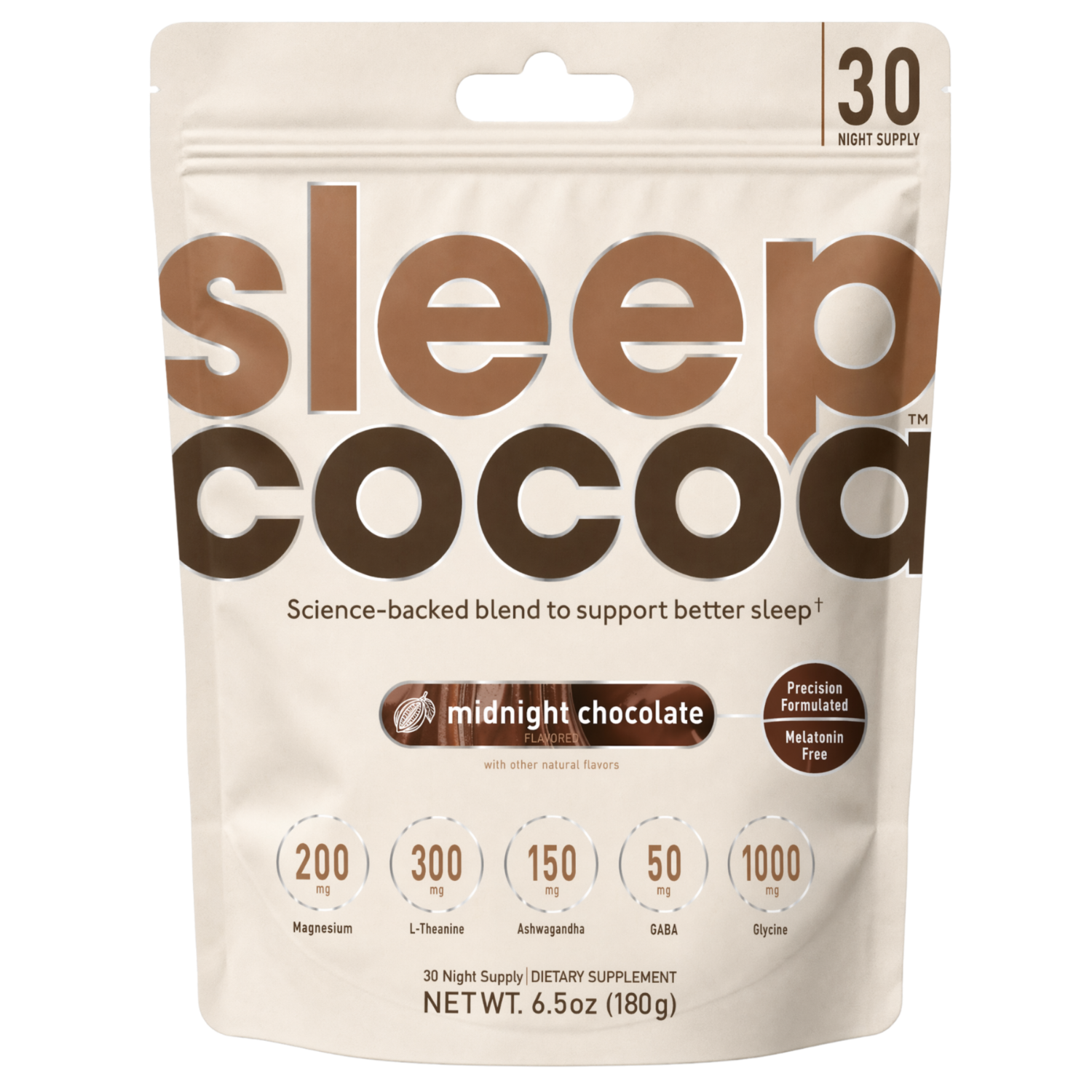
SleepCocoa makes a cocoa drink for your evening routine. Our team wrote this article, and we mention our product.
TL;DR: If you wake up in the middle of the night with a racing mind, no single bedtime ingredient is a fix. Magnesium glycinate, L-theanine, glycine, and ashwagandha show up often in bedtime drinks, and research on each one describes that ingredient at a specific dose in a specific group of people, not any product. A consistent wind-down routine and basic sleep habits are the practical place to start.
Why night waking so often turns into racing thoughts
A lot of people can fall asleep fine, then wake up at 1-3 a.m. and feel alert in the worst way. The room is dark, your body is tired, but your mind starts solving problems, replaying conversations, or scanning tomorrow's to-do list.
The pattern matters because it changes what to look at. Trouble falling asleep and trouble settling back down can call for different adjustments. For trouble falling asleep, the American Academy of Sleep Medicine suggests getting up after about 20 minutes and doing a quiet, low-light activity without electronics (AASM).
If your night waking comes with a wired feeling, this guide pairs well with why you might wake up at night feeling wired.
What to keep in mind about bedtime ingredients
If you wake up in the middle of the night with racing thoughts and wonder which bedtime ingredient helps, the honest answer is that no single ingredient fixes every cause. Research on an ingredient describes that ingredient at a specific dose in a specific group of people, not what you will notice from any particular product.
When you read a label, three questions keep things practical. First, what is in each serving, and how much? Second, does the format fit a wind-down routine you will actually repeat? Third, do you take medication or have a health condition that a doctor or pharmacist should weigh in on?
Common bedtime ingredients people look at for racing thoughts
These ingredients show up often in bedtime drinks and supplements. Here is what each one is, in plain terms.
L-theanine and mental chatter
L-theanine is an amino acid, and it shows up often on the labels of products marketed for the body-is-tired-but-brain-is-on pattern. Seeing it on a label does not tell you how you will respond.
If you are comparing options, magnesium plus L-theanine for sleep breaks down why this pairing shows up so often in night routines.
Glycine and settling back down
Glycine is an amino acid that is a common ingredient in bedtime formulas. People often notice it on labels when their sleep breaks feel like being stuck in a light, alert state rather than drifting back off.
If you want to go deeper, see the glycine sleep guide.
Magnesium glycinate and physical tension
Some racing thoughts start with a body that never fully relaxes. Tense shoulders, shallow breathing, and a wired feeling can push the mind to follow.
Magnesium glycinate is a common form of magnesium in bedtime products. Magnesium plays a role in regulating muscle and nerve function in the body, according to the NIH Office of Dietary Supplements; that general role is not evidence that a bedtime product will change your sleep. If you are deciding what to look at first, magnesium glycinate for sleep goes into the practical differences.
If you already use magnesium and still wake up, see what to try if you still wake up at night on magnesium.
Ashwagandha and everyday stress
If your racing thoughts feel linked to everyday stress, such as pressure, deadlines, or feeling on all day, you may notice ashwagandha, a plant extract often included in products marketed for stress.
If you are considering it, check the label for the amount and form, and talk to your doctor or pharmacist if you take medication.
Where melatonin fits into the picture
Melatonin is a hormone your brain makes in response to darkness, and it helps with the timing of your circadian rhythms and with sleep, according to NCCIH. Light at night can block its production, and the AASM suggests limiting bright light in the evening.
Whether a melatonin product fits you is a question for your doctor or pharmacist. Some bedtime drinks add melatonin and some do not, so check the supplement facts panel. If you are looking at ingredients for calming down at night, you can also read what to know about common evening ingredients for calming down.
A practical comparison of common approaches
When you are building a shortlist, it helps to compare by what you notice at night, not by hype. This table is meant to keep you focused on the middle-of-the-night problem: waking up, then getting pulled into thought loops.
| Option | Who it may fit | What to watch for |
|---|---|---|
| Single-ingredient magnesium | People who notice physical tension or trouble relaxing at night | Forms and amounts vary by product; read the label |
| Single-ingredient calming amino acid | People whose thoughts start racing at night | Ask your doctor or pharmacist before using it with other supplements |
| Melatonin products | People with questions about sleep timing; melatonin is a hormone linked to circadian timing | Talk to your doctor or pharmacist before use |
| Multi-ingredient bedtime drink mixes | People who want several ingredients in one warm drink as part of a nightly ritual | Ingredients and amounts vary; talk to your doctor or pharmacist if you take medication |
Why the form matters: drink mixes vs pills for night waking
For racing thoughts, the routine around what you take matters too. A capsule is fast, but it can feel clinical. A warm drink slows you down, which gives you a built-in pause before bed.
With a hot cocoa bedtime ritual, the routine itself is part of the point: step away from screens, make the drink, then let the warmth and the repetition mark the end of the day. The AASM lists a relaxing bedtime routine and turning devices off 30 minutes before bed among its healthy sleep habits.
If you want the deeper explanation of the ritual angle, see this guide to a bedtime cocoa ritual for night waking.
Where to start if you wake up and your thoughts race
If you want a simple starting plan, keep it boring and repeatable for a couple of weeks, so you are looking at patterns rather than single nights.
- Pick one consistent bedtime window and protect the last 30-60 minutes as low-stimulation time.
- Decide where you stand on melatonin. Some products add it and some do not, so check the label, and talk to your doctor or pharmacist if you have questions. If you are sorting through warm drink options, this guide to a calm bedtime drink ritual covers what matters for real routines.
- Use a drink-based ritual if you like the idea of a clear wind-down cue. Making the drink is itself a pause before bed.
How to try a new routine without turning it into a nightly test
When someone tries a new sleep supplement, the worst pattern is turning it into a nightly test. You take it, then you start monitoring your body for signs it is doing something, which keeps your brain switched on.
Instead, decide your plan before you start. Pick a routine, take it the same way, and judge it by how you feel across mornings, not by whether you had one perfect night.
Medications and new supplements: how to think about it
Being careful about new supplements makes sense. Even well-known ingredients can matter for certain people, medications, or combinations.
If you take medication, are pregnant or nursing, have a health condition, or have reacted badly to supplements before, talk to your doctor or pharmacist before starting any sleep support product. Bring the full ingredient list and ask directly about your specific medications and timing.
Third-party testing is a quality check, not a medical check, so that conversation still matters for any supplement.
How to choose based on your exact kind of night waking
The phrase waking up at night covers a few different problems. Noticing your own pattern makes it easier to read labels with a purpose and to have a useful conversation with your doctor or pharmacist.
- You wake up and feel wired immediately: focus on a bedtime routine that reduces stimulation, such as dim light and no screens for the last 30 minutes.
- You wake up after stress-heavy days: give yourself a longer wind-down window, and if you look at ingredients such as ashwagandha, check the label for the amount and talk to your doctor or pharmacist if you take medication.
- You wake up and your mind starts planning: note what you were thinking about and when, and read labels for ingredient amounts rather than front-of-pack promises.
Two related reads that can help you narrow it down are What to choose if you fall asleep fine but keep waking up during the night and Bedtime cocoa for racing thoughts at night: what to look for.
FAQ
I wake up in the middle of the night and my thoughts race. What should I know about bedtime ingredients for staying asleep?
Staying asleep problems often need a different approach than falling asleep problems. No single ingredient fixes every cause, and research on an ingredient such as magnesium, glycine, L-theanine, or ashwagandha describes that ingredient at a specific dose in a specific group of people, not any particular product. A practical first step is the same hot cocoa bedtime ritual or wind-down each night, so you are changing one thing at a time. For more on the habit side, see staying asleep without morning grogginess.
Should I look at melatonin if I wake up at 2 a.m. with a racing mind?
That is a good question for your doctor or pharmacist. Melatonin is a hormone your brain makes in response to darkness, and it helps with the timing of your circadian rhythms and with sleep, according to NCCIH. If your nights feel more like stress and activation than a timing problem, a calm evening routine is a practical place to start, and you can track how you feel in the morning.
What should I look for in a bedtime supplement if I wake up at night?
Bedtime products range from single-ingredient basics to multi-ingredient formulas. A practical filter is reading the supplement facts panel so you know what is in each serving, plus quality details you can check, such as third-party testing. If you tend to wake and spiral mentally, prefer a format you will actually repeat nightly, like a warm drink ritual, not a capsule you forget.
How do I know if my night waking is more stress related or more physical tension?
Sorting this out helps you notice what starts the wake-up. If your mind starts racing first, you may notice amino acids such as L-theanine and glycine on the labels of products marketed for that pattern. If your body feels tight first, magnesium glycinate is a common form of magnesium in bedtime products. Either way, read the label for amounts and talk to your doctor or pharmacist if you take medication. If you are deciding between forms, magnesium glycinate vs citrate for sleep can help you compare.
How can a bedtime cocoa ritual fit in if my thoughts race at night?
Racing thoughts can be fed by doing stimulating things late at night. A hot cocoa bedtime ritual turns making a warm drink into a consistent wind-down cue, and a relaxing bedtime routine is one of the healthy sleep habits the American Academy of Sleep Medicine lists. If you want to try it, keep the ritual simple: dim lights, no work tabs open, drink it in the same spot each night.
What should I ask about medications before trying a sleep supplement?
Even common supplement ingredients can matter for certain medications or conditions, so talk to your doctor or pharmacist before starting if you take medication, are pregnant or nursing, or have a health condition. The most useful step is bringing the full ingredient list and asking about your exact medications, not a general question.
What if I try a sleep drink and nothing seems to change right away?
Turning every night into a pass-fail test can keep your mind switched on. Give any change a consistent run as a routine rather than a one-night experiment, and look at trends in your notes, such as how often you wake and how you feel in the morning. If trouble sleeping keeps going, the CDC suggests talking to a healthcare provider.
A simple 14-night plan for your night waking
Pick one change you can repeat without friction. For some people, that is a warm bedtime drink plus a consistent wind-down window.
Keep everything else the same for two weeks. Then adjust one variable at a time, such as screens before bed or caffeine timing, so you can tell what made a difference for you.
*These statements have not been evaluated by the Food and Drug Administration. This product is not intended to diagnose, treat, cure, or prevent any disease. Research cited describes individual ingredients, not SleepCocoa as a finished product, which has not been clinically tested. Talk to your doctor or pharmacist before use if you are pregnant, nursing, under 18, have a medical condition, or take any medication. Do not drive or operate machinery until you know how SleepCocoa affects you.