What to try if you wake up at night and feel tired in the morning
Waking at 2 a.m. and dragging the next day? A plain look at night waking, common options on labels, and simple routine changes to test one at a time.
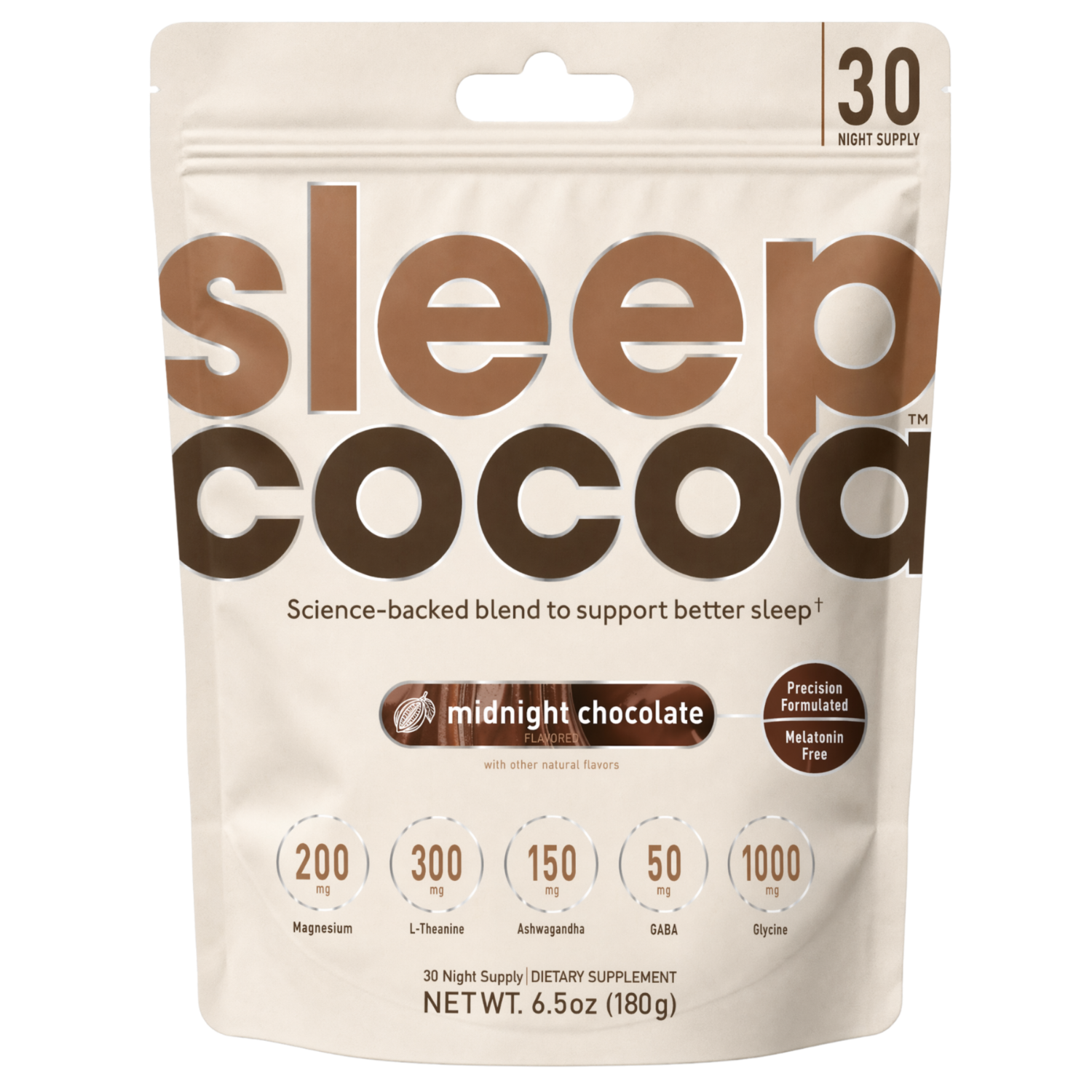
SleepCocoa makes a cocoa drink for your evening routine. Our team wrote this article, and we mention our product.
TL;DR: If you wake up a lot at night and feel foggy in the morning, start with basics you can repeat nightly: a consistent schedule, a relaxing bedtime routine, and a quiet, cool bedroom, all of which the American Academy of Sleep Medicine lists among its healthy sleep habits. If you take medications or have a health condition, talk with your doctor or pharmacist before trying any new sleep supplement.
Why staying asleep can be the hard part
Falling asleep is one problem. Staying asleep is another. A lot of people wake up at 2:00 a.m. or 4:00 a.m. with a light, wired feeling, then drag the next morning.
The CDC lists repeatedly waking during the night as one sign of poor sleep quality, alongside trouble falling asleep, so it helps to look at night waking as its own problem.
What people actually try at night when they keep waking up
In real life, people tend to try one of these lanes: melatonin, amino acids such as L-theanine or glycine, magnesium, or a routine-based approach. Which one makes sense depends on what is waking you up, and your doctor or pharmacist can help you think it through if you take medication.
Morning grogginess usually has a cause you can act on
If you feel hungover the next day, it often comes from one of these patterns.
- The amount or timing may not suit you. If you take melatonin or another supplement and feel foggy the next day, talk to your doctor or pharmacist about the amount and timing instead of adjusting it on your own.
- Your schedule moves around. The AASM suggests keeping the same wake time every day, weekends too.
- You are mixing products. Several new products at once make it hard to tell how each one affects you, and alcohol before bed is on the AASM list of things to avoid.
The fix is not always something stronger. Often it is a simpler plan you can repeat nightly.
Ingredient and option comparison for night waking
No option can promise that you will wake up without grogginess, and people respond differently. What you can do is understand what each approach is, then change one thing at a time.
Quick comparison table
| Option | What it is | Why people look at it | What to watch |
|---|---|---|---|
| Melatonin | A hormone your brain makes in response to darkness; it helps with the timing of circadian rhythms (NCCIH) | Questions about sleep timing | Talk to your doctor or pharmacist about whether it fits you and how it affects your mornings |
| Magnesium glycinate | A form of magnesium, a mineral that plays a role in muscle and nerve function (NIH ODS) | Body-level tension at night | Forms and amounts vary by product; individual response varies |
| L-theanine | An amino acid | Racing thoughts at night | Ask your doctor or pharmacist before using it with other supplements |
| Glycine | An amino acid found in some bedtime formulas | People who want a bedtime routine without feeling knocked out | Amounts vary by product; read the label |
| Sleep-habit plan (on your own or with a healthcare provider) | Changes to schedule, light, and wind-down habits | An approach that does not rely on a product | More work up front; the tradeoff is effort and consistency |
This table is not medical advice. It is a practical way to sort common options before you talk them through with your doctor or pharmacist.
A contrarian take on night waking
If you keep waking up, the instinct is to add something stronger. That can make it harder to tell what is actually going on.
A different approach is the opposite: pick one simple base routine you can repeat nightly, then adjust the routine before you add more products.
This is one reason some people like a hot cocoa bedtime ritual rather than another capsule. The routine itself becomes a cue to slow down, and the AASM lists a relaxing bedtime routine among its healthy sleep habits.
Where to start if you wake up at night and hate morning grogginess
If you want a simple plan, start here for 7-10 nights. Change one variable at a time.
- Pick one approach first. If you are trying a new sleep supplement, do not add other new sleep products at the same time, and ask your doctor or pharmacist before using more than one.
- Make it a repeatable bedtime ritual. A hot drink is an easy anchor because it gives you a clear start and end to the day.
- Start winding down early enough. Give yourself time to wind down before you are supposed to be asleep; the AASM suggests turning devices off 30 minutes before bed.
- Track one outcome. For staying asleep, track how many times you woke up and how you feel in the first hour after waking.
How a combination formula compares with magnesium or theanine alone
Some people prefer a single-ingredient supplement. Others prefer one product with several ingredients.
A multi-ingredient drink mix puts magnesium glycinate, glycine, L-theanine, or other ingredients in one serving, so you are not juggling several products at once. The tradeoff to keep in mind is that research on an individual ingredient describes that ingredient at a specific dose, not a combination.
If you are deciding between magnesium alone and a multi-ingredient drink, a useful question is whether what you notice at night is body tension, a busy mind, or both. People often look at magnesium glycinate for body-level tension and L-theanine for racing thoughts. If you want to go deeper on L-theanine specifically, read the L-theanine sleep guide.
Related reads if you want to compare approaches: Magnesium glycinate for sleep and Magnesium Plus Theanine Sleep Vs Alone.
What to do if you wake up in the middle of the night
Try not to use 3:00 a.m. like a second bedtime. If you are thinking about taking anything in the middle of the night, ask your doctor or pharmacist about it first.
Instead, keep the goal narrow: lower arousal, keep the lights low, and avoid clock watching.
If you take magnesium and still wake up, this is a useful next-step guide: What to try if you take magnesium and still wake up at night.
How to think about interactions before you add anything
If you worry about how a new product could affect you or interact with what you take, you are thinking about the right thing. Sleep support products can seem like they are just supplements, but they can still affect how you feel and how other products hit you.
- Check with your doctor or pharmacist if you take medications. Bring the supplement facts panel or a product link, and ask about interactions.
- Avoid adding several calming products early on. If you are trying a new sleep supplement, keep everything else stable for several nights.
- Be careful with alcohol. The CDC suggests avoiding alcohol before bedtime.
- Consider third-party tested products. Third-party testing is one quality signal you can check on a label or product page.
If your sleep trouble is new, severe, or keeps going, talk to a healthcare provider, as the CDC suggests. Sometimes waking up a lot is not an ingredient problem at all.
FAQ
What do people actually take at night to stop waking up and still feel clear-headed in the morning?
There is no single answer, because it depends on what is waking you up. Many people start with the routine: a consistent schedule, a relaxing bedtime routine, and a quiet, cool bedroom (AASM). Others look at supplements such as magnesium glycinate, glycine, or L-theanine; research on an ingredient describes that ingredient at a specific dose in a specific group of people, not any particular product. If you take medications, ask your doctor or pharmacist about interactions before adding any sleep supplement.
I get morning grogginess from what I take for sleep, what else can I try for staying asleep?
Talk to your doctor or pharmacist about the grogginess before changing anything you take. On the routine side, keep the same bed and wake time every day and keep the bedroom quiet, relaxing, and cool (CDC). Keep your first week simple by not adding several new products at once, so you can tell what is making a difference.
Can you compare melatonin vs magnesium glycinate vs L-theanine for staying asleep and morning fog?
These three are different things. Melatonin is a hormone your brain makes in response to darkness that helps with the timing of your circadian rhythms (NCCIH). Magnesium is a mineral that plays a role in muscle and nerve function (NIH Office of Dietary Supplements), and L-theanine is an amino acid; people often look at magnesium glycinate for body tension and L-theanine for racing thoughts. How any of them affects your nights and mornings is individual, so talk to your doctor or pharmacist.
If I wake up in the middle of the night, which is better to try first, magnesium glycinate or L-theanine?
People usually frame it around what wakes them up: body tension or a busy mind. Magnesium glycinate is often what people look at when their body feels restless, and L-theanine when their thoughts snap on. Which, if either, fits you is a question for your doctor or pharmacist, especially if you take medication.
Is there anything that guarantees I will not feel groggy at all?
No supplement or medication can guarantee zero next-morning fog for every person, because response depends on dose, timing, sleep debt, and what else you take. What you can control is keeping your routine simple, not adding several new products at once, and keeping the same bed and wake time every day (CDC).
How do I choose between a sleep drink and capsules if I want a better bedtime routine?
Routine matters because a repeatable cue can help you wind down before you get into bed, and the AASM lists a relaxing bedtime routine among its healthy sleep habits. A hot cocoa ritual gives you a concrete, nightly off switch, which some people find easier to stick with than another capsule. If you want to compare the routine angle directly, see Hot sleep drink vs capsules.
What if I am worried a supplement will not work for me?
That concern is normal, especially if you have already tried products and did not like how you felt. Give any change enough consistent nights to separate a real pattern from normal night-to-night ups and downs, and keep a simple log of wake-ups and how you feel in the morning. If trouble sleeping keeps going, the CDC suggests talking to a healthcare provider.
Your next 7 nights plan
Pick one primary option and run it consistently for a week, instead of cycling through three different products. If a warm drink is part of your plan, make it the same nightly hot cocoa bedtime ritual.
After 7 nights, make one change to your routine based on what is actually waking you up: body tension, racing thoughts, or a too-stimulating bedtime routine. Talk to your doctor or pharmacist before changing any supplement. If glycine is the ingredient you are most curious about, use this glycine for sleep guide to learn more.
*These statements have not been evaluated by the Food and Drug Administration. This product is not intended to diagnose, treat, cure, or prevent any disease. Research cited describes individual ingredients, not SleepCocoa as a finished product, which has not been clinically tested. Talk to your doctor or pharmacist before use if you are pregnant, nursing, under 18, have a medical condition, or take any medication. Do not drive or operate machinery until you know how SleepCocoa affects you.