What to know about common evening ingredients if you want to calm down at night
Feel tense or wired at night? A plain guide to magnesium glycinate, L-theanine, glycine, and ashwagandha, plus what to check on a supplement label.
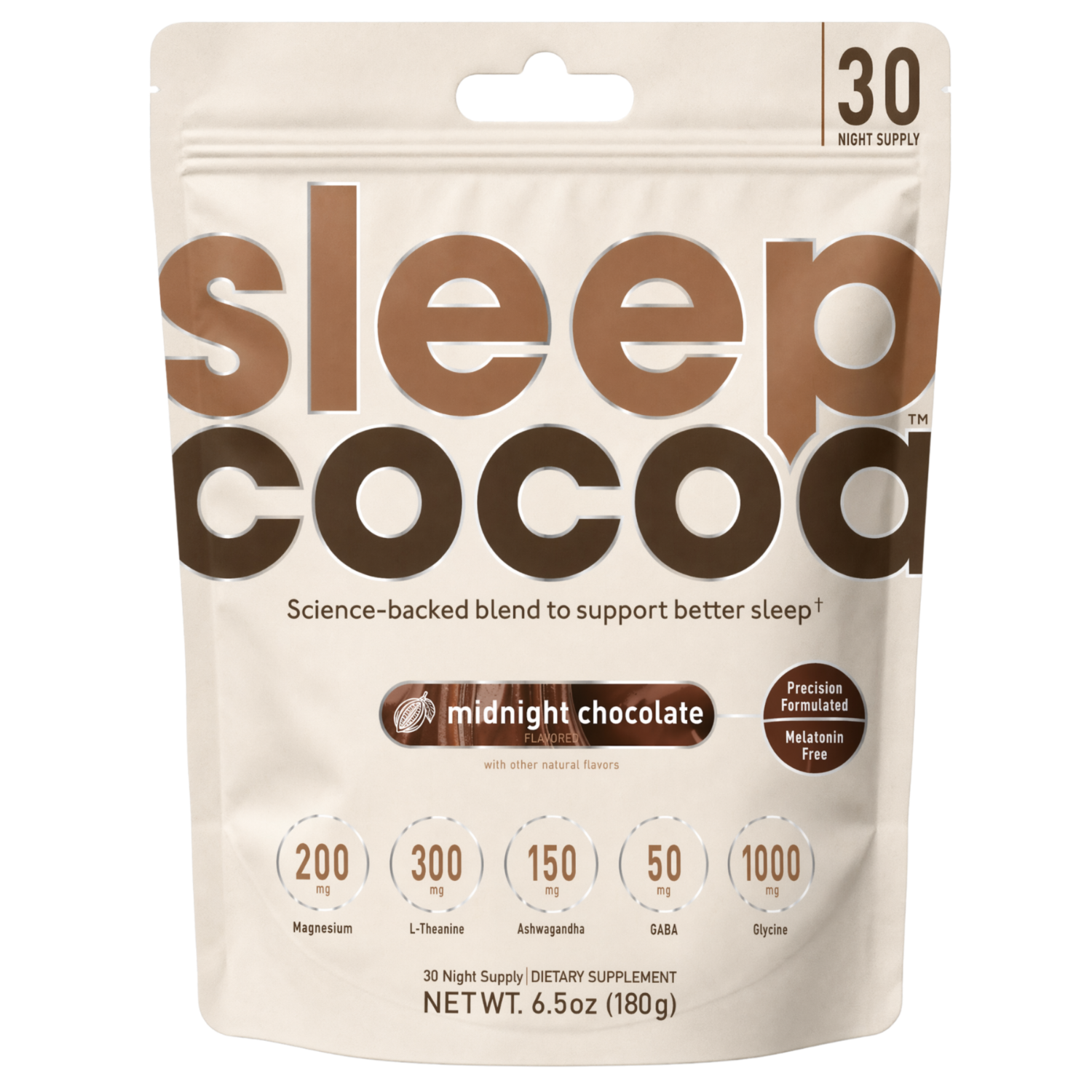
SleepCocoa makes a cocoa drink for your evening routine. Our team wrote this article, and we mention our product.
TL;DR: If you are looking at ingredients for calming down in the evening, magnesium (often as magnesium glycinate), L-theanine, glycine, and ashwagandha are common on bedtime labels. No single one is a sure thing, and research on an ingredient describes that ingredient at a specific dose in a specific group of people, not any product. A warm drink as part of a consistent wind-down routine is a practical place to start.
Which ingredient should I look at first for calming down at night?
If you feel wired or tense at bedtime, magnesium is often the first ingredient people look at, and magnesium glycinate is a common form in bedtime products.
Magnesium plays a role in regulating muscle and nerve function in the body, according to the NIH Office of Dietary Supplements; that general role is not evidence that any product will change how you feel at night. If you want a quick breakdown of forms, see magnesium glycinate vs citrate for sleep.
One practical way to use this idea is to notice the sensation you have at night. People whose body feels tense often look at magnesium. People whose mind will not stop going often notice amino acids like L-theanine and glycine, or ashwagandha, a plant extract, on labels. Talk to your doctor or pharmacist before starting any of them if you take medication.
How do I choose between magnesium, L-theanine, glycine, and ashwagandha for calming down?
One way to sort them is by what is loudest at bedtime: body tension, racing thoughts, stress load, or a general wired feeling.
That matters because feeling wired can mean very different things depending on your day. Some drink mixes combine several of these ingredients in one drink, so read the label for each amount.
| What you feel at bedtime | Ingredient people often look at | What it is | What to check on the label |
|---|---|---|---|
| Physical tension, tight shoulders, trouble getting comfortable | Magnesium (magnesium glycinate) | A mineral that plays a role in muscle and nerve function | Form and amount of magnesium |
| Racing thoughts, mental chatter | L-theanine | An amino acid | Amount per serving |
| Can't settle, light sleep, you feel like you never fully drop in | Glycine | An amino acid common in bedtime formulas | Amount per serving |
| Stress feels like it follows you into bed | Ashwagandha | A plant extract often included in products marketed for stress | Amount and form of the extract |
If you want more ingredient-level detail, see our guide to common sleep drink ingredients.
Why do some supplements make me feel calm, but others do nothing?
People respond differently to different ingredients and amounts, and what keeps you up can change from night to night: stress one night, physical tension or a late meal the next.
The routine around a product matters too. Making a warm drink is a built-in pause, and the American Academy of Sleep Medicine lists a relaxing bedtime routine among its healthy sleep habits.
A second reason is expectations. If you expect to feel knocked out, a warm drink and a wind-down routine will feel subtle. Simple notes on bedtime, wakeups, and how you feel in the morning give you a steadier picture than any single night.
What should I know about magnesium glycinate?
Magnesium glycinate is a form of magnesium that shows up often in bedtime products, and people often look at it when their body feels tense or buzzy at night.
Recommended magnesium amounts vary by age and sex, according to the NIH Office of Dietary Supplements, so check the label and ask your doctor or pharmacist if you are unsure. If you want a simple starting point, read magnesium glycinate for sleep.
If you already use magnesium but still wake during the night, look at the rest of your evening too, and see what to try if you still wake up at night on magnesium.
What is the point of a hot cocoa bedtime ritual instead of just taking capsules?
If your mind is still working at bedtime, the format matters as much as the ingredient list. A warm drink gives you a built-in pause that capsules do not.
With a cocoa drink, the steps are part of the point: heat water or milk, mix, sip slowly, and let that 5-10 minute window be the start of shutting the day down. A consistent off-ramp is easier to keep than a routine you have to force. If you are deciding between formats, hot sleep drink vs capsules walks through the tradeoffs.
If you are comparing cocoa styles, see how regular hot cocoa compares with other bedtime cocoa types.
What affects how I feel in the morning?
Skipping melatonin does not guarantee how you will feel in the morning. Many things can play a part, including how much sleep you got, alcohol, and how consistent your schedule is. The CDC notes that adults 18-60 need 7 or more hours, and suggests keeping the same bed and wake time every day and avoiding alcohol before bedtime.
If you tend to get overtired, start your wind-down earlier so you are not beginning the routine when you are already exhausted.
How do I know if a sleep supplement fits with my medications?
This matters, because a natural-sounding label does not tell you how an ingredient interacts with your medications. Approach any sleep supplement like any other active product and talk to your doctor or pharmacist, especially if you take medication, are pregnant, or have a medical condition.
Bring the full ingredient list to that conversation, and ask specifically about interactions and timing, not a general question. Third-party testing is a quality check, not a medical check. If you want to know what third-party tested should mean in practice, see how to choose a third-party tested bedtime cocoa.
Also be careful about adding several new sleep products at the same time. If you start more than one in the same week, you will not know how each one affects you. Ask your doctor or pharmacist before using more than one.
What should I look for on the label?
Start with the supplement facts panel, which lists what is in each serving. Reading the panel makes it easier to compare products and to check that a label matches what you are looking for.
Another quick check is quality: look for details you can verify, such as whether a product is third-party tested.
What if my main problem is waking up in the middle of the night?
Middle-of-the-night waking can come from stress, discomfort, temperature, alcohol, late meals, or a routine that does not match your schedule. Repeatedly waking during the night is one sign of poor sleep quality, according to the CDC, which also suggests a quiet, relaxing, cool bedroom and no large meals or alcohol before bedtime.
If your wake-ups feel connected to being on alert, a calm bedtime ritual is a practical place to start, and if waking keeps happening, talk to a healthcare provider.
What is a realistic way to try a new evening routine so I can tell if it fits?
You need a consistent test, not a single-night verdict. Sleep varies night to night, so your plan should control the basics and give the change a fair shot.
Keep your bedtime and wake time steady, have your drink at the same point in your wind-down, and avoid adding other new sleep products at the same time.
To make your notes easier to read, track only a few things: how long it takes you to fall asleep, how often you wake, and how you feel in the morning.
What can I do tonight if I want to calm down?
A simple routine that signals the day is done and reduces stimulation is a practical start: dim the lights, turn devices off at least 30 minutes before bed, and keep the bedroom quiet and cool (AASM).
A warm drink fits in as a bedtime ritual, not a rescue. Make the drink, dim the lights while it cools, and do one low-effort activity while you sip, like light stretching or a paper book, then go straight to bed. If you want more ideas in this format, this guide to a calm bedtime drink ritual is a good place to compare.
If your schedule includes travel or late nights, see evening drinks for travel and late nights.
How to approach calming ingredients over the next 2 weeks
If you are considering an ingredient, pick one to look into, read the label for the amount, and talk to your doctor or pharmacist first if you take medication. Noticing whether your body or your mind is the louder problem can help you decide which ingredient to ask about.
For the next 14 nights, keep your routine consistent, change one thing at a time, and keep notes on how long it takes to fall asleep, how often you wake, and how you feel in the morning.
*These statements have not been evaluated by the Food and Drug Administration. This product is not intended to diagnose, treat, cure, or prevent any disease. Research cited describes individual ingredients, not SleepCocoa as a finished product, which has not been clinically tested. Talk to your doctor or pharmacist before use if you are pregnant, nursing, under 18, have a medical condition, or take any medication. Do not drive or operate machinery until you know how SleepCocoa affects you.