Sleep ingredients FAQ: magnesium, theanine, glycine, GABA, and tryptophan
An ingredient FAQ on magnesium glycinate vs citrate and oxide, L-theanine, glycine, GABA, and tryptophan, with label tips and questions for your pharmacist.

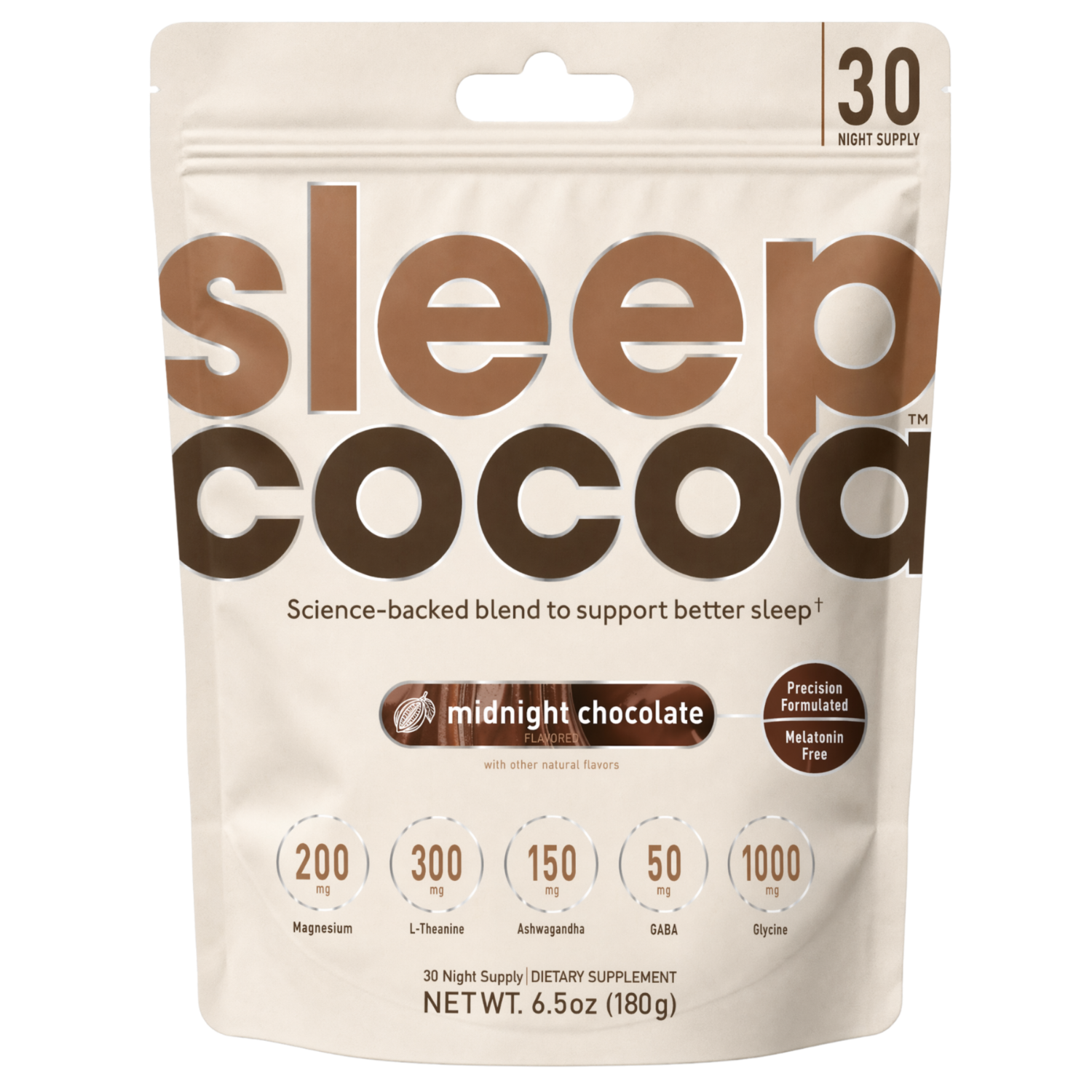
SleepCocoa makes a cocoa drink for your evening routine. Our team wrote this article, and we mention our product.
TL;DR: If you want a calmer way to wind down at night, magnesium glycinate and L-theanine are two common ingredients to learn about. The form of magnesium can matter for how your stomach handles it and for label clarity, and theanine, glycine, GABA, and tryptophan show up in many evening blends. If you take medications or you are sensitive to supplements, talk to your doctor or pharmacist first.
Magnesium plus theanine for sleep, is it worth buying?
If you often feel tired but wired at night, magnesium and L-theanine are two ingredients you will see on a lot of evening labels. Magnesium helps regulate muscle and nerve function in the body, according to the NIH Office of Dietary Supplements, and L-theanine is an amino acid that shows up often in products marketed for relaxation. Whether they are worth buying for you is a good question for your doctor or pharmacist, especially if you take medication.
If you want the simplest test, change one thing at a time. If you prefer a pre-mix and a consistent routine, a drink can be easier to stick with than pills, especially when you tie it to a bedtime ritual.
- If you are comparing drink mixes, you may also like magnesium drink mixes compared.
For sleep routines, is magnesium glycinate really better than citrate or oxide?
Magnesium glycinate is a common choice in evening routines, and some people pick it because other forms bother their stomach. If citrate upsets your stomach, ask your doctor or pharmacist which form fits you; that is a practical question, not a biohacking one.
Magnesium oxide also shows up in some blends. Seeing oxide in an evening blend is not a reason to rule a product out, but it is a cue to read the label carefully and set expectations.
If you want a deeper breakdown, this is a good next read: magnesium glycinate vs citrate for sleep.
So if I'm choosing between two sleep blends, how do I tell if the glycinate is actually the bulk of the magnesium?
You usually cannot tell just from the front label, so you have to use the Supplement Facts panel. Look for two things: whether the product lists magnesium as a mineral amount, and whether it clearly names the form, like "magnesium (as magnesium glycinate)."
If a label lists several magnesium forms without a breakdown, you cannot tell from the label alone whether glycinate is the main form. If that matters to you, you can ask the company.
Here is a simple way to compare labels without getting lost in chemistry.
| What you see on the label | What it often means | What to do next |
|---|---|---|
| "Magnesium (as magnesium glycinate)" and no other forms | The brand is committing to glycinate as the magnesium source | Check the magnesium amount, then evaluate the rest of the formula for fit |
| "Magnesium (as oxide, citrate, glycinate)" with no breakdown | The label does not show how much comes from each form | Ask the company for the breakdown if the form matters to you |
| A proprietary blend that includes magnesium forms | The blend total is listed, but individual amounts inside the blend are not | Check which ingredients are listed separately with their own amounts, and ask the company if you want more detail |
If you are comparing drink mixes specifically, this comparison can help you evaluate what matters: magnesium drink mixes compared.
Is magnesium glycinate the same as magnesium bisglycinate, and what about glycinate vs threonate for sleep blends?
Glycinate and bisglycinate are often used interchangeably on supplement labels, and shoppers usually see them as the same family of magnesium chelated to glycine. If you are buying for sleep, what matters more is that the form is clearly disclosed and your stomach handles it well.
Threonate comes up a lot in discussions about the brain, but that does not make it the obvious pick for a simple magnesium plus theanine routine. Glycinate is common in evening blends, so it is often the more straightforward form to find.
If I get stomach issues with citrate, is glycinate an option for my evening routine?
Ask your doctor or pharmacist which form fits you. Your routine only helps if you can stick with it, so comfort matters night after night.
If you do make a change, keep your bedtime and caffeine cutoff steady and change only one thing at a time for a week or two, so you can tell what made a difference.
A drink format also changes the experience: it can turn taking a supplement into a warm evening ritual. If you are curious about the ritual angle, this is helpful: hot chocolate at bedtime.
How do I choose an L-theanine product for sleep, and do I need it by itself?
If your main issue is mental chatter at bedtime, L-theanine is one of the simpler single-ingredient experiments to discuss with your doctor or pharmacist, because it is easy to add or remove. Trying it by itself makes it easier to see whether anything changes, or whether your issue is more about physical tension, temperature, or stress.
A combined product makes sense when you already know you want several evening ingredients in one place and you want fewer decisions at night.
If you are sensitive to supplements, talk to your doctor or pharmacist about whether to begin with a single ingredient or a combined product.
Glycine for sleep, what should I get to start?
If you want to try glycine, look for a product that lets you control the amount and has a short ingredient list. A single-ingredient product is the simplest way to see whether anything changes, without guessing which part of a blend made the difference.
That said, many people do not want another tub and another measuring step at night, and some drink mixes include glycine as one of several ingredients.
Glycine often appears alongside magnesium and L-theanine in evening products.
GABA vs theanine for sleep, which one should I choose?
Think about what your nights feel like, then talk to your doctor or pharmacist. L-theanine is a common ingredient in products marketed for relaxation, and it is easy to try on its own.
GABA is also a common ingredient in evening blends. People respond differently to different ingredients, so change one thing at a time rather than several at once, and ask your doctor or pharmacist before using more than one product.
Whatever you choose, third-party testing is one quality detail you can look for on the label or product page.
Tryptophan for sleep: what is it, and what should I ask about medications?
Tryptophan is an amino acid that shows up in some evening products. Like other supplement ingredients, it can matter for certain medications, so if you take any medication, talk to your doctor or pharmacist before trying it.
If you are unsure, bring the full Supplement Facts panel to your doctor or pharmacist and ask directly. Do not rely on guesswork, especially if you use more than one sleep product.
How does a combined drink mix compare to buying magnesium glycinate and theanine separately?
Buying separate bottles gives you maximum control, and it is a good plan if you are troubleshooting one ingredient at a time. The tradeoff is friction: you have to remember multiple products, keep them stocked, and follow each label every night.
A combined drink mix trades some of that control for consistency. For many people, the routine is the point: a calm wind-down that you will actually repeat matters as much as the label, and the American Academy of Sleep Medicine lists a relaxing bedtime routine among its healthy sleep habits.
| Option | Who it may fit | Main tradeoff |
|---|---|---|
| Combined drink mix with several ingredients | People who want a simple, repeatable bedtime ritual | Less control over changing one ingredient at a time |
| Magnesium glycinate + L-theanine as separate supplements | People who want to try each ingredient independently | More steps and more chances to fall off the routine |
What if I'm unsure a new supplement is right for me, or I'm sensitive to supplements?
That concern is reasonable because sleep products can feel unpredictable, especially if one has bothered you before. The simplest approach is to change one thing at a time, follow the label, and keep the rest of your routine stable for several nights.
If you take medication, are pregnant or nursing, or have a medical condition, talk to your doctor or pharmacist before starting a new supplement. Bring the label, and be specific about your medications and what you hope to change.
What should I try this week if I want a calmer evening routine?
Pick one simple change and run it for 7 nights so you get clean feedback. That could be the same bed and wake time every day or turning devices off at least 30 minutes before bed, two habits the CDC lists. If you are considering magnesium glycinate, L-theanine, or a drink that includes them, talk to your doctor or pharmacist first.
If your sleep still feels choppy after a week, do not add three new products. Adjust one variable, like caffeine cutoff time, room temperature, or the one ingredient you are trying, and keep everything else the same.
Can I take a sleep drink with other supplements or medications?
Talk to your doctor or pharmacist before starting any sleep drink if you take medication, use other supplements, or manage a health condition. Bring the full label so they can check every ingredient.
Ask them before using more than one multi-ingredient sleep product at a time.
Does SleepCocoa have melatonin?
It has no added melatonin. Tart cherry, one of the herbs in its Calming Herbal Blend, naturally contains trace melatonin. Labels vary, so check the Supplement Facts panel on any drink mix, and if you have questions about melatonin itself, talk to your doctor or pharmacist.
If you are comparing drink options, this guide is a good starting point: magnesium drink mixes compared.
How do I know if a sleep blend is high quality and not just good marketing?
Start with the details you can check: the ingredient forms and amounts listed on the Supplement Facts panel, and whether the product is third-party tested.
Third-party testing is one concrete signal that a company has its product checked outside its own facility; it does not mean the FDA has approved the product. If you are comparing options, look for a readable label that names ingredient forms.
*These statements have not been evaluated by the Food and Drug Administration. This product is not intended to diagnose, treat, cure, or prevent any disease. Research cited describes individual ingredients, not SleepCocoa as a finished product, which has not been clinically tested. Talk to your doctor or pharmacist before use if you are pregnant, nursing, under 18, have a medical condition, or take any medication. Do not drive or operate machinery until you know how SleepCocoa affects you.