Magnesium Glycinate vs. Citrate: Which Is Better for Sleep?
Both are magnesium. Neither behaves the same way in your body. One is built for absorption and comfort, the other for digestion, and the difference matters a lot at 10pm.

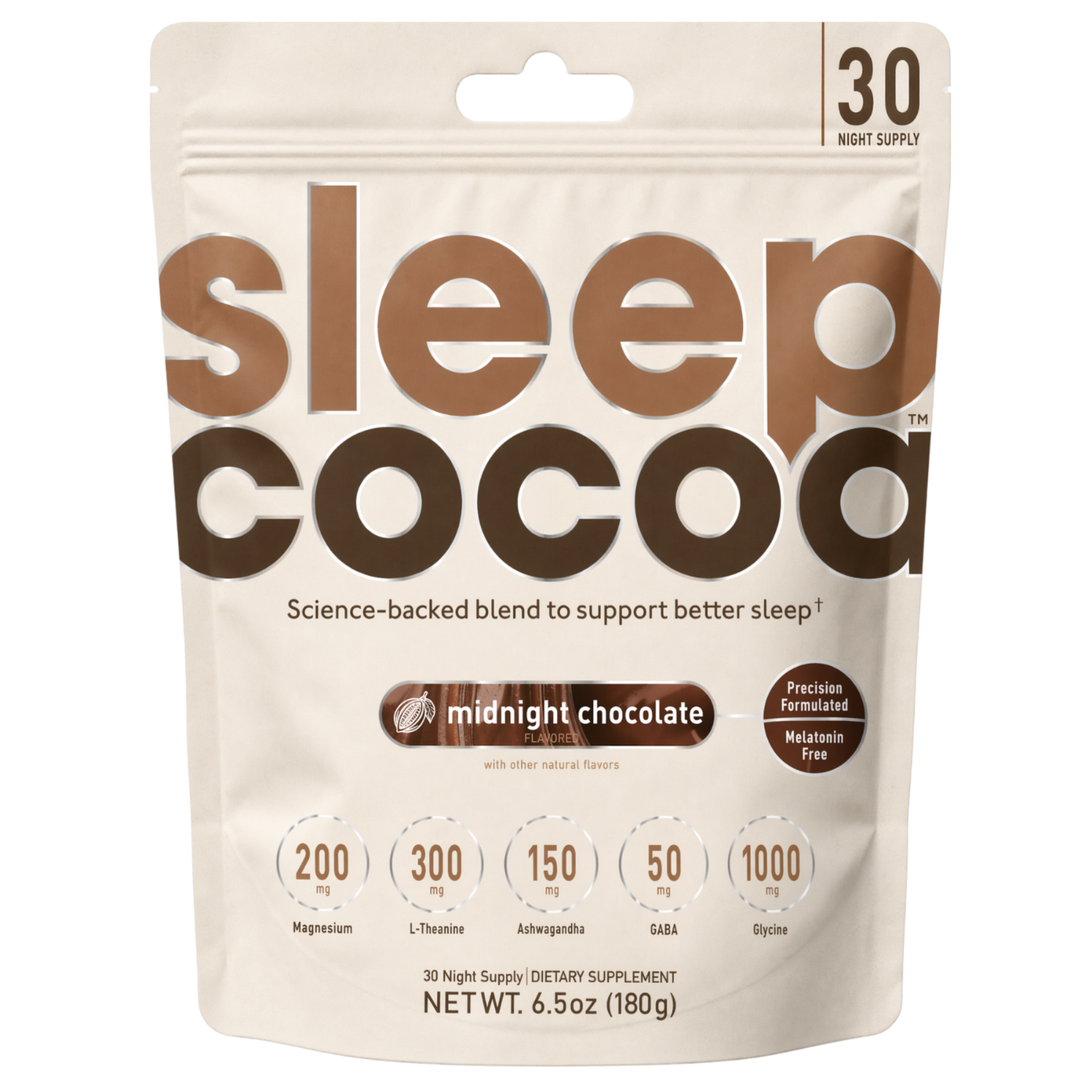
SleepCocoa uses 1,000mg of magnesium glycinate, delivering 200mg of elemental magnesium.
If you've stood in a supplement aisle comparing two magnesium bottles, you've run into the real question: not whether to take magnesium, but which form to take.
Magnesium is a mineral your body uses in hundreds of processes, and it's one of the most-studied nutrients in the sleep conversation. But "magnesium" on a label tells you almost nothing. What's attached to it, the chelate, determines how much your body absorbs, how your stomach handles it, and whether it's appropriate at bedtime.
Why the form matters
Magnesium is never sold alone. It's always bound to another molecule to make it stable and absorbable. That partner molecule changes everything.
- ✓Bioavailability — how much actually reaches your bloodstream instead of passing through.
- ✓Digestive tolerance — whether it sits comfortably or sends you to the bathroom.
- ✓Secondary effects — the partner molecule may have its own role in the body.
- ✓Elemental content — 1,000mg of a magnesium compound is not 1,000mg of magnesium.
Always look for elemental magnesium on the panel. SleepCocoa lists 1,000mg magnesium glycinate delivering 200mg elemental magnesium — because that second number is what your body works with.
How magnesium glycinate works
Magnesium glycinate binds magnesium to glycine, an amino acid. Because glycine is small and readily absorbed, it can carry magnesium through the intestinal wall efficiently, and it bypasses much of the osmotic effect that causes digestive upset.
This is why glycinate is the form most often recommended for people who need a higher dose, take it consistently, or have a sensitive stomach.
The glycine advantage
Glycine isn't just a delivery vehicle. It's independently studied for its own role in rest. Research has examined glycine before bed for supporting subjective sleep quality and next-day performance in people with restricted sleep.1
You're not just choosing a magnesium form. You're choosing what comes attached to it.
— SleepCocoa Research TeamHow magnesium citrate works
Magnesium citrate binds magnesium to citric acid. It's well absorbed and inexpensive, which is why it's everywhere. But citrate is also osmotic: it pulls water into the intestines. That's genuinely useful if you're managing constipation, which is why it's a common ingredient in laxative products.
At bedtime, that same property becomes a liability. A dose large enough to matter for your magnesium intake may also be large enough to wake you up.
SleepCocoa is designed to be taken every single night. That ruled out any form with a meaningful digestive tradeoff. Glycinate lets us dose meaningfully without asking you to gamble on your night.
Side-by-side comparison
| What matters | Magnesium Citrate | Magnesium Glycinate |
|---|---|---|
| Bound to | Citric acid | Glycine (amino acid) |
| Absorption | Good | High |
| Digestive comfort | Laxative effect at higher doses | Gentle, well tolerated |
| Best used for | Occasional constipation | Nightly relaxation support* |
| Partner molecule benefit | None notable | Glycine studied for sleep quality* |
| Suitable nightly | Often not practical | Yes |
Comparison reflects general characteristics of each magnesium form based on published literature. Individual tolerance varies.
Magnesium Glycinate
1,000mg → 200mg elementalThe chelated form we chose for SleepCocoa, selected for absorption and for being gentle enough to take every night.
What the research shows
In a double-blind, placebo-controlled trial, older adults with insomnia who supplemented magnesium showed improvements across several subjective sleep measures compared with placebo.*
Abbasi B, et al. J Res Med Sci. 2012 ↗Glycine taken before bed has been studied for improving subjective sleep quality and reducing next-day fatigue in participants with restricted sleep schedules.*
Bannai M, Kawai N. J Pharmacol Sci. 2012 ↗How much should you take?
Studies examining magnesium and sleep have generally used roughly 200–500mg of elemental magnesium. More isn't automatically better, and total intake includes what you get from food.
- Check the panel for elemental magnesium, not compound weight.
- Take it about 30 minutes before bed so it becomes part of a routine.
- Stay consistent — magnesium status builds over weeks, not hours.
- If you take other magnesium products, add up the totals.
One scoop delivers 200mg elemental magnesium from 1,000mg magnesium glycinate — squarely inside the studied range, in a form designed for nightly use. See the full formula →
The bottom line
If your goal is digestive regularity, citrate has a real purpose. If your goal is a magnesium form you can take every night, comfortably, at a dose that reflects the research, glycinate is the clearer choice — and the glycine attached to it is doing work of its own.
- 1The form of magnesium matters more than the milligram number on the front of the bottle. Glycinate is highly absorbable and gentle, making it appropriate for nightly use. Citrate is well absorbed but osmotic, which is useful for constipation and awkward at bedtime. Always read elemental magnesium, not total compound weight. Research on sleep has typically used 200–500mg elemental magnesium.*
References
- Bannai M, Kawai N. "New therapeutic strategy for amino acid medicine: glycine improves the quality of sleep." Journal of Pharmacological Sciences. 2012;118(2):145–148. PubMed ↗
*These statements have not been evaluated by the Food and Drug Administration. This product is not intended to diagnose, treat, cure, or prevent any disease. Studies referenced examine individual ingredients, not the finished SleepCocoa product.