What to look at if magnesium helps you relax but you still wake up at night
Magnesium helps you unwind but you still wake at 2-4 a.m.? Ingredients you will see on labels, room and timing fixes, and a back-to-sleep plan.
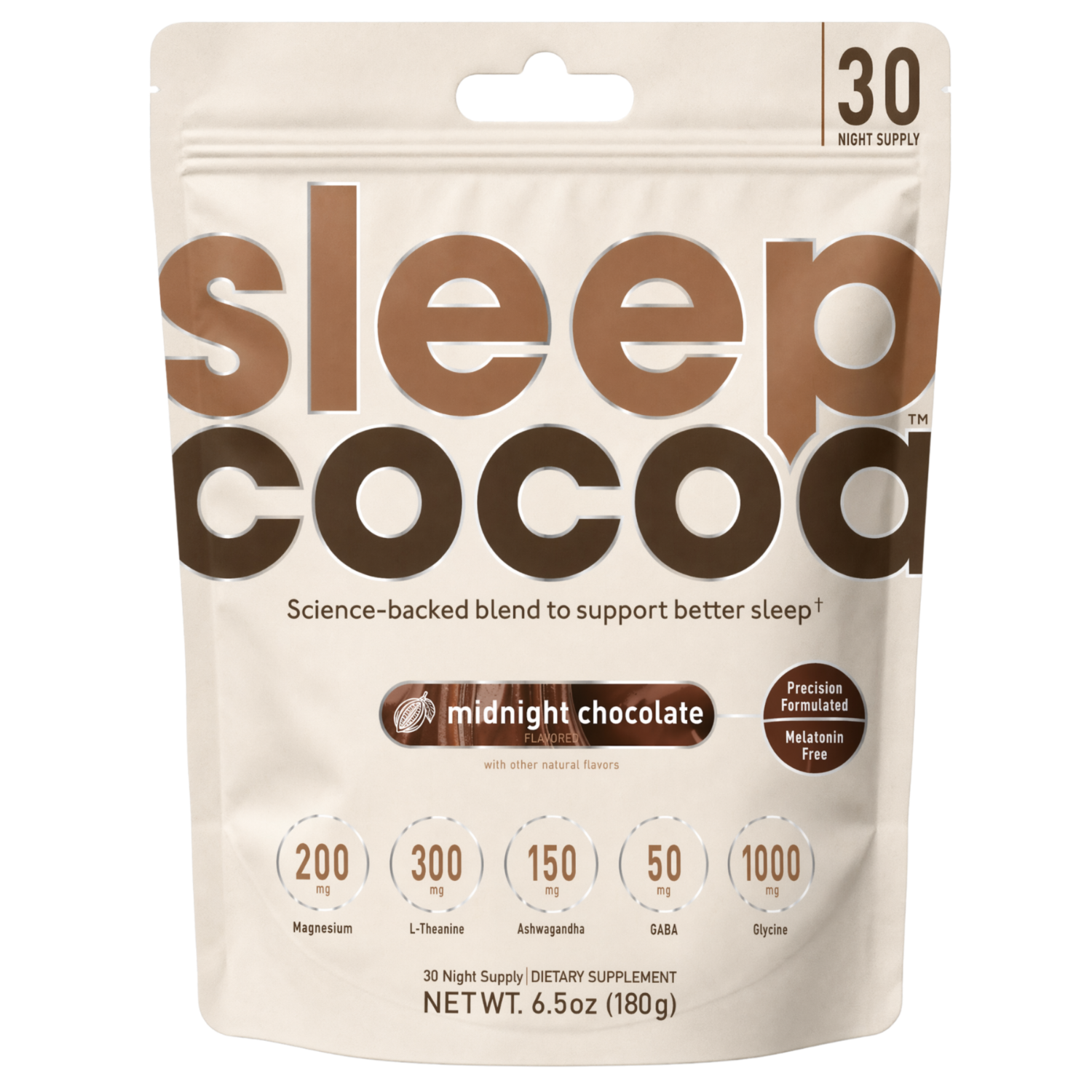
SleepCocoa makes a cocoa drink for your evening routine. Our team wrote this article, and we mention our product.
TL;DR: If magnesium helps you unwind but you still wake up at 2-4 a.m., more magnesium is usually not the first thing to look at. Look at the whole night instead: your wind-down, your bedroom, caffeine and alcohol timing, and a calm back-to-sleep plan. If you are curious about other ingredients, read labels carefully and talk to your doctor or pharmacist first.
Why magnesium can help you relax, yet you still wake up
Magnesium plays a role in regulating muscle and nerve function, according to the NIH Office of Dietary Supplements, and many people make it part of the downshift part of bedtime.
But staying asleep is a different problem. Nighttime waking can come from everyday stress, light sleep, alcohol, room temperature, or just a brain that pops back online after a sleep cycle. The American Academy of Sleep Medicine lists a quiet, cool bedroom and avoiding alcohol before bed among its healthy sleep habits.
So if magnesium gets you drowsy but you still wake up, look at the whole night: one or two practical changes that reduce wake triggers, and, if you are curious about other ingredients, a conversation with your doctor or pharmacist before adding anything.
What to look at when magnesium is not enough for staying asleep
This list is written for people who already tried magnesium and liked the relaxation, but still wake up at night. The items are in no particular order: the first few are ingredients you will see on labels, and the rest are routine and bedroom changes.
1) Glycine, a common ingredient in bedtime formulas
Glycine is an amino acid that shows up in many bedtime formulas, including ones marketed to people who fall asleep fine, then wake with a slightly alert, restless feeling.
Research on glycine and sleep comes from small studies. For example, one study in volunteers used 3 g of glycine before bed (Yamadera et al., 2007). That is research on glycine alone at that dose, not on any drink mix. If you want to go deeper on dosing and what to look for, see our glycine sleep guide.
If you want to understand the roles different ingredients are marketed for, our overview of common sleep drink ingredients is a useful map.
2) L-theanine, common in products marketed for racing thoughts at night
If you wake up and your brain immediately starts solving problems, you are not alone. That pattern is often less about sleep drive and more about mental activation.
L-theanine is an amino acid you will often see on the labels of products marketed for this pattern, and it is often described as calming rather than as something that knocks you out. If you want a simple overview of where it tends to fit, read the L-theanine sleep guide.
If you have questions about how magnesium and melatonin differ, see magnesium vs melatonin, and talk to your doctor or pharmacist before changing anything you take.
3) Ashwagandha, often marketed for everyday stress
Some wake-ups feel like a stress spike, not a bathroom break. You may wake warm, tense, or with a churny stomach, then have trouble settling back in.
Ashwagandha is a plant extract often included in products marketed for stress. If you are considering it, check the label for the amount and form. If you are deciding whether it fits your situation, see ashwagandha at night for sleep.
If you take medication or have a health condition, talk with your doctor or pharmacist before adding ashwagandha. Interactions are individual.
4) Build a hot cocoa bedtime ritual
If your evening routine is just lights out, you may be skipping the part that tells your brain the day is done. A ritual is not fluff, it is repetition plus timing, and the American Academy of Sleep Medicine lists a relaxing bedtime routine among its healthy sleep habits.
A warm cocoa routine can slow you down, reduce scrolling, and create a consistent pre-sleep window, even when your day is messy. Cocoa naturally contains small amounts of caffeine and theobromine, so factor it into your caffeine cutoff. If you are wondering how this differs from regular cocoa, see bedtime cocoa vs regular hot cocoa.
If you want a closer look at hot cocoa as part of an evening routine, see hot cocoa as an evening drink.
5) If you use magnesium, make sure it is a form you tolerate well
Some people give up on magnesium because the form does not agree with them, or because it creates bathroom wake-ups. In those cases you can end up trading one problem for another.
Magnesium glycinate is one form you will often see in bedtime products. If you are comparing options, our take on where to start is in magnesium glycinate for sleep.
If your question is dosing, keep it personal and talk to your doctor or pharmacist. You can also read our general overview at How much magnesium should you take at night for sleep?
6) If you have questions about melatonin, talk to your doctor or pharmacist
Melatonin is a hormone your brain makes in response to darkness, and it helps with the timing of your circadian rhythms and with sleep, according to NCCIH. Light at night can block its production, which is one more reason to keep middle-of-the-night light low.
If you take melatonin or any other supplement and do not like how you feel the next morning, bring it up with your doctor or pharmacist rather than changing it on your own.
7) Reduce a common stealth wake-up trigger in your room
If you wake up at the same time most nights, look for a trigger that is just strong enough to pull you out of lighter sleep. Common ones are heat, a partner moving, pets, hallway light, or early-morning noise.
The contrarian take is that you do not need a perfect sleep setup. You need to fix the single most irritating thing first, because that one change can matter more than adding another capsule.
Pick one: make the room darker, lower the temperature a bit, or add consistent background sound. The CDC recommends a quiet, relaxing, and cool bedroom. Then keep everything else the same for a week so you can tell what made a difference.
8) Tighten your caffeine cutoff if you wake up fully alert
There is a difference between waking briefly and rolling over, versus waking with clear, alert thoughts. If your wake-ups feel like someone flipped a switch, caffeine timing is worth testing, and the CDC suggests avoiding caffeine in the afternoon or evening.
Do not guess with five changes at once. Move your last caffeine earlier and hold that line every day for a week, including weekends, then reassess.
If magnesium helps you relax but your sleep still fractures, caffeine is one of the easiest variables to control without changing your whole routine.
9) Check alcohol timing if you wake up in the second half of the night
Alcohol close to bedtime is worth a look: both the CDC and the American Academy of Sleep Medicine list avoiding alcohol before bed among healthy sleep habits.
If this pattern fits you, run a simple test: keep your evening routine the same, but avoid alcohol for several nights. If your waking improves, you have a clear lever you can use when sleep matters most.
10) Use a back-to-sleep plan for middle-of-the-night wake-ups
If you wake up and start negotiating with your brain, you train your body to expect a long awake period. A plan reduces that spiral.
Keep it boring: low light, no phone, minimal clock-checking. If you need something concrete, try slow breathing for a few minutes, then a short body scan. For trouble falling asleep, the AASM suggests getting up after about 20 minutes for a quiet, low-light activity without electronics.
If a warm drink is part of your bedtime ritual, keep the middle-of-the-night plan separate. You want your brain to associate the drink with the start of sleep, not a 3 a.m. reset.
11) If you take medication or have a health condition, talk to your doctor or pharmacist
If you take medication, run any sleep plan by your doctor or pharmacist. This matters more when you add multi-ingredient products, not less.
Bring the full supplement facts panel and your medication list so they can check for interactions, and choose a routine you can stick with.
If you want to compare ingredient categories before you buy anything, our guide on how to read a sleep drink label can help you ask better questions.
Quick comparison if you still wake up after magnesium
| Option | Who it may fit | What it is | What to watch |
|---|---|---|---|
| Magnesium by itself | People who mainly want a relaxing bedtime step | A mineral involved in regulating muscle and nerve function (NIH ODS) | Forms and amounts vary by product; read the label |
| Melatonin products | People with questions about sleep timing | A hormone linked to the timing of circadian rhythms (NCCIH) | Talk to your doctor or pharmacist before use |
| Room and routine changes | People who wake up at the same time nightly | Targets a trigger that may be pulling you out of lighter sleep | Change one variable at a time so you know what made a difference |
FAQ
What ingredients should I look at if I still wake up at night?
Nighttime waking usually has more than one driver, so there is rarely a single hero ingredient. Common ingredients in bedtime formulas include magnesium, glycine, L-theanine, and ashwagandha. Research on an ingredient describes that ingredient at a specific dose in a specific group of people, not any particular product. Read labels for amounts, look at your routine and bedroom too, and talk to your doctor or pharmacist if you take medication.
I tried magnesium for sleep but I still wake up, what should I look at next?
If magnesium helps you unwind but you still wake up, look at what happens in the middle of the night: mental activation, light sleep, or a trigger in the room. Keep your routine steady for at least several nights, and change only one other variable, like caffeine cutoff, so you can see what actually moved the needle. Talk to your doctor or pharmacist before adding another supplement. If you are comparing drink mixes, see magnesium drink mixes compared.
Should I choose a sleep product that contains melatonin?
That depends on you, and it is a good question for your doctor or pharmacist. Melatonin is a hormone your brain makes in response to darkness, and it helps with the timing of your circadian rhythms and with sleep, according to NCCIH. Check the supplement facts panel to see whether a product adds melatonin, and compare how you feel the next day, not only how fast you fall asleep.
How do I know if my waking is stress-related or something in my environment?
The fastest way to separate these is to look for patterns you can test. If you wake at random times with racing thoughts, a steady wind-down and a calm back-to-sleep plan may be the first things to look at. If you wake at the same time nightly, start by removing one trigger like light, noise, or heat, and keep the rest of your routine the same so the result is clear.
Can I take a multi-ingredient sleep supplement if I am on medication?
Ask your doctor or pharmacist before you start. Bring the full supplement facts panel and your medication list so they can give you a direct answer.
What is the easiest way to turn a supplement into a routine that actually works?
Consistency beats intensity for most sleep routines, because your brain learns cues through repetition. A warm drink can anchor that routine: making it helps many people stop working, stop scrolling, and create a reliable wind-down window before sleep. Pick a fixed time, keep the steps the same each night, and avoid adding new changes for a week so you can judge how it fits.
How to pick your next step tonight
If magnesium helped you relax, look at the whole night before adding anything new. For most people, that means a wind-down routine you repeat, plus one practical fix that removes the biggest wake trigger in the bedroom.
Give your routine a fair trial, then adjust one variable at a time. If you keep waking up during the night, the CDC suggests talking to a healthcare provider.
*These statements have not been evaluated by the Food and Drug Administration. This product is not intended to diagnose, treat, cure, or prevent any disease. Research cited describes individual ingredients, not SleepCocoa as a finished product, which has not been clinically tested. Talk to your doctor or pharmacist before use if you are pregnant, nursing, under 18, have a medical condition, or take any medication. Do not drive or operate machinery until you know how SleepCocoa affects you.