Ways to wind down a busy mind at bedtime
Mind busy at bedtime? An unranked look at common wind-down options, what to check on labels, and routine habits worth keeping.
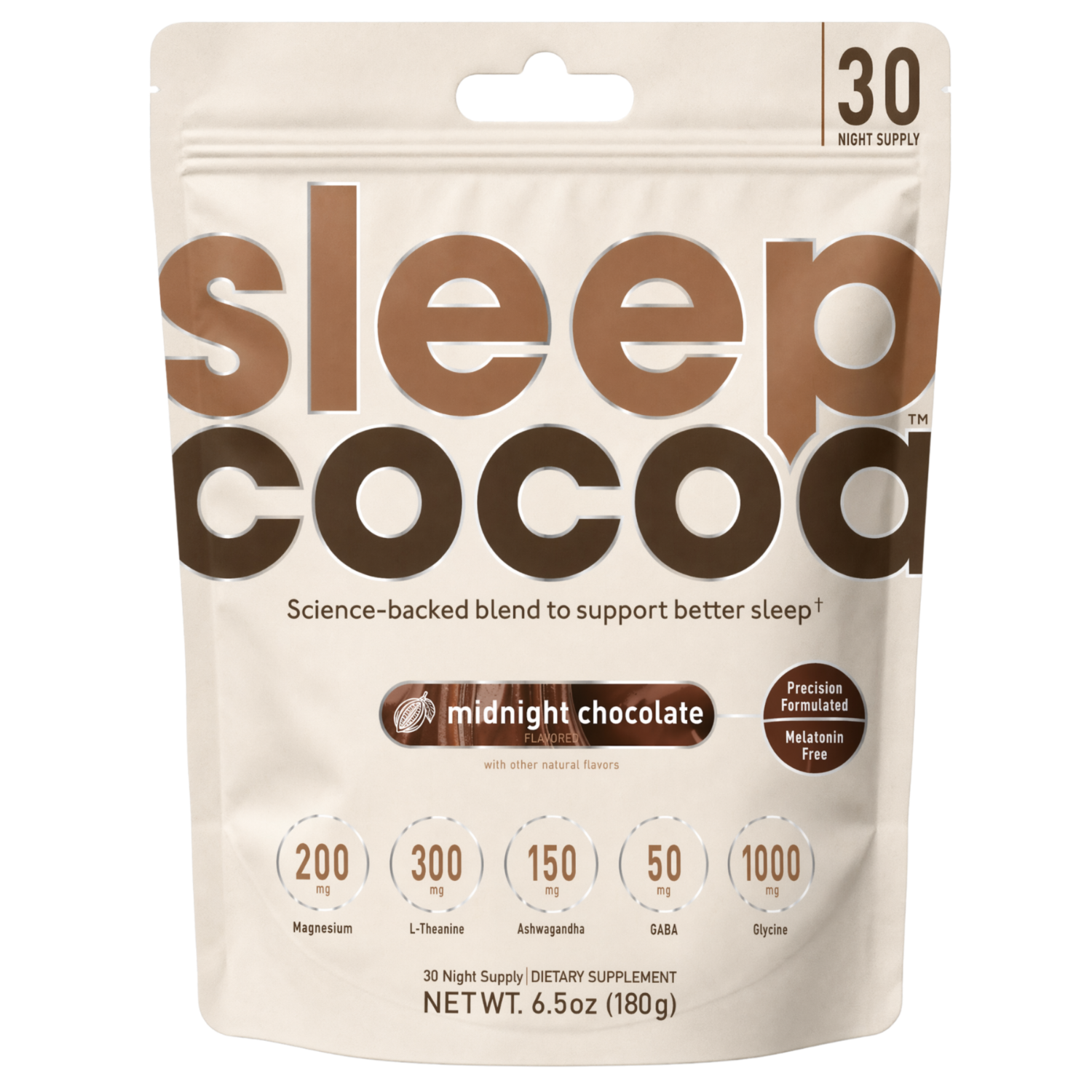
SleepCocoa makes a cocoa drink for your evening routine. Our team wrote this article, and we mention our product.
TL;DR: If your mind gets busy at bedtime, or you wake at 3-4 a.m. with your thoughts running, start with the routine around bed: a consistent schedule, a relaxing bedtime routine, and devices off 30 minutes before bed, as the AASM suggests. If you are reading supplement labels, magnesium glycinate and L-theanine are common ingredients, and they are different things; talk to your doctor or pharmacist before adding either.
What a busy mind at bedtime can feel like
For some people, the problem at bedtime is a body that is tired while the mind stays on. You might fall asleep fine, then wake up wired, with a busy mind and a to-do list running.
That is why the routine around bed matters. The American Academy of Sleep Medicine lists a relaxing bedtime routine among its healthy sleep habits, and a steady wind-down gives a busy mind something calm to do. If worry at night feels hard to manage, or you often have a racing heart at night, talk to a healthcare provider.
If your main issue is waking up feeling wired, you may also like this guide: Why you wake up at night feeling wired, and what to try in your evening routine.
Who this list is for
- Routine first. A repeatable bedtime ritual is easier to keep than a random capsule you forget half the time.
- Read the label. You should be able to tell what you are taking and how much, including whether melatonin is added.
- No particular order. We describe general categories rather than specific brands, and the list is in no particular order.
- Talk to your doctor or pharmacist. Especially before adding a supplement if you take medication or have a health condition.
The list
1) Magnesium glycinate
People who notice physical tension at night often look at magnesium glycinate, a common form of magnesium on supplement labels. Magnesium plays a role in regulating muscle and nerve function in the body, according to the NIH Office of Dietary Supplements; that general role is not evidence that a supplement will change your sleep. If you want a comparison of forms, see magnesium glycinate vs citrate for sleep.
If you still wake up wired later in the night, look at your routine as a whole, and talk to your doctor or pharmacist before adding anything else.
If magnesium helps you relax but you still wake up, this article can help you troubleshoot: What to look at if magnesium helps you relax but you still wake up at night.
2) L-theanine
If the problem is not physical restlessness but mental chatter and worry, you may notice L-theanine on a lot of labels. It is an amino acid that shows up often in products marketed for a mind that will not shut off. If you want the full overview, see this L-theanine sleep guide.
If you are comparing magnesium glycinate and L-theanine, they are different kinds of ingredients: magnesium is a mineral and L-theanine is an amino acid. Introduce one change at a time, and ask your doctor or pharmacist before using both.
3) Glycine
Glycine is an amino acid that is a common ingredient in bedtime formulas, and it comes up often when people talk about waking too easily. If you want to learn more, see the glycine sleep guide.
Glycine powder can be mixed into a warm drink, so it can fit a bedtime routine without adding another capsule. If you are considering it, check the label for the amount and talk to your doctor or pharmacist if you take medication.
4) Ashwagandha
Some people feel stressed and keyed up at night rather than sleepy. Ashwagandha is a plant extract often included in products marketed for stress. If you want specifics, this guide covers it: ashwagandha at night for sleep.
If you are considering it, check the label for the amount and form, and talk to your doctor or pharmacist if you take medication.
5) Chamomile or passionflower teas
Herbal teas can be a simple first step if you are cautious about trying new products. The ritual itself matters: a warm cup can become a cue that the day is done. There is little research on chamomile and sleep, according to NCCIH, and chamomile in the amounts found in teas is commonly consumed as a beverage.
The downside is that it is easy to end up layering too many different things without a clear plan. Pick one ritual and keep it steady.
6) GABA and theanine sprays
Sprays are usually marketed for quick use when you wake up at night. Some people like the simplicity of not making a full drink.
The downside is that sprays vary a lot by product, and it can be hard to compare labels. If you want a steadier approach, a consistent nightly ritual can be easier to evaluate because you are not changing the form and timing every night.
7) Tart cherry juice
Some people drink tart cherry juice as part of a wind-down routine. Tart cherry naturally contains trace melatonin, so check the label if that matters to you.
8) Melatonin
Melatonin is a hormone your brain makes in response to darkness, and it helps with the timing of your circadian rhythms and with sleep, according to NCCIH. Whether melatonin in any form fits you is a question for your doctor or pharmacist. If you want to compare warm drink formats, see Warm bedtime drinks for a calm evening ritual.
Quick comparison of wind-down options
| Option | Who it may fit | When people use it | What to know |
|---|---|---|---|
| Magnesium glycinate | People who notice physical tension at night | Before bed | Forms and amounts vary by product; read the label |
| L-theanine | People whose thoughts loop at night | Before bed | Ask your doctor or pharmacist before using it with other supplements |
| Glycine | People who wake easily | Before bed | Check the label for the amount |
| Ashwagandha | People whose everyday stress carries into bedtime | Before bed as part of a routine | Talk to your doctor or pharmacist if you take medication |
| Herbal tea (chamomile, passionflower) | People who want a simple ritual | Before bed | NCCIH notes there is little research on chamomile and sleep |
| Sprays (GABA/theanine blends) | People who want a quick option after waking | Middle of the night | Labels vary by product |
| Melatonin | People with questions about sleep timing | Before bed | Talk to your doctor or pharmacist before use |
A practical way to choose if you wake at 3-4 a.m. with a busy mind
If you want the simplest path with the least guesswork, start with one consistent nightly routine for 2-3 weeks: the same bed and wake time every day, a relaxing wind-down, and devices off 30 minutes before bed (AASM). If you want more detail on what goes into a sleep drink, see what to look for on a sleep drink label.
If you are considering supplements, make one change at a time and talk to your doctor or pharmacist before adding more than one.
For a deeper breakdown of magnesium alone vs pairing it with theanine, see: Magnesium alone vs magnesium plus L-theanine for sleep: what to know before buying
Medications and new supplements: talk to your doctor or pharmacist
If you take medication, or you are managing a health condition, talk with your doctor or pharmacist before adding any sleep supplement. That is extra important if you are considering multi-ingredient products, since interactions can be ingredient-specific.
A simple way to try any new routine change is to change one variable at a time. Keep everything else the same for several nights so you can tell what is making a difference, and what is not. If trouble sleeping keeps going, the CDC suggests talking to a healthcare provider.
FAQ
What can I try at night if I wake up with a busy mind?
This question matters because a quick fix at 3 a.m. is not always the right choice when you need to function the next day. Start with the routine: keep the same bed and wake time, keep the bedroom quiet and cool, and avoid caffeine in the afternoon or evening and alcohol before bed (CDC). Keep one consistent bedtime routine for a couple of weeks before you add extra products, and talk to your doctor or pharmacist before adding any supplement.
Can you compare L-theanine vs magnesium glycinate vs glycine?
These three often appear together on labels, but they are different ingredients. Magnesium glycinate is a form of magnesium, a mineral that helps regulate muscle and nerve function (NIH Office of Dietary Supplements). L-theanine and glycine are amino acids. Research on an ingredient describes that ingredient at a specific dose in a specific group of people, not any particular product, so read labels for amounts and ask your doctor or pharmacist before using any of them.
What is the difference between theanine and glycine?
Both are amino acids that show up in bedtime formulas. Research on each describes a specific dose in a specific group of people, and it cannot tell you which one will suit you. If you are deciding, talk to your doctor or pharmacist and bring the labels.
Is melatonin a bad idea if my main goal is waking up without grogginess?
That is a question for your doctor or pharmacist, because it depends on you. Melatonin is a hormone your brain makes in response to darkness, according to NCCIH. People respond differently to ingredients and amounts; if you feel off in the morning, write down what you took and bring the label to your doctor or pharmacist.
How do I pick a sleep supplement if I am worried about how it will affect me?
This matters because worry can make normal body sensations feel like something is wrong, which can turn trying a supplement into its own stressor. Talk to your doctor or pharmacist before adding any supplement, and bring the full label. Introduce one new product at a time and keep a short notes log on sleep and how you feel the next morning.
If magnesium helps me relax but I still wake up at night, what should I look at?
This matters because relaxing at bedtime and staying asleep are not always the same problem. Look at your full routine first: timing, bedroom setup, light in the evening, and caffeine or alcohol later in the day. Talk to your doctor or pharmacist before adding or changing any supplement, and if waking during the night keeps happening, talk to a healthcare provider. For a structured walkthrough, see What to look at if magnesium helps you relax but you still wake up at night.
Do I need a bedtime supplement, or something I use only when I wake up at night?
That depends on you, so it is a good question for your doctor or pharmacist. Reactive fixes can turn into a nightly scramble, which keeps your brain focused on what happens if you wake up again. Whatever you choose, keep your bedtime routine and your middle-of-the-night plan simple and consistent so decisions do not add to the busy-mind feeling.
Next step: a simple plan you can stick to
If you like the idea of a warm drink as part of your wind-down, make it the same time and the same steps each night. If you want more background on cocoa as part of the ritual, see how bedtime cocoa compares with other evening drinks.
Pick one routine change, keep it steady for a couple of weeks, and keep notes. If you are considering a supplement, talk to your doctor or pharmacist first and add one thing at a time so you are not guessing.
*These statements have not been evaluated by the Food and Drug Administration. This product is not intended to diagnose, treat, cure, or prevent any disease. Research cited describes individual ingredients, not SleepCocoa as a finished product, which has not been clinically tested. Talk to your doctor or pharmacist before use if you are pregnant, nursing, under 18, have a medical condition, or take any medication. Do not drive or operate machinery until you know how SleepCocoa affects you.