Ashwagandha at night for sleep: what to know and what to check on the label
When ashwagandha comes up at bedtime, what one small study found, how to read the label, and how to build a simple evening routine around it.
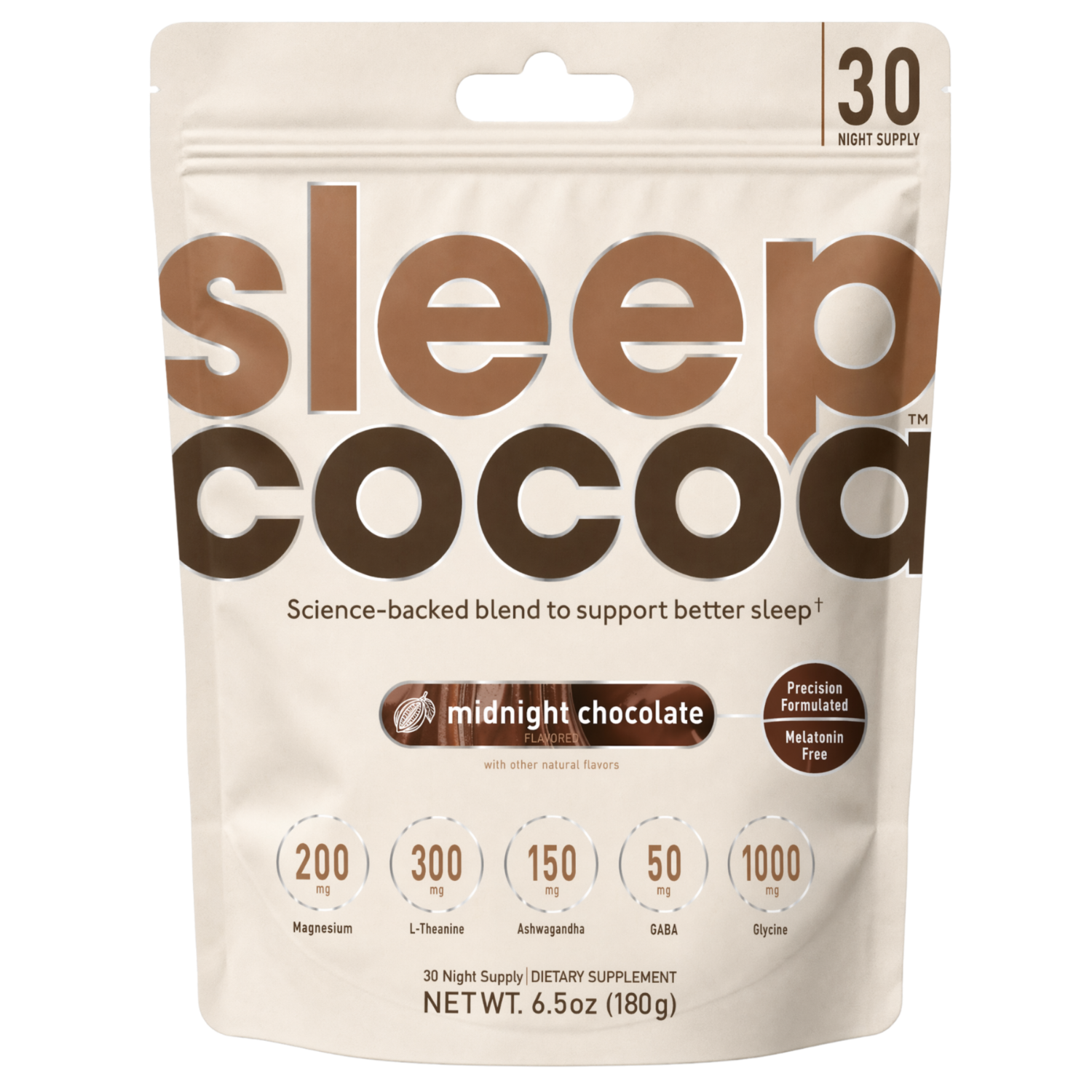
SleepCocoa makes a cocoa drink for your evening routine. Our team wrote this article, and we mention our product.
TL;DR: Ashwagandha comes up most when evenings feel stressful and your mind stays on at bedtime. Research on it describes specific extracts, doses, and groups of people, so approach it like any supplement: read the label, talk to your doctor or pharmacist, especially if you take medication, and start with a simple, repeatable bedtime ritual.
When people consider ashwagandha at night
People tend to look at ashwagandha when their sleep trouble starts before they even fall asleep: they feel wired, tense, or stuck in mental loops at bedtime. Ashwagandha is a plant extract often included in products marketed for stress.
In one small trial, 60 stressed but healthy adults took an ashwagandha root extract at 250 mg or 600 mg a day for 8 weeks and reported lower perceived-stress scores than a placebo group (Salve et al., 2019). That is one study of one extract at those doses in that group of people, not evidence about any particular product.
- You take a long time to settle down: you feel physically tired but mentally alert.
- You wake up and cannot downshift: your body feels on edge when you want to go back to sleep.
- Your sleep feels light: small noises wake you, and it takes a while to settle again.
When it might not be the right fit
Ashwagandha is not a match for every sleep problem. If your main issue is a schedule problem (late caffeine, inconsistent bedtime, late-night screen habits), start there before buying anything.
Also, if you are pregnant, nursing, have a medical condition, or take any medication, talk to your doctor or pharmacist before trying ashwagandha. The goal is a steadier routine, not a new variable to worry about.
A contrarian take: look at the whole bedtime picture, not one ingredient
If you search for ashwagandha at night for sleep, you will see lots of single-ingredient pills positioned like a silver bullet. For many people, the bigger picture is the whole bedtime state: tense body, fast thoughts, and an inconsistent wind-down.
A practical place to start is one consistent ritual, rather than expecting any one ingredient to do all the work. The American Academy of Sleep Medicine lists a relaxing bedtime routine among its healthy sleep habits.
What to look for on an ashwagandha product label
If your shortlist includes an ashwagandha product, a few label checks help you ask better questions.
Notice what else is in the product
Ashwagandha shows up both on its own and in multi-ingredient products alongside magnesium, glycine, or L-theanine. Look at the form and amount of each ingredient, and ask your doctor or pharmacist before using more than one new supplement. If you want to understand those ingredients better, see magnesium glycinate for sleep and this L-theanine sleep guide.
Check whether melatonin is added
Some ashwagandha products also add melatonin, and some do not. Melatonin is a hormone your brain makes in response to darkness, and it helps with the timing of your circadian rhythms and with sleep (NCCIH).
If you have questions about melatonin, talk to your doctor or pharmacist.
Third-party testing matters more than hype
If you have questions about how a supplement is made, look for quality steps you can check, such as third-party testing. Third-party testing is a quality step: it does not mean the FDA has approved a product, and it does not tell you how a product will affect you.
Choose products that make it easy to be consistent
A consistent routine is one of the AASM healthy sleep habits. A routine you actually keep every night, at about the same time, is easier to judge than one you follow at random.
This is where a hot cocoa bedtime ritual can fit. You are not forcing a new habit; you are swapping part of your evening routine for something warm and repeatable. If you are weighing formats, hot sleep drink vs capsules breaks down the tradeoffs.
Common ways people take ashwagandha at night
This table is not about brand bashing. It is about matching the format to your routine.
| Option | Who it may fit | What to watch |
|---|---|---|
| Ashwagandha-only capsules | Simple routines where you only want to try one ingredient at a time | Extract type and amount vary by product; a capsule does not add a warm-drink ritual |
| Ashwagandha in gummies or blends with melatonin | People with questions about melatonin, a hormone linked to sleep timing | Talk to your doctor or pharmacist before use |
| Cocoa drink mixes with ashwagandha and other ingredients | People who want a warm drink as part of a nightly routine | More than one active ingredient; if you only want a single herb in capsule form, a drink mix may feel like more than you asked for |
Where to start if you are curious about ashwagandha at night
If you are curious about ashwagandha, talk to your doctor or pharmacist first, and set up your routine so you can tell what is changing without changing everything at once.
- Pick one bedtime anchor: the same start-winding-down time most nights.
- One change at a time: ask your doctor or pharmacist before adding more than one new supplement, and avoid changing several things in the same week.
- Keep the routine boring: warm lights, no intense content, and the same pre-bed steps.
How to think about medications and new supplements
This is the part most blogs skip, but it is what many people worry about the most. Supplements can interact with medications, and individuals can respond differently to the same ingredient.
An article cannot tell you how a supplement fits with your specific medication list. If you take medication or have a health condition, ask your doctor or pharmacist whether ashwagandha and nighttime magnesium are appropriate for you. If magnesium is part of your plan, how much magnesium at night can help you think through the basics before you buy anything new.
For personal response, the practical move is to change one thing at a time. If you start a new sleep product, do not also add a new caffeine habit, a new workout time, and a new diet change that week. Make it easy to tell what is causing what.
Building a bedtime ritual that actually sticks
A routine that tells your body the day is done is easier to keep than a capsule you swallow while scrolling, and a warm drink can be the anchor for it. If you are curious how regular cocoa compares with a bedtime cocoa, read bedtime cocoa vs hot cocoa.
- Set a cutoff for stimulation: choose a time when you stop work, news, and heated conversations.
- Make the drink, then slow down: pair it with a consistent cue like stretching or reading a few pages.
- Keep your goal simple: you are practicing a wind-down, not chasing a perfect night.
If your biggest issue is nighttime waking, see this guide to a bedtime cocoa ritual for night waking.
FAQ
Is ashwagandha at night good for sleep or is it better during the day?
Studies describe a specific extract, dose, and group of people, not one right time of day for everyone. Some people who take it at night do so because their main concern is a wired mind at bedtime. Timing is a good question for your doctor or pharmacist, especially if you take medication.
How do I compare ashwagandha products for night use?
It depends on whether you want a single-ingredient product or a multi-ingredient drink that fits a bedtime routine. Compare the extract type and amount on each label, check whether melatonin or other active ingredients are added, and talk to your doctor or pharmacist before trying one.
Will ashwagandha make me groggy in the morning?
People respond differently, and an article cannot predict how you will feel. If you notice next-day effects after any new supplement, talk to your doctor or pharmacist and bring the label. Changing one thing at a time makes it easier to tell what is causing what.
Can I take ashwagandha at night if I am on medications?
Talk to your doctor or pharmacist. Bring the full label and your medication list so they can check your specific situation.
Should I choose ashwagandha alone or a blend for sleep?
This comes down to what you want to learn and what fits your routine. A single-ingredient product makes it easier to see how you respond to that one ingredient. A multi-ingredient drink adds more ingredients along with a warm-drink ritual, so read every amount on the label. Either way, talk to your doctor or pharmacist first.
How do I know if a sleep supplement is trustworthy?
Look for details you can check: a clear supplement facts panel with the serving size and ingredient amounts, and quality steps such as third-party testing. Third-party testing does not mean the FDA has approved a product, and it does not show how a product will affect you.
What if I try it and it does not suit me?
Give any change a fair trial with the rest of your routine steady, and keep notes on how long it takes to fall asleep and how you feel in the morning. If you have concerns, talk to your doctor or pharmacist, and if trouble sleeping keeps going, the CDC suggests talking to a healthcare provider.
Your next step for a calmer evening routine
If your evenings feel stress-driven, start with a repeatable bedtime ritual instead of chasing a strong one-off supplement, and talk to your doctor or pharmacist before adding ashwagandha or any other supplement.
If you want to keep learning in a practical way, see this guide to a calm bedtime drink ritual.
*These statements have not been evaluated by the Food and Drug Administration. This product is not intended to diagnose, treat, cure, or prevent any disease. Research cited describes individual ingredients, not SleepCocoa as a finished product, which has not been clinically tested. Talk to your doctor or pharmacist before use if you are pregnant, nursing, under 18, have a medical condition, or take any medication. Do not drive or operate machinery until you know how SleepCocoa affects you.