Sleep drink ingredients for racing thoughts and nighttime waking: what to look for on the label
Racing thoughts or nighttime waking? What L-theanine, magnesium glycinate, glycine, and ashwagandha are, and how to read a sleep drink label.

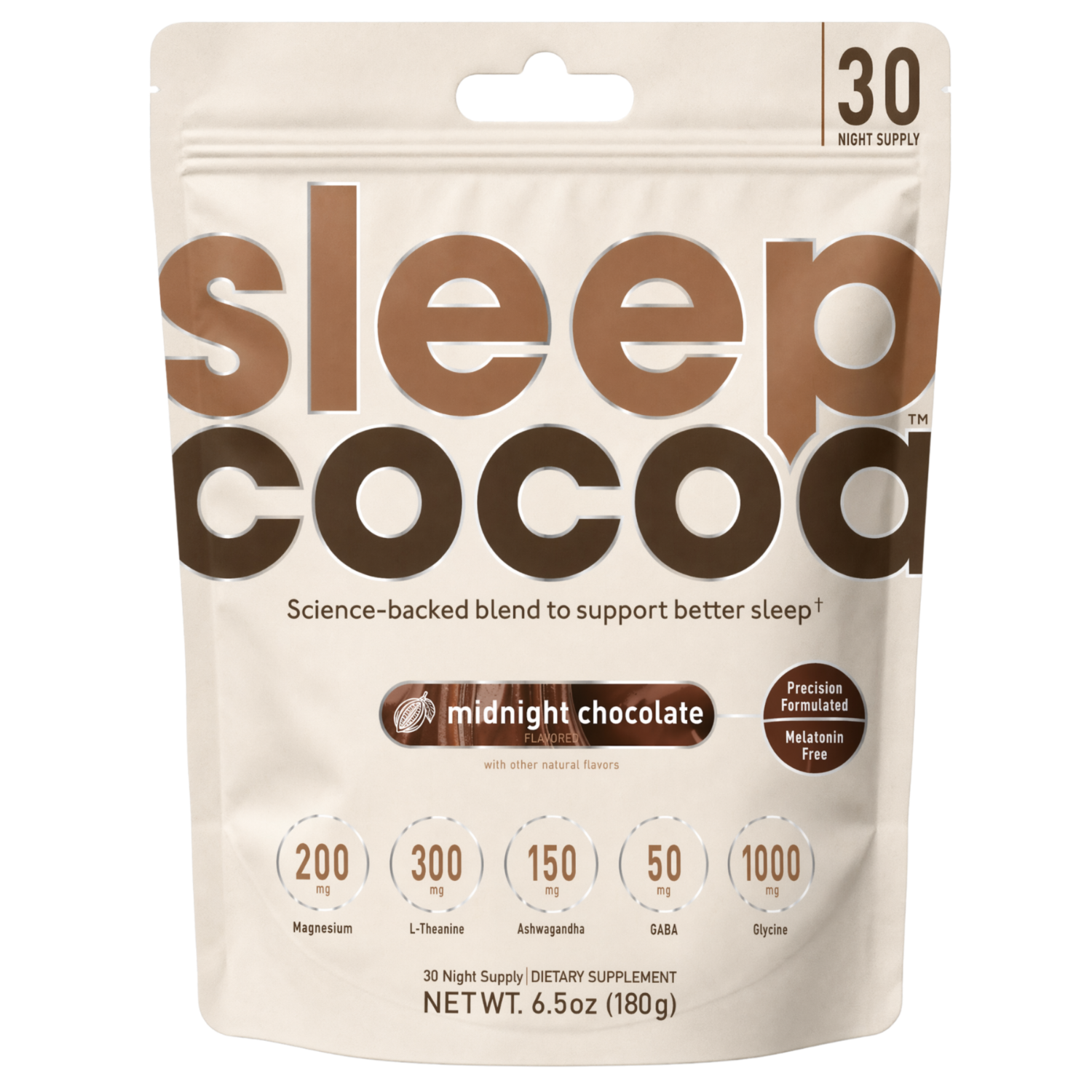
SleepCocoa makes a cocoa drink for your evening routine. Our team wrote this article, and we mention our product.
TL;DR: If you are choosing a sleep drink for racing thoughts or nighttime waking, it helps to know which ingredients show up on bedtime labels and what each one is. Common ones include L-theanine, magnesium glycinate, glycine, and ashwagandha. Read the amount of each on the supplement facts panel, and build the drink into a consistent bedtime ritual.
Why racing thoughts and nighttime waking can feel like different problems
Two problems can feel like one. You lie down with a busy mind, then later you wake up at 2:00 a.m. and cannot settle back in.
In practice, it helps to tell them apart. Racing thoughts are about winding down at bedtime. Nighttime waking is about what happens later, and whether you can settle back in after you wake. Noticing which one is louder for you makes label reading easier.
Either way, the routine around the drink matters. The American Academy of Sleep Medicine lists a relaxing bedtime routine among its healthy sleep habits, and a warm drink is an easy way to build one you repeat every night.
The ingredients people look for, and what they are
Bedtime drink labels tend to repeat the same handful of ingredients. Here is what each one is and the pattern people often associate with it. Research on an ingredient describes that ingredient at a specific dose in a specific group of people, not any particular drink.
Some drinks combine several of these ingredients with cocoa as part of a hot cocoa bedtime ritual, so read the label for each amount.
| Ingredient | What it is | Pattern people often associate with it |
|---|---|---|
| L-theanine | An amino acid that shows up often in products marketed for relaxation | Racing thoughts at bedtime |
| Magnesium glycinate | A form of magnesium, a mineral that plays a role in muscle and nerve function | Physical tension while winding down |
| Glycine | An amino acid common in bedtime formulas | Trouble settling back down after waking |
| Ashwagandha | A plant extract often included in products marketed for stress | Everyday stress that follows you into bed |
Which ingredient do people look at first for calming down at night?
If your problem is a mind that will not shut off, L-theanine is usually the first ingredient people check for on the label. It is an amino acid that shows up often in products marketed for relaxation before sleep.
If your problem is more physical, tight shoulders, restlessness, or that wired but tired feeling, magnesium glycinate is often the next label item people look for. Magnesium plays a role in regulating muscle and nerve function, according to the NIH Office of Dietary Supplements; that general role is not evidence that a drink will change your sleep. If you want to compare magnesium types, see magnesium glycinate vs citrate for sleep.
For timing, should you look at L-theanine or magnesium?
When someone asks for the quickest bedtime calm, they are usually asking about what they will feel in the first 30-60 minutes.
We do not have a reliable source comparing how quickly people notice L-theanine versus magnesium, and people respond differently to different ingredients and amounts. What you can control is the timing of your routine.
That is also why a drink format can help. A warm mug as part of a bedtime ritual creates a built-in buffer between screen time and sleep, and it gives you a consistent time cue to start winding down. The AASM suggests turning devices off 30 minutes before bed.
What about magnesium glycinate vs magnesium L-threonate?
The label form matters because magnesium comes in several forms, and products do not always say which one they use. Magnesium glycinate is a common choice in bedtime formulas.
If you are comparing options, use form as a filter. If a product does not specify the magnesium form, it is hard to compare apples to apples.
What ingredients do people look at for nighttime waking?
Nighttime waking is tricky because it can have more than one cause. Repeatedly waking during the night is one sign of poor sleep quality, according to the CDC.
If you are reading labels, glycine is one ingredient you will often see in bedtime formulas. Magnesium glycinate is another that people look at, especially if they wake with tension or restlessness.
The habits around the drink matter too. The CDC suggests keeping the same bed and wake time every day, a quiet, relaxing, cool bedroom, and no large meals or alcohol before bedtime. If waking keeps happening, talk to a healthcare provider.
Why a hot cocoa ritual can fit a busy mind at bedtime
Most sleep supplement advice focuses on ingredients only. The format can matter too.
A hot cocoa bedtime ritual is simple, but it does a few practical things. It replaces late-night snacking or scrolling with a repeatable routine. It also gives you an easy timing habit, make the drink, sip it, then go through your normal bedtime steps.
If you want more detail on the ritual and how cocoa fits as a format, read hot cocoa with no added melatonin.
How to read a sleep drink label without getting burned
If you have ever bought a sleep product that left you foggy, you are not alone. A calmer bedtime should not require guessing what is in the tub.
- Check whether it adds melatonin. Do not assume the front label tells the whole story. Check the supplement facts panel and ingredient list. If you have questions about melatonin, talk to your doctor or pharmacist.
- Read the supplement facts panel. It lists what is in each serving, so you can compare products and ask your doctor or pharmacist specific questions.
- Look for quality details you can verify. Check whether a product is third-party tested. If you want a checklist, see how to choose a third-party tested sleep drink.
- Pick a format you will actually use nightly. Consistency beats perfection. A drink can be easier to repeat than a handful of capsules.
If you want a deeper comparison of drink mixes, you can also read magnesium drink mixes compared.
Where to start based on your main sleep complaint
If you are trying to choose one direction, start with the problem you notice first, then build from there.
| Your main problem | First label filter | Second label filter | Simple nightly plan |
|---|---|---|---|
| Racing thoughts at bedtime | L-theanine | Magnesium glycinate | Make your drink 30-60 minutes before bed as a wind-down cue |
| Waking up and struggling to fall back asleep | Glycine | Magnesium glycinate | Keep the routine consistent every night, not just on bad nights |
| Evening stress and a busy mind | L-theanine | Ashwagandha | Pair the drink with a short off-screen buffer before lights out |
If you want to compare warm drink options more broadly, see how to build a calm bedtime drink ritual and this sleep drink powder guide.
Single-ingredient vs multi-ingredient sleep drinks
Some sleep drinks are basically single-ingredient mixes. That can be fine if you know exactly what you want, and one ingredient is easier to judge on its own.
Others combine several ingredients in one cocoa drink or powder. That puts more variables in one mug, so read the amount of each ingredient on the label, and talk to your doctor or pharmacist first if you take medication.
| Option type | What the label often looks like | Who it may fit |
|---|---|---|
| Single-ingredient theanine drink | Mostly L-theanine, sometimes flavors and sweeteners | People focused mainly on racing thoughts and short labels |
| Magnesium-only drink | Magnesium, sometimes without specifying the form | People whose sleep issues feel more physical than mental |
| Multi-ingredient cocoa drink mix | Cocoa plus several ingredients, such as magnesium glycinate, ashwagandha, glycine, and L-theanine | People who want a warm cocoa ritual and are comfortable reading a longer label |
Medications and health conditions: what to think about before you try a new sleep supplement
If you take medications or you have a health condition, approach any sleep supplement like any other active product. Read the label carefully, and talk to your doctor or pharmacist about interactions.
This matters whether or not a product adds melatonin. Ingredients like magnesium and ashwagandha may not fit everyone, depending on their situation.
Third-party testing is a quality check, not a medical check, so it does not replace that conversation. Also be careful about adding several new sleep products at the same time: if you start more than one in the same week, you will not know how each one affects you.
FAQ
What ingredient in sleep drinks do people look at for racing thoughts at bedtime?
L-theanine is one of the most common ingredients people look for when their mind will not settle at bedtime. It is an amino acid that shows up often in products marketed for relaxation. If you are comparing products, look for L-theanine clearly listed in the supplement facts panel, check the amount, and keep your routine consistent. For a deeper breakdown, see magnesium plus theanine for sleep.
Between L-theanine and magnesium, which one should I look at for racing thoughts in the 30-60 minutes before bed?
People whose mind is the louder problem often look at L-theanine, while people who notice physical tension often look at magnesium glycinate. We do not have a reliable source comparing how quickly people notice either one, and people respond differently. Some drinks include both, so read the label for each amount, and talk to your doctor or pharmacist if you take medication.
What ingredients do people look at for nighttime waking in a sleep drink?
Glycine and magnesium glycinate are two ingredients people often look at when waking at night is the main issue. Repeatedly waking during the night is one sign of poor sleep quality, according to the CDC, so keep your bed and wake times steady, and if it keeps happening, talk to a healthcare provider.
How can I check whether a sleep drink adds melatonin?
People get tripped up because front labels can emphasize calming ingredients while melatonin is still in the formula. Check the supplement facts panel and the ingredient list, where added melatonin should be named. If you have questions about melatonin, talk to your doctor or pharmacist.
Should I choose a single-ingredient theanine product or a blend?
This choice depends on whether your sleep problem feels one-dimensional or mixed. A single-ingredient L-theanine option keeps things simple if racing thoughts are your only concern, while a blend puts several ingredients in one drink. Either way, read the amount of each ingredient, and talk to your doctor or pharmacist if you take medication.
Will a sleep drink interact with my medications?
Interaction risk is the right concern. Ingredients like magnesium and ashwagandha can matter for some medications or conditions, so talk to your doctor or pharmacist before starting any sleep drink. Bring the full supplement facts panel to that conversation so the advice is specific to the exact product.
What is the easiest way to tell if a sleep drink fits my routine without guessing?
Most people change too many variables at once, then they cannot tell what changed. Try one new product at a time as a consistent bedtime ritual instead of a one-night experiment. Keep your bedtime and wake time as steady as you can, and keep short notes on how long it takes to fall asleep, how often you wake, and how you feel in the morning.
A simple plan for your next 7 nights
Pick one sleep drink and commit to a repeatable routine for a week. Make it at the same time each night, and let the mug be your off-ramp from work, news, and scrolling.
If you want to browse cocoa options, see bedtime cocoa mixes. If you want more help choosing a format, compare drinks vs. capsules in Hot sleep drink vs capsules for your bedtime routine.
*These statements have not been evaluated by the Food and Drug Administration. This product is not intended to diagnose, treat, cure, or prevent any disease. Research cited describes individual ingredients, not SleepCocoa as a finished product, which has not been clinically tested. Talk to your doctor or pharmacist before use if you are pregnant, nursing, under 18, have a medical condition, or take any medication. Do not drive or operate machinery until you know how SleepCocoa affects you.