Bedtime drink ritual FAQ: what to look for if you want a warm drink, not a capsule
Want a warm bedtime drink, not a capsule? Practical answers on caffeine, melatonin labels, ingredient amounts, timing, and a simple nightly ritual.
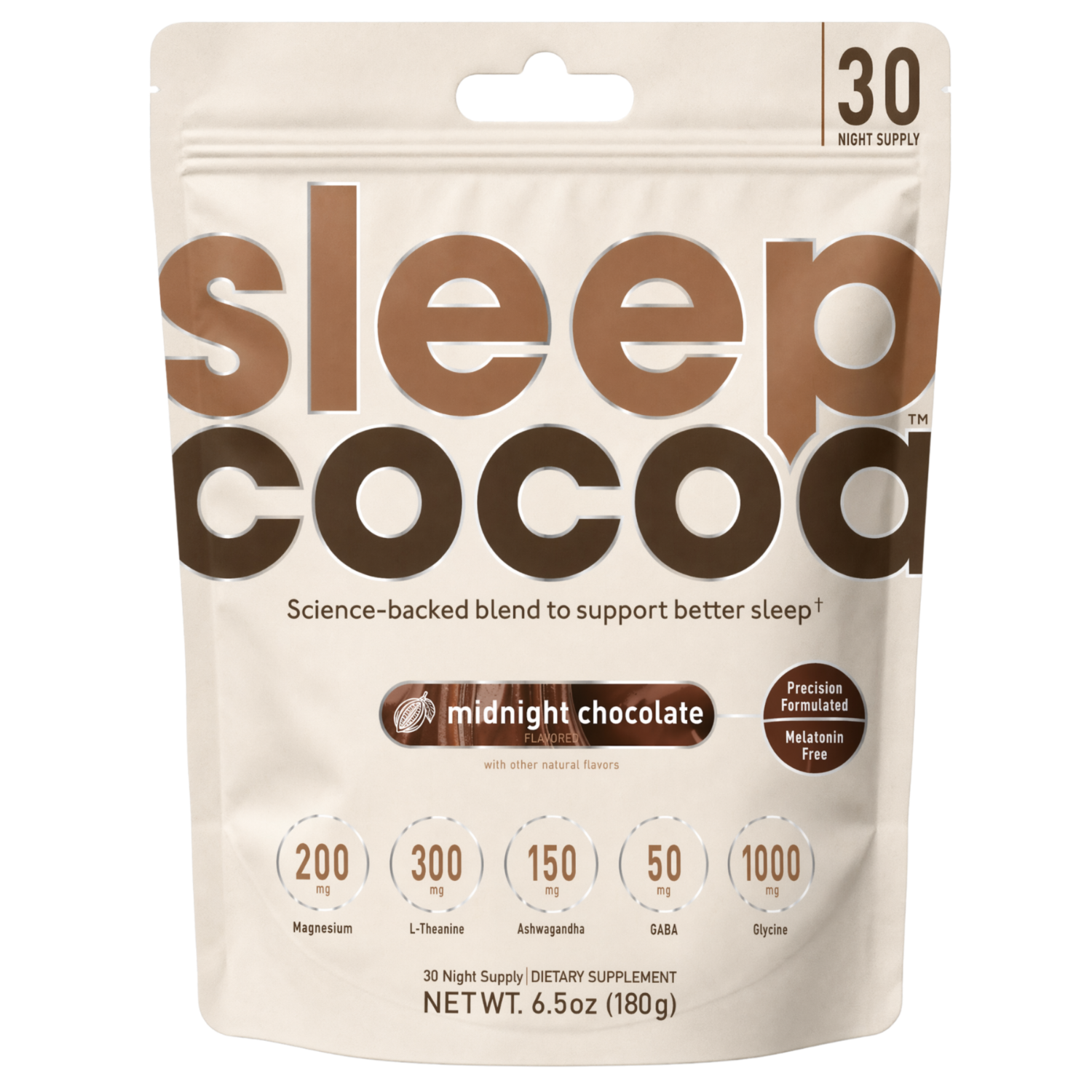
SleepCocoa makes a cocoa drink for your evening routine. Our team wrote this article, and we mention our product.
TL;DR: If you want a drink mix you can use as part of a nightly bedtime ritual, read the label before anything else: check whether it adds melatonin, whether it contains caffeine or stimulating ingredients such as green tea or coffee extracts, and which active ingredients it lists, such as magnesium glycinate or L-theanine. If you take medication, talk to your doctor or pharmacist before adding any supplement.
I want a drink mix for my evening routine without added melatonin, what should I look for?
Start by deciding what you actually want from the drink: a wind-down cue, something warm and comforting, or a specific ingredient you have read about. Then filter your options with three practical label checks: whether it adds melatonin, whether it includes caffeine or other stimulating ingredients, and whether it lists ingredients that make sense to you for the evening.
If you are deciding between a bedtime drink and a capsule, one real-world difference is consistency. A warm drink is a built-in cue to slow down, and the American Academy of Sleep Medicine lists a consistent schedule and a relaxing bedtime routine among its healthy sleep habits.
What should I think about if I want a drink for a nightly ritual and I care about how I feel in the morning?
If morning fog is your worry, bring the label of anything you are considering to your doctor or pharmacist. Melatonin is a hormone your brain makes in response to darkness, and it helps with the timing of your circadian rhythms and with sleep, according to NCCIH. Whether a product that contains it fits you is a question for your doctor or pharmacist.
How you feel in the morning also depends on your habits. The CDC suggests keeping the same bed and wake time every day and avoiding large meals and alcohol before bedtime.
If you want more context on what to consider for a drink you have every night, this guide may help: a nightly evening drink routine.
I want a hot cocoa bedtime ritual, what should I look for?
Know what kind of cocoa drink you are buying. Regular hot chocolate is comfort food made for flavor, and cocoa naturally contains small amounts of caffeine and theobromine; some versions also add sugar or other ingredients you may not want late in the evening. Cocoa drinks sold for bedtime often add supplement ingredients, so read the supplement facts panel.
If you want to understand the cocoa part better first, read Bedtime cocoa vs hot cocoa.
If you are comparing regular cocoa with bedtime cocoa types, this breakdown keeps it simple: how regular hot cocoa compares with other bedtime cocoa types.
Between two sleep drink mixes, how can I tell which has more caffeine or stimulating ingredients?
This is the right question, because caffeine late in the day can work against sleep, and the CDC suggests avoiding caffeine in the afternoon or evening. Even when the front label looks calm, the details are in the ingredient panel.
Here is the quickest way to compare them yourself in under a minute: look for an explicit caffeine line (some brands list milligrams, others only say the product contains caffeine), scan for green tea or coffee-derived ingredients, and check whether the product is positioned as a hydration or recovery drink. If anything is unclear, ask your doctor or pharmacist, or choose a product whose label is clear about what it contains.
How can I tell whether a drink mix actually has 0 caffeine?
Only trust a zero-caffeine claim when it is stated clearly on the label and the ingredient list does not include caffeine sources. Any cocoa-based drink naturally contains small amounts of caffeine and theobromine, even when no caffeine is added, so no added caffeine and zero caffeine are not the same thing.
If you want to keep this simple, look for a bedtime drink that does not mention energy, does not include green tea or coffee extracts, and is clearly meant for the evening.
Which amino acids, like L-theanine or GABA, show up in bedtime drink mixes, and do they all leave out melatonin?
This matters because bedtime marketing can describe very different formulas. Some products add melatonin, and others use amino acids such as L-theanine or GABA, minerals such as magnesium, or botanicals instead. The only way to know is to read the supplement facts panel for each product. If you want to go deeper on two common ingredients, Magnesium plus theanine for sleep is a helpful reference.
If you want to understand the ingredients that commonly show up in bedtime drinks, this ingredient guide is the most direct place to start: our guide to common sleep drink ingredients.
Is L-theanine itself a source of caffeine, and how do I spot green tea in a drink mix?
It is smart to separate the ingredient from the source. L-theanine is an amino acid. It is often associated with tea, but a supplement can include L-theanine without including green tea or caffeine. The wired feeling usually comes from added caffeine, green tea extract, or other energizing ingredients, not from L-theanine itself. If you want a quick breakdown of what L-theanine is (and what it is not), start with this L-theanine sleep guide.
If you are sensitive to caffeine, count any bedtime powder that lists tea extract or natural caffeine as a no, and remember that cocoa naturally contains small amounts of caffeine too.
How do I compare price per serving and flavors between two drink mixes?
Compare the exact products you would buy, not the brand names. Price per serving and flavor lists vary by product and change over time.
If your goal is the lowest price per serving, the only reliable method is to compute it from the same inputs for both brands: total price divided by servings on the exact product you will buy. Check the flavor list on each brand's own product page.
How do I check a drink mix for caffeine, stimulating ingredients, and the amount of each ingredient per serving?
If you care about how you feel in the morning or about how a product fits with your medications, look at both which ingredients are in it and how much of each is listed.
Read the supplement facts panel, which lists amounts per serving (a proprietary blend lists its total amount), and take a screenshot so you can reference it later if you change other parts of your routine or want to show it to your doctor or pharmacist.
Should I check with anyone before having ingredients like magnesium plus GABA at night?
Yes. Whether an ingredient fits you depends on your health history and what else you take, so talk to your doctor or pharmacist and bring the full ingredient list. If you are choosing between magnesium forms, Magnesium glycinate vs citrate for sleep can help you prepare questions.
A simple question to ask is whether anything on the label is a problem with your medications.
How do I choose an evening drink if I have questions about medications or how I will react?
If you are cautious, choose a product with a clear label and talk to your doctor or pharmacist before you start. When people add several new things at once, it is hard to know what caused what.
Make one change at a time, keep the rest of your nighttime routine the same for a week, and if you take medication, run the ingredient list by your doctor or pharmacist first. If you want to see what third-party testing should look like in this category, use how to choose a third-party tested sleep drink as a checklist.
What should I look for on the label if I want a bedtime drink, not an energy or hydration product?
Some drink mixes are designed for workouts, travel, or daytime hydration, and they sometimes include ingredients that are fine at noon but annoying at 10 p.m. The fastest label tell is positioning: if it talks about performance, focus, or energy, it is probably not a bedtime drink.
Look for clear bedtime positioning, and check the supplement facts panel to see whether melatonin is added if that matters to you. For more on evening drinks, see bedtime drinks when your thoughts are racing.
What should I do tonight if I want to try a bedtime drink ritual and keep it simple?
Keep the routine boring and repeatable. Make your drink at the same time each night, lower overhead lights, and give yourself 20-30 minutes to wind down instead of trying to fall asleep right after the last sip.
If you want to compare options across the category before you commit, this guide is a practical starting point: building a calm bedtime drink ritual.
People also ask about bedtime drink rituals
- Can I have a bedtime drink every night?
- What if I wake up in the middle of the night?
- How long before bed should I drink it?
- Can a bedtime drink routine fit if my issue is racing thoughts?
- What if I am sensitive to supplements?
Can I have a bedtime drink every night?
Consistency is the main reason people choose a drink over a capsule, because it can become part of a bedtime ritual you actually repeat. Whether a supplement drink fits your nightly routine is a question for your doctor or pharmacist, especially if you take medication. If you are adding anything new to your routine, change one variable at a time so you can tell what is making a difference.
What if I wake up in the middle of the night, should I drink another serving?
Middle-of-the-night waking is common, but a second serving is not automatically the right move because it can turn into a habit of eating or drinking at night. Follow the serving directions on the label, and focus on what helps you return to sleep without getting fully alert: the AASM suggests that if you cannot fall asleep after about 20 minutes, you get up and do a quiet, low-light activity without electronics. If waking happens often, bring it up with your doctor, especially if you snore, have reflux, or suspect blood sugar swings. If this is your pattern, you may also want to read bedtime cocoa and waking up in the night.
How long before bed should I have a bedtime cocoa?
Timing matters because the point is to arrive in bed calmer, not to rush through the routine. Think of the drink as a wind-down cue, follow the label's directions, and leave a short buffer between finishing the drink and trying to sleep; the AASM also suggests reducing fluids before bed. If you are troubleshooting, keep the timing consistent for several nights before you judge how it fits.
Can a bedtime drink routine fit if my thoughts race at bedtime?
Many people find a calming routine more useful than trying to force themselves to sleep. A warm drink can be one step in that routine. Pair it with one concrete step, like writing tomorrow's top three tasks on paper, so your brain has permission to stop rehearsing them.
What if I am sensitive to supplements or worried about how I will react?
Reactions can depend on the ingredient, the amount, and what else you take at the same time. Add one new thing at a time so you know what caused what. If you take medication or manage a health condition, bring the ingredient list to your doctor or pharmacist and ask specifically about interactions.
Choosing your bedtime drink ritual
If you want a drink mix that feels like a real bedtime ritual, choose the product you will actually use nightly, not the one with the loudest claims. Read the label, check caffeine and melatonin, and keep the routine around it simple.
When you are ready, you can read the deeper comparisons here: a guide to sleep drink powders.
*These statements have not been evaluated by the Food and Drug Administration. This product is not intended to diagnose, treat, cure, or prevent any disease. Research cited describes individual ingredients, not SleepCocoa as a finished product, which has not been clinically tested. Talk to your doctor or pharmacist before use if you are pregnant, nursing, under 18, have a medical condition, or take any medication. Do not drive or operate machinery until you know how SleepCocoa affects you.