Bedtime drinks and racing thoughts: what to look for on the label
A warm drink can anchor a wind-down routine when your mind races. What to check on the label, how common ingredients compare, and a 7-night plan.

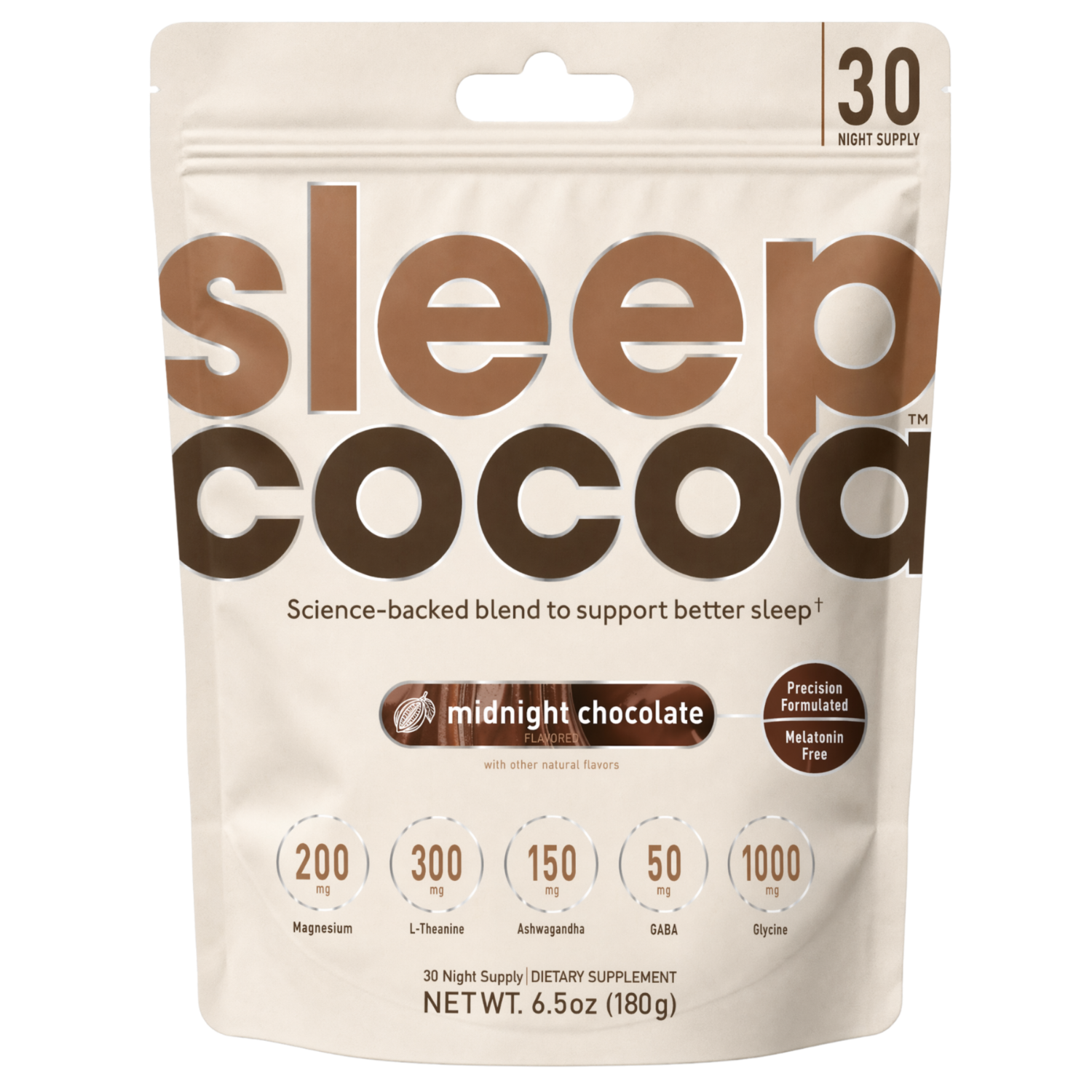
SleepCocoa makes a cocoa drink for your evening routine. Our team wrote this article, and we mention our product.
TL;DR: If your mind races at bedtime, a warm drink can be an easy anchor for a consistent wind-down routine. If you are comparing drinks, read the Supplement Facts panel: check whether melatonin is added, which ingredients are listed, and whether the product is third-party tested, and talk to your doctor or pharmacist if you take medication.
Why a warm drink can be a useful bedtime cue when your thoughts race
Racing thoughts at bedtime can feel like a mix of mental arousal (your brain stays on) and physical tension (your body does not downshift). A warm drink gives you something slow to do: making it pulls you away from the screen, and a mug is an easy thing to repeat every night. The American Academy of Sleep Medicine lists a relaxing bedtime routine among its healthy sleep habits.
That is the idea behind a drink ritual rather than a capsule: routines are easier to stick to than one-off fixes.
What to look for in a bedtime drink if your thoughts race
Most shoppers get stuck on one question: what kicks in fastest? Label details matter more, because they tell you exactly what is in the mug.
- Whether melatonin is added, which you can see on the Supplement Facts panel.
- Ingredients listed by name, so you can talk them through with your doctor or pharmacist if you take medication.
- Third-party tested if you care about consistency and label accuracy (see how to choose a third-party tested sleep drink).
- A ritual you will repeat, because you cannot judge any drink you only have now and then.
- Clear return terms, so you know the conditions before you buy.
If you want a deeper breakdown of ingredient roles, we also wrote a dedicated guide: common sleep drink ingredients.
What fast really means at bedtime
When someone asks for something that works within 30 minutes, they usually mean one of two things. They either want their thoughts to quiet down enough to stop problem-solving in bed, or they want a body-level sense of relaxation during the wind-down.
A practical way to judge any evening drink is to notice how you feel during the wind-down window and how you feel the next morning, and to keep notes rather than rely on one night.
L-theanine vs magnesium for speed of onset
A common version of this question: if you have a drink 30 minutes before bed, which of the two is noticed sooner?
We did not find research that compares how quickly L-theanine and magnesium are noticed, so be cautious about speed claims. L-theanine is an amino acid that shows up often on evening drink labels. Magnesium plays a role in regulating muscle and nerve function, according to the NIH Office of Dietary Supplements; that general role is not evidence that a drink will change how fast you settle. (Related: magnesium plus theanine for sleep.)
Magnesium glycinate vs magnesium L-threonate for speed
Shoppers often assume different magnesium forms are all about speed. We did not find a primary source comparing how quickly different forms are felt at bedtime. The label lists the form, and the NIH Office of Dietary Supplements notes that recommended magnesium amounts vary by age and sex.
If you are trying something new, change one thing at a time so you can tell what made a difference, and talk to your doctor or pharmacist before using more than one new supplement.
L-theanine vs GABA
GABA and L-theanine both appear on many evening drink labels. Check the amount of each on the Supplement Facts panel, and ask your doctor or pharmacist if you take medication.
A simple way to sort common evening ingredients
A useful way to compare bedtime drink ingredients is by type. This does not replace medical advice, but it helps you build a shortlist of questions.
| Ingredient type | What it is | What to check on the label |
|---|---|---|
| Amino acids (example: L-theanine) | An amino acid that shows up often in evening drink mixes | The amount per serving |
| Minerals (example: magnesium) | A mineral that plays a role in regulating muscle and nerve function (NIH ODS) | The form and the amount of magnesium itself |
| Herbs (examples: chamomile, valerian, passionflower) | Research on valerian is limited and inconsistent (NCCIH); there is little research on chamomile and sleep (NCCIH) | Whether amounts are listed individually or as part of a blend; ask your doctor or pharmacist about herbs |
| Plant extracts (example: ashwagandha) | A plant extract often included in products marketed for everyday stress | The amount and form; talk to your doctor or pharmacist if you take medication |
Why a cocoa ritual, not only a single-ingredient powder
Single-ingredient products are easier to compare on price. But racing thoughts are not only about what is in the mug. They are also timing, habit, screens, and the moment you finally stop moving.
A cocoa drink can be part of a nightly bedtime ritual: make a warm drink, step away from the scroll, and give yourself a clear cue that the day is over. The AASM suggests turning devices off 30 minutes before bed and limiting bright light in the evening (healthy sleep habits).
If you want to compare drink formats and what they are like, these guides pair well with this post: a calm bedtime drink ritual and hot cocoa with no added melatonin.
How to read labels if you want no added melatonin
Brand lists and prices change too often to be trustworthy in an evergreen guide, so this section sticks to reading the label yourself.
What you can do in 60 seconds in any store or online listing is this:
- Scan the Supplement Facts panel for melatonin first.
- Check whether L-theanine and magnesium are listed, and note the amount of each.
- Note any herbs included, and whether they are listed individually or as part of a blend.
- If you take medication, bring the full ingredient list to your doctor or pharmacist. Interactions depend on your situation, not on marketing copy.
Where to start tonight
If you want a simple starting point, try a short, consistent plan for 7 nights. Do not change five things at once, or you will not know what made a difference.
- Pick a time: make your drink 30-60 minutes before lights out.
- Make it a cue: same mug, same spot, no email in hand.
- Track two things: how long it takes to feel calmer, and how you feel on waking.
One or two nights is not enough to judge how you are sleeping. If trouble sleeping keeps going, the CDC suggests talking to a healthcare provider.
When to check with your doctor or pharmacist first
A common worry is whether a new drink will mix well with your medications. That is a reasonable concern, especially with products that have several ingredients.
If you are pregnant or nursing, have a medical condition, or take any medication, talk to your doctor or pharmacist, who can look over the full label. A drink with no added melatonin can still have ingredients you should check for your personal situation.
FAQ
What ingredients in a bedtime drink with no added melatonin are worth knowing about if my thoughts race at bedtime?
Common ones include L-theanine, an amino acid that shows up often on evening drink labels, and magnesium, which plays a role in regulating muscle and nerve function, according to the NIH Office of Dietary Supplements. Research on an ingredient describes that ingredient at a specific dose in a specific group of people, not any particular drink. Read the label for amounts, and talk to your doctor or pharmacist if you take medication.
Between L-theanine and magnesium, is one known to feel faster within 30-60 minutes?
We did not find research comparing how quickly the two are noticed. Speed matters most when your problem is the moment your head hits the pillow and your brain starts planning tomorrow, so pair any drink with a consistent wind-down routine and keep notes on how you feel. If you take medication, ask your doctor or pharmacist before trying either.
Does magnesium glycinate vs magnesium L-threonate make a noticeable speed difference at bedtime?
We did not find a primary source comparing the two for speed at bedtime. The form is listed on the label, and recommended magnesium amounts vary by age and sex, according to the NIH Office of Dietary Supplements. If you are experimenting, change one variable at a time, and ask your doctor or pharmacist which form fits you.
Between L-theanine and GABA, which one usually feels faster when your mind is busy at bedtime?
We did not find research comparing how quickly the two are felt. Both appear on many evening drink labels, so check the amount of each on the Supplement Facts panel. Pay attention to how you feel the next morning, not just at night, and talk to your doctor or pharmacist if you take medication.
What should I look for on the label if I want no added melatonin?
Start with the Supplement Facts panel, which lists melatonin if it is added. Then look for ingredients named in plain language and details you can verify, such as third-party testing. People respond differently to different ingredients and amounts, so keep notes on how you feel in the morning and bring the label to your doctor or pharmacist if you take medication.
How do chamomile, valerian, and passionflower compare with L-theanine and magnesium?
Research on valerian is limited, and the evidence on whether it helps sleep is inconsistent, according to NCCIH. There is little research on chamomile and sleep (NCCIH). We did not find research comparing these herbs with L-theanine or magnesium. Check the label for each ingredient, and ask your doctor or pharmacist about herbs if you take medication.
How do I try a new bedtime drink without wasting money?
Read the return terms before you buy so you know the conditions. Then keep the plan simple: same timing, same routine, and notes on how long it takes you to fall asleep and how you feel when you wake, so you judge it on more than a couple of nights.
Your next 7 nights: a simple wind-down plan
Pick one option and commit to a repeatable wind-down window. If you want to compare formats and ingredients before you choose, start with a calm bedtime drink ritual or browse the Bedtime Cocoa Mixes collection, then narrow based on whether your biggest issue is racing thoughts, nighttime waking, or both.
*These statements have not been evaluated by the Food and Drug Administration. This product is not intended to diagnose, treat, cure, or prevent any disease. Research cited describes individual ingredients, not SleepCocoa as a finished product, which has not been clinically tested. Talk to your doctor or pharmacist before use if you are pregnant, nursing, under 18, have a medical condition, or take any medication. Do not drive or operate machinery until you know how SleepCocoa affects you.