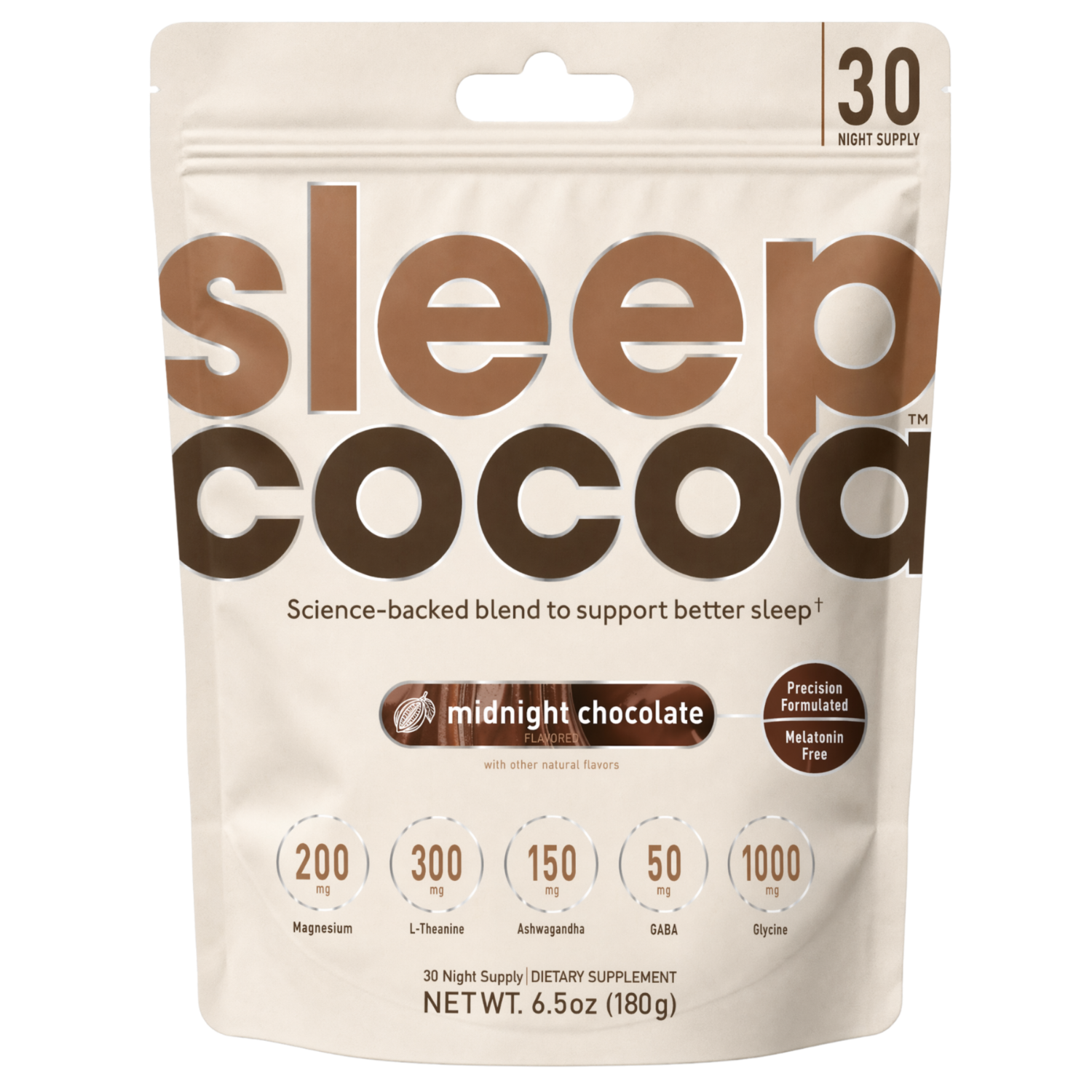
Regular hot cocoa vs bedtime cocoa with and without added melatonin
Regular hot cocoa or a bedtime cocoa? Compare what each type contains, where caffeine comes from, and what to check on the label before bed.
SleepCocoa makes a cocoa drink for your evening routine. Our team wrote this article, and we mention our product.
TL;DR: If you are choosing a bedtime cocoa, the biggest difference is what is in the mix. Regular hot cocoa is a dessert drink, while bedtime cocoas add ingredients such as melatonin, magnesium, amino acids, or botanicals. All cocoa naturally contains small amounts of caffeine and theobromine, and some mixes add more through coffee or tea, so read the label.
Quick comparison at a glance
| Option | What it is | How it is positioned | Caffeine and stimulant sources | What to watch for |
|---|---|---|---|---|
| Regular hot cocoa | Classic cocoa drink mix (often sugar-forward) | Comfort and a warm bedtime ritual | Cocoa naturally contains small amounts of caffeine and theobromine; add-ins vary | Added coffee, tea, or energy botanicals add caffeine or other stimulants |
| Melatonin bedtime cocoa | Bedtime cocoa with melatonin added | Often marketed for falling asleep | Natural caffeine and theobromine from the cocoa; check for other add-ins | Melatonin is a hormone; talk to your doctor or pharmacist before use, especially if you take medications |
| Bedtime cocoa with no added melatonin | Cocoa drink mix with added supplement ingredients such as magnesium, amino acids, or botanicals | Marketed for an evening wind-down | Cocoa's natural caffeine and theobromine; check the full formula, not just the cocoa | Check your full supplement and medication list with your doctor or pharmacist, especially for botanicals like ashwagandha |
| Other bedtime cocoa blends | Cocoa blends with mushrooms, herbs, or other functional add-ins | Varies by formula | Varies. Some products in this space add tea or coffee | Do not assume latte means no caffeine. Read the label for tea, coffee, guarana, green tea, or yerba mate |
What actually drives grogginess the next morning
If you wake up foggy, it is easy to blame the last thing you took before bed. Sometimes that is fair, but other things matter too, such as how long you slept (the CDC says adults need 7 or more hours) and how often you woke up.
Melatonin comes up often here. It is a hormone your brain makes in response to darkness, and it helps with the timing of your circadian rhythms and with sleep, according to NCCIH. If you have questions about how a melatonin product affects you, talk to your doctor or pharmacist.
With cocoa drinks, caffeine can come from a few places. Cocoa naturally contains small amounts of caffeine and theobromine, and some blends add ingredients such as coffee or tea that act more like a daytime product than a bedtime one. The CDC suggests avoiding caffeine in the afternoon or evening.
Option 1: Regular hot cocoa at bedtime
Regular hot cocoa wins on comfort. It is warm, familiar, and it fits easily into a bedtime ritual because it feels like dessert, not a pill.
The tradeoff is simple: regular hot cocoa is built to taste good, often with plenty of sugar, and that does not always line up with how you want to feel at 7 a.m.
Where regular hot cocoa helps
- Ritual and wind-down: A warm mug can cue your brain that the day is done, especially if you keep the same timing nightly.
- Simple ingredient expectations: You know what it is trying to be, dessert in a cup.
Where regular hot cocoa can backfire at night
- Stimulant sensitivity: Even without added coffee or tea, cocoa naturally contains small amounts of caffeine and theobromine, which some people notice, especially if you already wake easily at night.
- Label surprises: Some mixes and cafe-style versions include coffee, tea, or other add-ins. If the front says latte, do not assume there is no caffeine.
Option 2: Melatonin bedtime cocoa
Melatonin bedtime cocoa is usually marketed for people who want to fall asleep faster. The logic is straightforward: add melatonin to a comforting cocoa drink, and you have a bedtime product that feels easy to use.
The thing to remember is that melatonin is a hormone, not a flavor add-in. Whether it fits your routine is a question for your doctor or pharmacist.
When melatonin bedtime cocoa can be a fit
- If you have already discussed melatonin with your doctor or pharmacist and want it in your routine.
- If you want a cocoa-based ritual and prefer a product that includes melatonin.
What to watch for
- Next-day feel: If you feel heavy, flat, or slow the next morning, that is a real signal worth raising with your doctor or pharmacist.
- Medication interactions: If you take medications or manage a condition, talk to your doctor or pharmacist before using melatonin or herbal blends.
Option 3: Bedtime cocoa with no added melatonin, what changes
Bedtime cocoa with no added melatonin is a different category. These mixes do not add melatonin, and many include other supplement ingredients, such as magnesium, amino acids, or botanicals, so the supplement facts panel tells you more than the front of the pouch.
No added melatonin is not always the same as none at all: some botanicals, such as tart cherry, naturally contain trace melatonin.
What to look for in these mixes
Common ingredients in this category include magnesium glycinate, ashwagandha, glycine, and L-theanine. Research on an ingredient describes that ingredient at a specific dose in a specific group of people, not any particular cocoa mix, so check the amounts on the label and talk to your doctor or pharmacist if you take medication.
Third-party testing and nightly use
If you plan to have a drink nightly, look for a clear statement that it is third-party tested and what that testing covers. Testing is a quality check on what is in the product; it does not mean the FDA has evaluated the product, and it is not a promise of any effect.
The unique angle most comparisons miss
Most cocoa comparisons act like the caffeine question is only about whether coffee is in the formula. In practice, the bigger issue is the whole blend, including the cocoa's own natural caffeine and theobromine and whether the product adds ingredients that feel like daytime focus support.
Stimulant sources: what to check on any label
If you are sensitive to caffeine, read the label like you are screening for a late-night espresso. You are not being dramatic, you are being efficient.
- Look for obvious caffeine sources: coffee, espresso, green tea, black tea, matcha, yerba mate, guarana.
- Be careful with latte branding: It sometimes means coffee-style flavor, and sometimes it means actual coffee content.
- Scan for daytime-style add-ins: If a product reads like a focus supplement, it may not fit at 10 p.m.
Even if a product has no added caffeine, you can still react to other ingredients. Keep a consistent routine, note how you feel in the morning, and talk to your doctor or pharmacist if something feels off.
Comparing other bedtime cocoa blends
Bedtime cocoa blends vary a lot. Since ingredient and caffeine details vary by product and flavor, the most useful comparison is about fit: whether the product is a bedtime ritual you will repeat, and whether its label includes daytime-style stimulant sources.
Comparing two blends for stimulant sources
If you are picking between two blends because you are caffeine-sensitive, verify the exact product and flavor label, then look for coffee, tea, guarana, or green tea extracts.
Mushroom cacao blends vs herb-forward bedtime lattes
Some shoppers compare mushroom cacao blends with herb-forward bedtime lattes. What to check is less about the brand name and more about whether the formula includes tea or coffee, plus how you personally respond to herbs.
If you have ever felt wired after an herbal tea, do not assume a cocoa latte will feel different. Keep the rest of your routine stable, note nighttime waking and how you feel in the morning, and talk to your doctor or pharmacist if you take medication.
A bedtime cocoa routine you can keep
A bedtime ritual is easiest to keep when it is boring in the right way. Same time, same steps, same expectations.
- Make your cocoa the last flavored drink of the night, then switch to water if needed.
- Pair it with a short, repeatable wind-down habit. The American Academy of Sleep Medicine suggests limiting bright light in the evening and turning devices off 30 minutes before bed.
- When you test any sleep drink, change one variable at a time. If you add a new magnesium capsule, a new tea, and a new cocoa mix all at once, you will not know what helped or hurt.
If you want ideas for keeping it consistent, a bedtime cocoa ritual for nighttime waking can be a simple starting point.
If you have questions about interactions, bring the full label and your medication list to your doctor or pharmacist before you start.
FAQ
What should I look for in a bedtime hot cocoa mix if I often wake up groggy?
Grogginess can have many causes, including a short night or waking often, so start with your routine: the CDC suggests the same bed and wake time every day and avoiding caffeine in the afternoon or evening. When you read a cocoa mix label, check for added caffeine sources, whether it adds melatonin, and the amounts of any supplement ingredients. If grogginess keeps happening, talk to a healthcare provider.
Between two bedtime cocoa blends, how do I tell which has less caffeine or other stimulants?
If you are caffeine-sensitive, the label matters more than the brand name because different flavors can carry different ingredients. Check each product and flavor for coffee, espresso, green tea, black tea, matcha, yerba mate, or guarana, and skip anything that reads like daytime focus support. Remember that cocoa itself naturally contains small amounts of caffeine and theobromine.
Between mushroom cacao blends and herb-forward bedtime lattes, how do I think about stimulant sources and next-morning wired feelings?
With mushroom cacao blends and herb-forward lattes, stimulant sources usually come from added tea or coffee and from how you personally respond to specific botanicals, along with the cocoa's own natural caffeine and theobromine. Choose a straightforward formula, try one new product at a time, and talk to your doctor or pharmacist if you take medication.
How do I know whether a melatonin bedtime cocoa suits me?
People respond differently, and an article cannot tell you how a melatonin product will affect you. Melatonin is a hormone your brain makes in response to darkness, and it helps with the timing of your circadian rhythms and with sleep (NCCIH). If you have questions about melatonin, talk to your doctor or pharmacist. If you are trying any bedtime drink, change one thing at a time and note wake-ups and how you feel in the morning for several nights, not just one.
Can I have a bedtime cocoa with added supplement ingredients if I take medications?
Talk to your doctor or pharmacist first. Sleep drink mixes often include botanicals and amino acids, and whether one fits you depends on your specific medications and health history. Bring your full medication list and the product label so they can look over every ingredient before you start.
Why does a third-party tested bedtime cocoa matter if I am using it nightly?
Nightly use raises the bar because you want consistency, not surprises. Third-party testing is a quality check on what is in the product; it does not tell you how you will feel. If you want to see what third-party tested means in practice, use this guide to choosing a third-party tested bedtime cocoa as a quick checklist.
How to decide based on your morning and your label
If your priority is comfort and you rarely wake groggy, regular hot cocoa can be enough. If you want a product with melatonin, talk to your doctor or pharmacist about whether melatonin bedtime cocoa fits your routine.
If you want a bedtime cocoa with no added melatonin, read the supplement facts panel for the ingredients and amounts. Use the simplest decision filter: avoid obvious stimulants on the label, bring melatonin questions to your doctor or pharmacist, and give any change enough nights to judge it fairly. If you want a deeper ingredient-level breakdown, this guide to common sleep drink ingredients can help.
References
- CDC, About Sleep
- NCCIH, Melatonin: What You Need To Know
- American Academy of Sleep Medicine, Healthy Sleep Habits
*These statements have not been evaluated by the Food and Drug Administration. This product is not intended to diagnose, treat, cure, or prevent any disease. Research cited describes individual ingredients, not SleepCocoa as a finished product, which has not been clinically tested. Talk to your doctor or pharmacist before use if you are pregnant, nursing, under 18, have a medical condition, or take any medication. Do not drive or operate machinery until you know how SleepCocoa affects you.