What to know about magnesium if you keep waking up at night
Curious about magnesium for night waking? How common forms differ, what to check on the label, and why a steady bedtime routine matters.
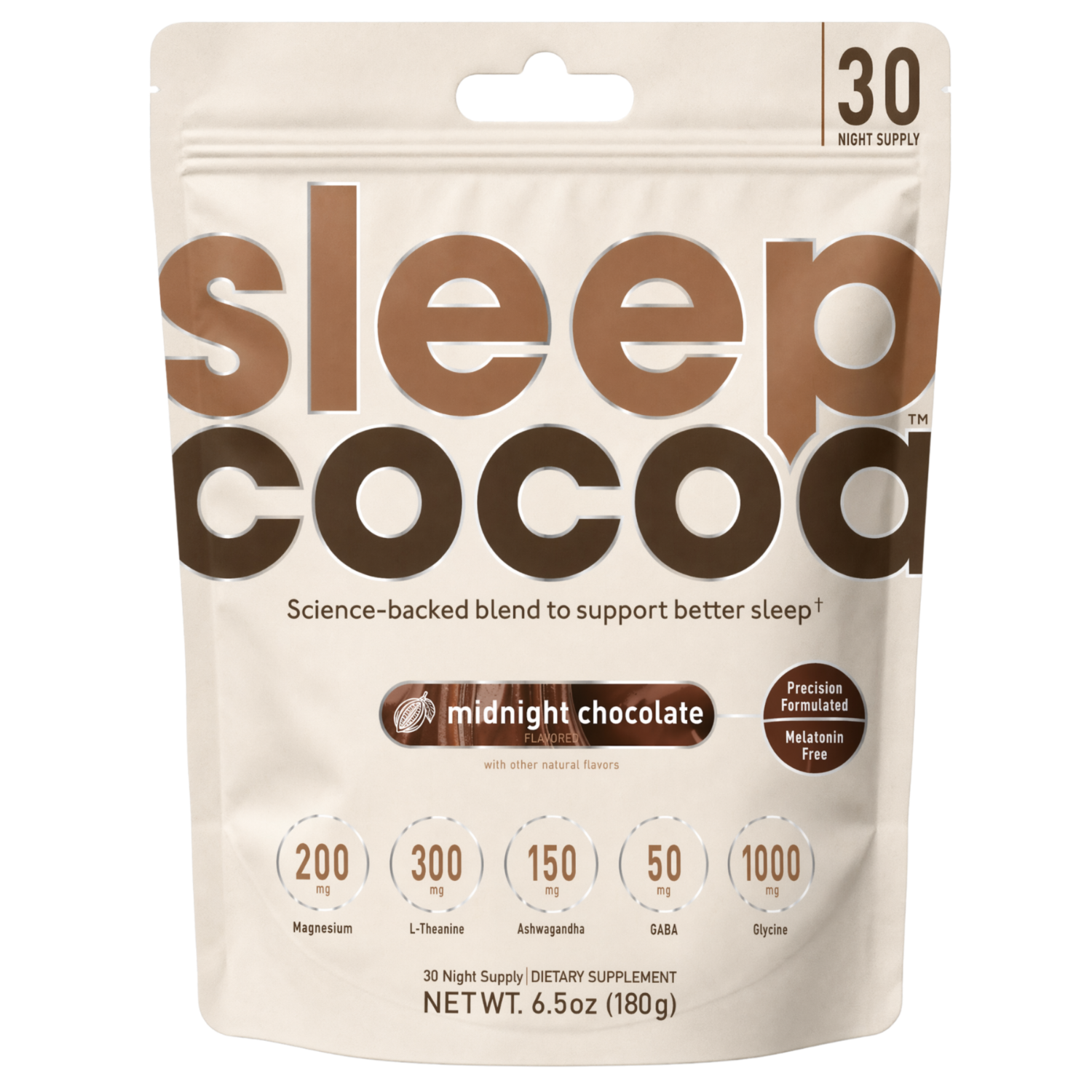
SleepCocoa makes a cocoa drink for your evening routine. Our team wrote this article, and we mention our product.
TL;DR: If you keep waking up at night and are thinking about magnesium, start by learning how the common forms differ and which one your stomach tolerates, then talk to your doctor or pharmacist before adding it, especially if you take medication or have a health condition. Whatever you decide, a steady bedtime routine is part of the picture: the American Academy of Sleep Medicine lists a relaxing bedtime routine among its healthy sleep habits.
Why you are waking up at night and where magnesium fits
Night waking is common, but it is not always the same problem. Some people wake because they are tense and alert, others wake from light sleep, and some wake due to bathroom trips, reflux, temperature, or stress spikes.
Magnesium is important for many processes in the body, including regulating muscle and nerve function, according to the NIH Office of Dietary Supplements. The practical reason people look at it for night waking is simple: they want to settle down before bed. That general role is not evidence that magnesium will change your night waking.
The routine around bedtime matters too. For some people, a warm drink and the same few steps each night are part of how the mind slows down, and the CDC lists keeping the same bed and wake time every day among the habits that can improve sleep.
What to look for in a magnesium supplement for night waking
If your main problem is waking at 2 a.m. and feeling switched on, look for a magnesium you can take nightly without digestive drama. If you cannot stick with it, you cannot learn whether it fits you.
These are the filters that matter most for night waking.
- Stomach comfort: Some forms are more likely to upset the stomach than others. For nightly use, a practical choice is often the one you can tolerate every night.
- Sleep goal fit: Is your main issue falling asleep, waking during the night, or feeling keyed up when you wake? Knowing your pattern makes it easier to compare labels and to talk it through with your doctor or pharmacist.
- Label clarity: You should be able to tell what form of magnesium you are getting. A label that lists magnesium without a form is harder to evaluate.
- Testing: Third-party testing is one quality signal you can check on a label or product page.
- Time to judge it: Sleep varies from night to night, so give any single change enough nights to see a pattern.
Magnesium types for sleep, and what to know about each for night waking
People search for which magnesium to get for waking up at night because the aisle is confusing. Forms differ, and people report different experiences with digestion.
Magnesium glycinate
This is often the first form people look at for evening use. If you wake up wired and your stomach is sensitive, glycinate is a common form to discuss with your doctor or pharmacist.
If you want a deeper breakdown, we have a guide comparing forms here: Magnesium glycinate vs citrate for sleep.
Magnesium citrate
Citrate is widely used, and some people associate it with digestive effects. If your night waking already includes bathroom trips, this is a reason to be careful and talk with your doctor or pharmacist before you choose citrate.
Magnesium threonate, malate, oxide, and blends
You will see other forms and blends marketed for different goals. The practical issue is that it can be hard to compare products, so people end up changing products too fast to learn anything.
If you want a simple decision rule, look for a label that states the form clearly, make one change at a time, and keep the rest of your routine steady for a couple weeks.
Magnesium alone vs magnesium with other ingredients
Magnesium by itself is a simpler test, because you know exactly what you changed. Multi-ingredient drinks and powders combine magnesium with other ingredients, which makes it harder to tell what is doing what, and research on single ingredients does not describe how a combination will affect you.
If you are deciding between magnesium alone and combinations, these comparisons help you think it through:
- Magnesium and melatonin compared
- Magnesium alone vs magnesium plus L-theanine
- Magnesium glycinate vs a multi-ingredient bedtime drink
A practical way to choose what to get if you keep waking up at night
This is the part most blog posts skip. Magnesium listicles are easy to write, but they do not tell you what to do on night one.
Use this short method. It keeps things simple and makes it easier to tell what is making a difference.
Step 1: Decide what you are trying to fix
- If you wake up tense and alert: Magnesium glycinate is a common form to ask your doctor or pharmacist about, and a warm drink can make a relaxing bedtime routine easier to keep.
- If you wake up to use the bathroom: Be cautious with forms people associate with digestive effects, and focus on routine, fluid timing, and bedroom temperature. The AASM suggests reducing fluids before bed and keeping the bedroom quiet and cool.
- If you wake up and your mind starts solving problems: A wind-down routine may matter more than any single ingredient. Some people like a bedtime ritual that signals the day is done, such as writing tomorrow's tasks on paper or making a warm drink.
Step 2: Pick a format you will actually use nightly
If you hate swallowing pills, you will skip them when you are tired. A warm drink is often easier to stick with because it already matches what people do at night.
A warm mug fits that moment: you make it as part of a bedtime ritual, then get into bed with less friction.
Step 3: Make the one-change rule non-negotiable
If you start magnesium, change your caffeine timing, start a new workout plan, and cut screens all at once, you will not know what made a difference. Make one change, keep the rest steady, and track two things: how long it takes to fall back asleep after a wake-up, and how you feel in the morning.
Quick comparison table for night waking
| Option | Who it may fit | Watch-outs | Why someone chooses it |
|---|---|---|---|
| Magnesium glycinate | People looking at magnesium as part of an evening routine | Ask your doctor or pharmacist if you take medication or have kidney issues | A common first form people ask about |
| Magnesium citrate | People who already tolerate it well | May be a poor match if you wake to use the bathroom or have a sensitive stomach | Common and easy to find, but not always the easiest at night |
Where to start if you feel stuck
If you want the simplest test, and your doctor or pharmacist agrees, use a clearly labeled magnesium form at the same time each night. Keep your wind-down consistent, lights low, and the bedroom cool.
If you already tried magnesium and your night waking did not change, it may be that the form did not agree with you, the timing was inconsistent, or your wake-ups have other causes. The CDC suggests talking to a healthcare provider about ongoing sleep problems.
Questions about medications and how you might react
The most common worry is: What if I react badly? The next one is: What if this interacts with my medications? Both are fair questions.
Be careful about adding several new supplements at the same time. If you take medication, are pregnant or nursing, or have kidney issues, talk with your doctor or pharmacist before adding magnesium or a multi-ingredient sleep supplement.
If you want to see what third-party tested means in practice, read how to choose a third-party tested sleep drink. Third-party testing is a quality check; it does not replace medical advice or a conversation about your medication plan.
How to tell if your magnesium choice is helping night waking
Do not judge it by a single night. Sleep varies from night to night, so look for patterns: how long it takes to fall back asleep, how the wake-ups feel, and how you feel in the morning.
Keep a simple note for 10-14 nights. Write down bedtime, number of wake-ups you remember, how long it took to fall back asleep, and how you feel in the morning.
If you want more detail on timing and general guidance, see our magnesium timing guide: How much magnesium should you take at night for sleep?
FAQ
What magnesium should I get if I keep waking up at night?
This matters because magnesium is not one product, and the form can change how well you tolerate it and how consistent you can be. Magnesium glycinate is a common form people ask about for evening use, and some people also like a warm bedtime ritual as part of their routine. If you take medication or have a medical condition, check with your doctor or pharmacist before you start.
Is magnesium or melatonin better for waking up in the middle of the night?
This is a question for your doctor or pharmacist, because the answer depends on your pattern and anything else you take. Melatonin is a hormone your brain makes in response to darkness, and it helps with the timing of your circadian rhythms and with sleep, according to NCCIH. Magnesium is a mineral involved in regulating muscle and nerve function, according to the NIH Office of Dietary Supplements. For a broader look at evening drink routines, see building a calm bedtime drink ritual. If you do make a change, change one thing at a time for 10-14 nights so you can see your own pattern.
Should I take magnesium alone or with other ingredients for staying asleep?
This matters because night waking is often driven by more than one factor. Magnesium alone is a simpler test because you know what changed; multi-ingredient formulas make it harder to tell what is doing what, and research on individual ingredients does not describe how a combination will affect you. If you want to see which ingredients commonly show up in bedtime drinks, read our guide to common sleep drink ingredients. If you already tried magnesium alone with no change, talk with your doctor or pharmacist about next steps.
How do I know if my magnesium is making night waking worse?
This matters because people sometimes misread a digestive reaction as bad sleep. If a magnesium form upsets your stomach or increases bathroom trips, it can lead to more awakenings, and that is worth raising with your doctor or pharmacist. Bring the full ingredient list so they can see everything you take.
Can I take magnesium if I am on medication?
This matters because magnesium can matter for some medications and health conditions, and you do not want to guess. Talk with your doctor or pharmacist before adding magnesium or any sleep supplement if you take medication, especially if you have kidney issues or a complex medication schedule. Bring the label, list your medications, and ask about spacing and timing.
How long should I try magnesium before deciding whether it fits?
This matters because changing too quickly makes it hard to know what made a difference. Give one plan a fair test with consistent timing and a stable routine, then look at how fast you fall back asleep and how you feel in the morning. Talk to your doctor or pharmacist before changing anything you take.
What is a good bedtime routine if I wake up at 2 a.m. and cannot fall back asleep?
This matters because what you do at the first wake-up can train your brain to stay alert. A calm, repeatable routine before bed is one of the AASM healthy sleep habits. For more ideas, see bedtime cocoa for racing thoughts at night. If you wake up, keep lights low, avoid checking the time, and use a simple cue like slow breathing or a short body scan. The AASM suggests that if you cannot fall asleep after about 20 minutes, you get up and do a quiet, low-light activity without electronics.
A simple plan for tonight
If you are considering magnesium, talk to your doctor or pharmacist first, choose one approach, keep a steady bedtime routine, and track your wake-ups and how you feel in the morning for 10-14 nights.
If medications or health conditions are part of your story, involve your doctor or pharmacist early. It is the fastest way to choose a product with less worry.
*These statements have not been evaluated by the Food and Drug Administration. This product is not intended to diagnose, treat, cure, or prevent any disease. Research cited describes individual ingredients, not SleepCocoa as a finished product, which has not been clinically tested. Talk to your doctor or pharmacist before use if you are pregnant, nursing, under 18, have a medical condition, or take any medication. Do not drive or operate machinery until you know how SleepCocoa affects you.