Magnesium alone vs magnesium with melatonin: how the two differ
Magnesium is a mineral; melatonin is a hormone tied to sleep timing. A plain comparison, evening habits, and questions for your doctor or pharmacist.
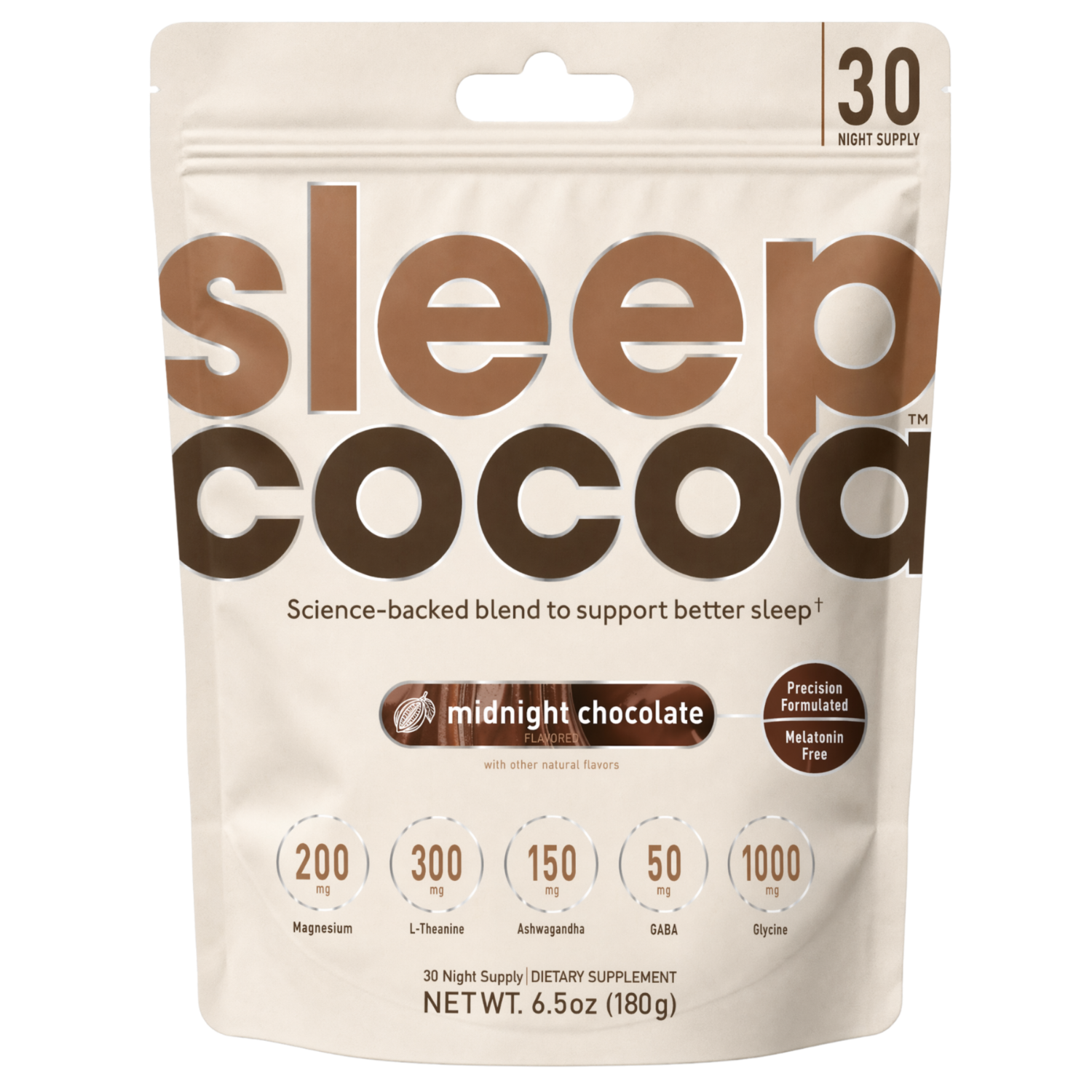
SleepCocoa makes a cocoa drink for your evening routine. Our team wrote this article, and we mention our product.
TL;DR: Magnesium and melatonin do different jobs. Magnesium is a mineral involved in muscle and nerve function, while melatonin is a hormone tied to the timing of your sleep-wake cycle. Which, if either, fits you is a question for your doctor or pharmacist, and a consistent evening routine matters either way.
Quick comparison
| Option | What it is | What it is involved in | Things to consider |
|---|---|---|---|
| Magnesium alone | A mineral; supplements come in forms such as glycinate and citrate | Regulating muscle and nerve function, among many processes in the body (NIH ODS) | Form and amount vary a lot by product; read the label and talk to your doctor or pharmacist if you take medication |
| Magnesium with melatonin | Magnesium plus melatonin, a hormone your brain makes in response to darkness | The timing of your circadian rhythms and sleep (NCCIH) | Melatonin is an active ingredient; talk to your doctor or pharmacist before use, especially if you take medication |
| A warm drink as part of a bedtime routine | A repeatable wind-down cue rather than a single ingredient | A relaxing bedtime routine is one of the AASM healthy sleep habits | It is a routine-based approach, so it takes consistency; check the label for ingredients and caffeine |
What better means when you compare them
Most people asking whether magnesium alone or magnesium with melatonin is better are really asking a more specific question: what fits my sleep pattern? The answer depends on whether your evenings feel tense, your schedule keeps shifting, or you wake up often, and it is worth talking through with your doctor or pharmacist.
Here is a simple way to frame it. Magnesium is a mineral your body uses for many processes, including regulating muscle and nerve function (NIH Office of Dietary Supplements). Melatonin is more like a timing signal: your brain makes it in response to darkness, and it helps with the timing of your circadian rhythms and with sleep (NCCIH).
Magnesium alone for sleep
Magnesium-only products are popular in part because they feel body-first. If your evenings include tension or that wired-but-tired feeling, magnesium-only products are often what you will see mentioned first.
When people tend to look at magnesium alone
- Your goal is relaxation: you want to feel calmer at bedtime, not knocked out.
- You wake up at night: your main concern is waking during the night more than falling asleep.
Real tradeoffs
Magnesium is not a timing signal the way melatonin is, so it can be harder to judge any single change. It also comes in different forms, like glycinate and citrate, and the form and amount vary by product.
If you are comparing magnesium types, this guide can help: magnesium glycinate vs citrate.
Magnesium with melatonin for sleep
When a product pairs magnesium with melatonin, it adds an ingredient tied to sleep timing. That is why many sleep gummies and sleep capsules pair the two. Light at night can block the body's own melatonin production (NCCIH), and the AASM healthy sleep habits include limiting bright light in the evening.
When people tend to look at magnesium plus melatonin
- Your schedule is off: you fall asleep later than you want to.
- Travel or late nights: you are adjusting after a time change or a run of late nights.
Real tradeoffs
People respond differently to melatonin, and it is an active ingredient like any other. If you take medication or have a health condition, talk to your doctor or pharmacist before adding it.
Where a warm bedtime drink fits
A third path some people consider is not a single ingredient at all but a routine: a warm drink at about the same time each evening. The American Academy of Sleep Medicine lists a relaxing bedtime routine among its healthy sleep habits. If you want to read more about this angle, see hot cocoa as an evening ritual.
If you are shopping by format, you can also browse bedtime cocoa mixes.
Why a hot cocoa bedtime ritual appeals when capsules do not
This is the part most comparison posts skip. For many people, the appeal is not one ingredient, it is the repeatable cue.
Making a warm cup 30 to 60 minutes before bed forces a pause. It can replace late-night scrolling with a small routine, and the CDC suggests turning electronic devices off at least 30 minutes before bed. If you are curious how a bedtime cocoa differs from regular hot cocoa, see bedtime cocoa vs hot cocoa.
Medications and new supplements: what to check first
If you have questions about how a supplement might affect you, you are asking the right thing. People respond differently to supplements, so talk to your doctor or pharmacist before you add one, especially if you take medication.
A simple checklist before you add anything
- If you take any medication: ask your doctor or pharmacist about magnesium and melatonin for your specific medication list.
- If you have questions about melatonin: bring them to your doctor or pharmacist before deciding.
- If you have a sensitive stomach: magnesium comes in different forms, so bring the label to your doctor or pharmacist.
- If you are thinking about more than one product: ask your doctor or pharmacist before using more than one sleep product. Adding several at once also makes it hard to tell how each one affects you.
A practical stance is simple: keep the plan low in complexity, work on the habits first, and change one thing at a time.
How to think about it based on your sleep pattern
If you want an answer that is not generic, use these patterns to frame the conversation with your doctor or pharmacist and to decide which habits to work on first.
If you struggle to fall asleep because your mind will not slow down
A relaxation-first routine is a reasonable place to start. The American Academy of Sleep Medicine suggests a relaxing bedtime routine, going to bed only when sleepy, and, if you are not asleep after 20 minutes, getting up for a quiet, low-light activity without electronics. If you are considering magnesium, ask your doctor or pharmacist whether it fits you.
If you want to read about magnesium pairings, this is a helpful next read: magnesium plus theanine vs magnesium alone.
If you fall asleep late even when you feel tired
This is a timing question. Melatonin is tied to sleep timing: your brain makes it in response to darkness, and light at night can block its production (NCCIH). Keeping the same wake time every day and limiting bright light in the evening are part of the AASM healthy sleep habits.
Whether melatonin fits you is a question for your doctor or pharmacist, especially if you take medication.
If you fall asleep fine but wake up at 2 a.m. or 3 a.m.
This is often a staying-asleep pattern rather than a falling-asleep one. Repeatedly waking during the night is one sign of poor sleep quality, according to the CDC, which suggests talking to a healthcare provider about ongoing sleep problems.
It is also a good place to tighten basics: avoid alcohol before bedtime, keep the bedroom quiet and cool, and avoid caffeine in the afternoon and evening (CDC).
Where product labels fit in this conversation
Magnesium products, melatonin products, and blends that include both often sit on the same shelf, and the label details matter more than the logo. Check the supplement facts panel for the form and amount of each ingredient and whether melatonin is added.
If you are comparing drink mixes specifically, this guide can help you sort options by format and routine fit: magnesium drink mixes compared.
FAQ
Is magnesium alone or magnesium with melatonin better for sleep?
They do different jobs, so the more useful question is what fits your sleep pattern. Magnesium is a mineral involved in regulating muscle and nerve function (NIH ODS), while melatonin is a hormone that helps with the timing of your circadian rhythms and with sleep (NCCIH). Talk to your doctor or pharmacist about which, if either, fits you, especially if you take medication or have a health condition.
Will melatonin make me groggy the next day?
People respond differently to melatonin, and an article cannot predict how you will feel. If you have questions about melatonin and how you feel the next day, talk to your doctor or pharmacist. If you feel off after any new product, write it down and bring the label to that conversation.
Can I take magnesium and melatonin together every night?
That is a question for your doctor or pharmacist, especially if you take medication or have a health condition. Bring the labels of anything you use so they can see every ingredient and amount.
What if magnesium alone does nothing for me?
People respond differently, and it is hard to judge any single change if the rest of your routine keeps shifting. Keep your bedtime, wake time, and caffeine cutoff steady, and talk to your doctor or pharmacist about form, amount, and timing. If trouble sleeping keeps going, the CDC suggests talking to a healthcare provider.
Can I take melatonin with my medications?
Talk to your doctor or pharmacist. Bring the supplement facts label and your full medication list so they can check your specific situation.
What should I look for on a sleep supplement label besides melatonin?
Look at the form and amount of each ingredient, the serving size, and whether the product lists quality steps you can check, such as third-party testing. Also think about format: a product that fits your evening routine is easier to use consistently, and a consistent routine is one of the AASM healthy sleep habits. For a practical guide to what third-party testing means for sleep drinks, read third-party tested sleep drinks.
How long should I try a new evening routine before changing it?
Give any routine change enough nights to see a pattern rather than judging it on one rough night. Keep a simple sleep log for a week and adjust one thing at a time, such as timing or caffeine cutoff. If trouble sleeping keeps going, talk to a healthcare provider.
How to decide this week
If your main question is about evening tension or waking at night, start with the habits: a consistent schedule, a relaxing bedtime routine, and a quiet, cool bedroom. If your main question is about sleep timing, keep your wake time consistent and limit bright light in the evening. Either way, talk to your doctor or pharmacist before adding magnesium, melatonin, or both.
Pick one change, run it consistently, and keep the rest of your routine stable so the signal is clear.
*These statements have not been evaluated by the Food and Drug Administration. This product is not intended to diagnose, treat, cure, or prevent any disease. Research cited describes individual ingredients, not SleepCocoa as a finished product, which has not been clinically tested. Talk to your doctor or pharmacist before use if you are pregnant, nursing, under 18, have a medical condition, or take any medication. Do not drive or operate machinery until you know how SleepCocoa affects you.