Tryptophan and sleep: what it is and what to know first
What tryptophan is, why people look at it for sleep, how to track a routine change, and why your doctor or pharmacist comes first.
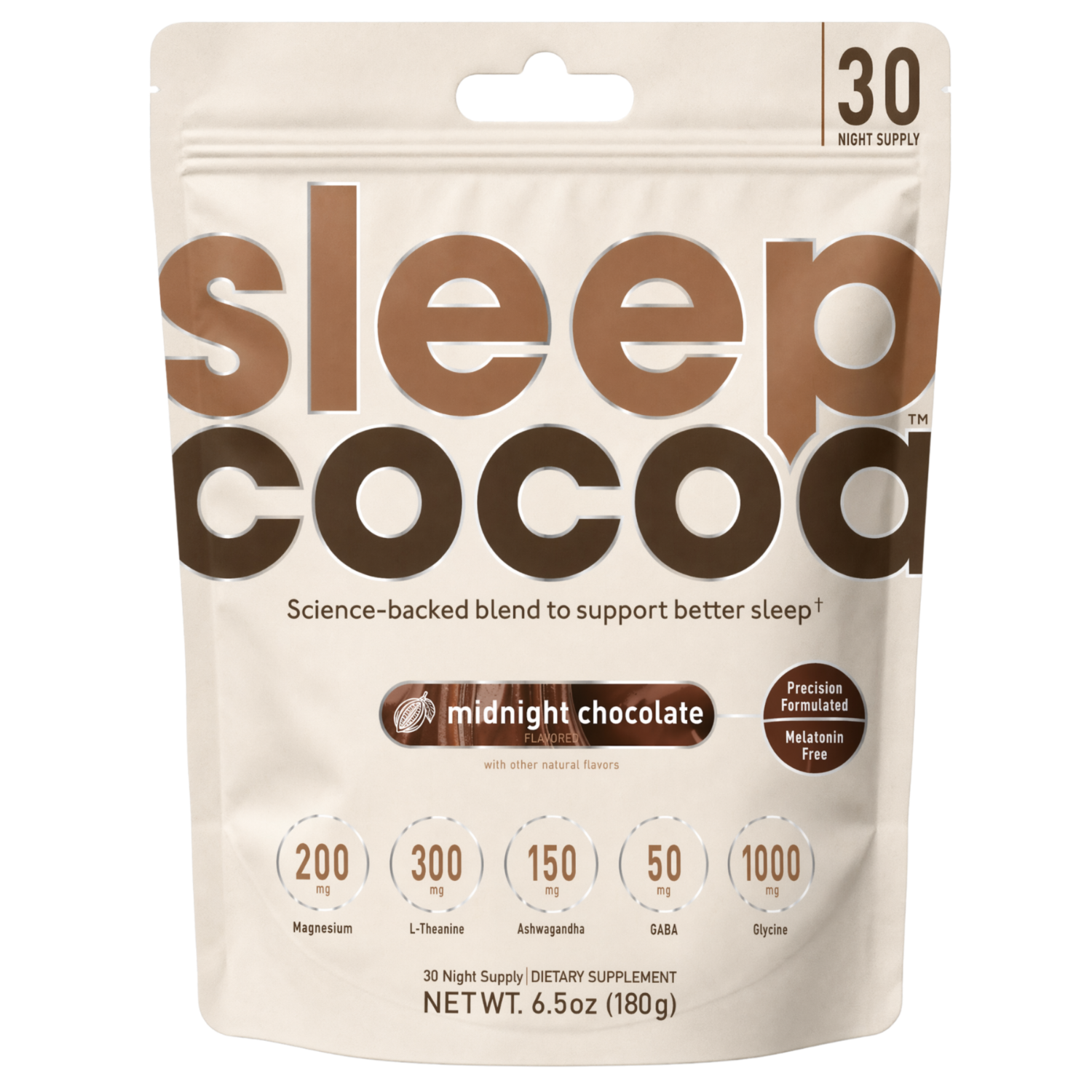
SleepCocoa makes a cocoa drink for your evening routine. Our team wrote this article, and we mention our product.
TL;DR: Tryptophan is an amino acid that comes up often in sleep conversations, but it is rarely a magic switch on its own, and the routine around it matters. If you take medication or have a health condition, think of tryptophan as a check-first ingredient and talk with your doctor or pharmacist before you add it.
What tryptophan is, in plain terms
Tryptophan is an amino acid, and your body uses it to make serotonin. That link is the basic reason tryptophan shows up in sleep conversations.
When people search for a tryptophan sleep supplement, they are often hoping for a calmer mind at bedtime, less time lying awake, and fewer middle-of-the-night wake-ups.
Does tryptophan help sleep?
The honest answer is that responses vary from person to person, and this article does not cite tryptophan sleep studies, so we will not promise an effect.
The practical point is that sleep is usually not blocked by one missing nutrient. It is shaped by a pattern: a stressed feeling at night, a brain that does not power down easily, or sleep that breaks up after the first few hours. Any single ingredient is at most one input into that pattern, not the whole thing.
Why people look at tryptophan
- You feel wired at bedtime. You want mental quiet more than a knocked-out feeling.
- Your sleep quality is the main concern. You fall asleep, but it does not feel restorative.
- You prefer amino acids to herbs. Some people are simply more comfortable with an amino acid on the label.
When routine matters more than any supplement
- Your problem is mainly schedule and light exposure. No supplement can outwork a bedtime that shifts by hours every night; the American Academy of Sleep Medicine recommends a consistent schedule and limiting bright light in the evening.
- You expect a sleep switch on night one. Habits like a consistent schedule and a relaxing bedtime routine are built by repeating the same steps nightly.
- Your sleep keeps breaking up for a physical reason. The CDC suggests talking to a healthcare provider about ongoing sleep problems, and that usually matters more than adding another capsule.
A contrarian take: stop chasing a single sleep ingredient
Most shoppers compare sleep supplements one active ingredient at a time and expect one predictable outcome. Sleep rarely works that way.
Sleep is shaped by habits as much as by anything in a mug or a capsule. The CDC lists the same bed and wake time every day, a quiet, relaxing, cool bedroom, and devices off at least 30 minutes before bed among the habits that can improve sleep. If you want to read about other ingredients that show up in evening formulas, we have guides on magnesium glycinate, ashwagandha, glycine, and L-theanine.
For a closer look at two other common evening ingredients, see our guide to magnesium plus theanine.
What to think about before trying tryptophan
People who look at tryptophan usually want to feel calmer at night and prefer a routine-based approach. Whether it fits you is a question for your doctor or pharmacist.
Either way, the routine around it matters. The American Academy of Sleep Medicine lists a relaxing bedtime routine and limiting bright light in the evening among its healthy sleep habits, and a plan to reduce stimulation in the last hour before sleep fits that advice.
Who a routine-first plan suits
- People who feel stress in the body at night, like tense muscles or a buzzing feeling.
- People who can commit to a consistent nightly routine for at least a few weeks.
People who should be extra cautious
This matters because your body uses tryptophan to make serotonin, and some medications act on serotonin. If you take any medication or you are managing a health condition, think of any new sleep supplement as something to clear with your doctor or pharmacist first.
This article is not medical advice. If you are worried about interactions, do not guess: bring the ingredient list to your doctor or pharmacist and ask about your situation.
Tryptophan alone vs a multi-ingredient evening drink
Many people ask whether tryptophan makes more sense as a single ingredient or as part of a multi-ingredient drink. Here is a simple way to compare the formats.
| Option | What it is | What to watch out for | Who it fits |
|---|---|---|---|
| Tryptophan-only supplement | A single ingredient, if you want a simple formula | Responses vary by person; check the amount on the label and ask your doctor or pharmacist if you take medication | People who like minimal formulas and want to add one variable at a time |
| Multi-ingredient evening drink mixes | A warm drink that may include several ingredients, such as tryptophan, magnesium glycinate, glycine, or L-theanine | Amounts vary by product; read the label for each ingredient, and you still need a repeatable routine | People who want a warm wind-down as part of a nightly ritual |
| Melatonin-based products | Melatonin is a hormone your brain makes in response to darkness that helps with the timing of circadian rhythms (NCCIH) | Talk to your doctor or pharmacist before use | People with questions about sleep timing, after talking to their doctor or pharmacist |
Whichever format you look at, check whether the product is third-party tested. It is one of the few quality signals you can verify, and it is about whether the product matches its label, not about how it will affect you.
Where to start if you are thinking about tryptophan
Talk to your doctor or pharmacist first if you take medication. Then keep it simple: change one thing at a time, and keep your routine steady.
Step 1: decide what you are tracking
- Time to fall asleep: measure by the time you turn off the lights to when you think you fell asleep.
- Night waking: track how often you wake up and how long you are awake.
- Morning feel: note how you feel in the first 30 minutes after waking.
Step 2: build the same wind-down every night
This is where most supplement trials fall apart. People take a capsule at random times, keep scrolling, then blame the ingredient.
A warm drink can act as a consistent start signal for your wind-down, and the American Academy of Sleep Medicine lists a relaxing bedtime routine among its healthy sleep habits.
If you are comparing cocoa-based routines, these guides compare the options: Hot chocolate and sleep and Bedtime cocoa vs regular hot cocoa.
Step 3: choose a format you can repeat
If you hate swallowing pills at night, a tryptophan capsule may be a poor fit for you. If you like a calming routine, a drink is often easier to stick with.
What to do if you have questions about interactions
This is a common hesitation with any new supplement, and it is a reasonable one.
Use this three-check system:
- Check 1: bring your medication list and the product label to your doctor or pharmacist and ask about interactions, including with tryptophan.
- Check 2: ask your doctor or pharmacist before using more than one new product, and avoid starting several in the same week. If something feels off, you will not know what caused it.
- Check 3: track how you feel in the morning. If you feel off, talk to your doctor or pharmacist and bring your notes.
FAQ
Does tryptophan actually help you fall asleep faster?
This question matters because falling asleep faster is a different problem than staying asleep. Responses to tryptophan vary from person to person, and this article does not cite tryptophan sleep studies. A consistent wind-down routine is one of the American Academy of Sleep Medicine healthy sleep habits, and if trouble falling asleep keeps going, the CDC suggests talking to a healthcare provider.
Is tryptophan easier to take as a capsule or a drink?
The format matters because the right format is the one you will take the same way each night. A capsule can be simpler if you want one variable, while a drink can be easier to repeat if you want a calming routine. In either format, read the label for the tryptophan amount.
Who should skip tryptophan and choose a different approach?
This matters because adding the wrong product can waste weeks and add worry around sleep. If you take any medication or have a health condition, check with your doctor or pharmacist before using tryptophan; your body uses it to make serotonin, and some medications act on serotonin. If your sleep keeps breaking up for a physical reason, talk to a healthcare provider, as the CDC suggests; that tends to matter more than adding tryptophan or any other supplement.
Can you take tryptophan with other calming ingredients like magnesium or theanine?
Ask your doctor or pharmacist before using tryptophan together with any other supplement, and bring every label. Adding several new products at once also makes it hard to tell how each one affects you.
How do I avoid morning grogginess when trying sleep supplements?
This matters because the next day is part of sleep quality, not a separate issue. Track how you feel in the first 30 minutes after waking, and if you feel off, talk to your doctor or pharmacist and bring your notes.
What should I track during a 2-3 week tryptophan trial?
Tracking matters because sleep perception can change night to night even when nothing changes. Write down three things: estimated time to fall asleep, number of nighttime wake-ups, and how you feel in the morning. Keep the bedtime ritual consistent during the same window so you are testing one change, not a different bedtime every night.
What if I am worried that a new supplement will not suit me?
This matters because worry about sleep can make it harder to judge any change. The most useful next step is to keep the same bedtime window and routine, and give any change long enough to show a real pattern instead of judging it after one night.
A simple plan for the next 7 nights
Pick one approach and make it easy to repeat. Set a last-screen time, dim the lights, and start the same bedtime ritual each night.
If you want to test tryptophan alone, check with your doctor or pharmacist first if you take medication, keep your wind-down identical, and change only that one ingredient, so your notes mean something.
*These statements have not been evaluated by the Food and Drug Administration. This product is not intended to diagnose, treat, cure, or prevent any disease. Research cited describes individual ingredients, not SleepCocoa as a finished product, which has not been clinically tested. Talk to your doctor or pharmacist before use if you are pregnant, nursing, under 18, have a medical condition, or take any medication. Do not drive or operate machinery until you know how SleepCocoa affects you.