Bedtime cocoa and sleep: can cocoa keep you awake?
Cocoa naturally contains caffeine and theobromine. What that means at bedtime, what to check on a cocoa label, and how to keep a warm mug in your routine.
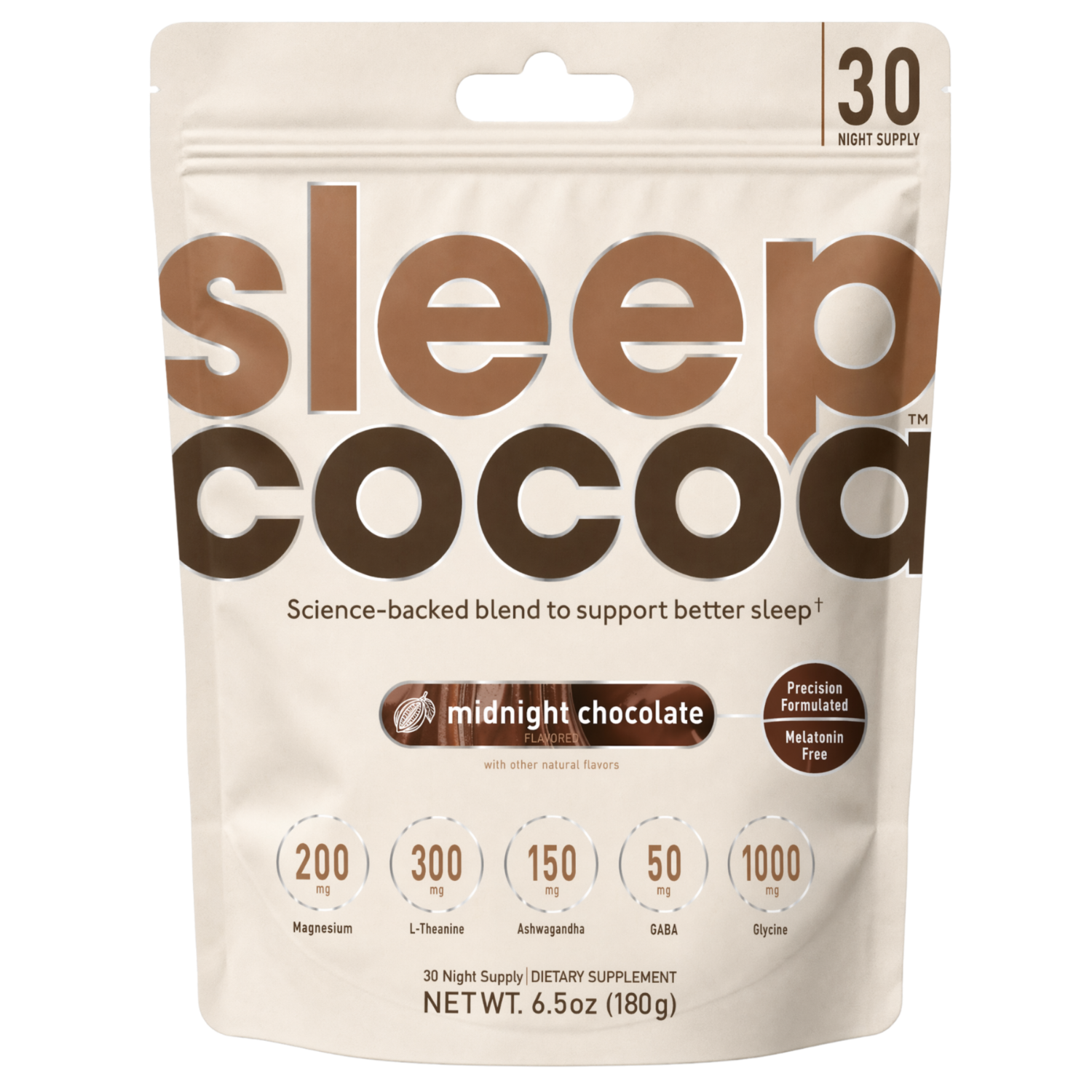
SleepCocoa makes a cocoa drink for your evening routine. Our team wrote this article, and we mention our product.
TL;DR: A warm cocoa drink can be a relaxing part of a bedtime routine, but regular cocoa still contains caffeine and theobromine, and many mixes add a lot of sugar. The CDC suggests avoiding caffeine in the afternoon or evening. If you are sensitive to caffeine or you wake in the night, read labels closely, keep the portion small, or choose a non-caffeinated drink on those nights.
Does hot chocolate before bed help sleep, and what should I look for?
There is no simple yes. The warmth and ritual of a mug before bed can be calming, and a relaxing bedtime routine is one of the healthy sleep habits the American Academy of Sleep Medicine lists. But caffeine, lots of sugar, or a large, heavy drink can leave some people more alert or more likely to wake up; the CDC suggests avoiding caffeine in the afternoon or evening and large meals before bedtime.
When you buy one, think about what drives your sleep issue. If your problem is a busy mind or tension, read the label to see which added ingredients a mix contains. If your problem is waking up and not falling back asleep, keep sugar low and avoid anything that makes you feel wired.
Can cocoa keep you awake even if it feels calming?
Yes, it can for some people. Cocoa can feel relaxing because it is warm, familiar, and soothing, but cocoa naturally contains small amounts of stimulants, mainly caffeine and theobromine. If you are sensitive to caffeine, even small amounts may matter to you.
This is why hot chocolate before bed is not one category. A sugary instant mix, a dark cacao drink, and a sleep-focused cocoa blend can feel very different at 10:30 pm.
Is the caffeine from the cocoa powder or from the instant mix?
It can be both. Cocoa powder has naturally occurring caffeine and theobromine, and an instant mix can add more variables like extra cocoa solids, chocolate flavoring, or other ingredients that change how stimulating it feels.
If you are trying to keep a bedtime drink sleep-friendly, you usually get more control by reading the label closely, then watching sugar and portion size.
What should I look for on a label if I want a sleep-friendly cocoa?
Start with caffeine, sugar, and portion size. Then look at any added ingredients and how they are listed.
- Whether it adds melatonin: Some bedtime cocoas add melatonin and some do not, so check the supplement facts panel. If you have questions about melatonin, talk to your doctor or pharmacist.
- Added ingredients: Common added ingredients in bedtime cocoa mixes include magnesium glycinate, ashwagandha, glycine, and L-theanine. Research on an ingredient describes that ingredient at a specific dose in a specific group of people, not any particular drink mix. If you want to go ingredient by ingredient, start with this magnesium and L-theanine explainer.
- Third-party tested: This matters if you worry about what is really in the tub or packet. Look for a direct statement, ideally naming the lab.
- Sugar and calories that fit your evening: If sugar spikes or heavy sweetness tend to wake you up later, keep it low and consistent with your normal dinner habits.
If you want a deeper breakdown of types, we have a simple explainer here: bedtime cocoa vs hot cocoa.
Between regular hot cocoa, melatonin bedtime cocoa, and bedtime cocoa with no added melatonin, what is the real difference?
The difference is the job the product is trying to do. Regular hot cocoa is usually a dessert drink. Melatonin bedtime cocoa adds melatonin, a hormone your brain makes in response to darkness that helps with the timing of your circadian rhythms and with sleep, according to NCCIH. Bedtime cocoa with no added melatonin is built around other added ingredients, such as magnesium or L-theanine, and around the evening ritual itself.
If you want the comparison laid out more directly, see how regular hot cocoa compares with other bedtime cocoa types.
How do I compare cocoa options on caffeine, calories, and ingredient simplicity if labels are all over the place?
If you are trying to shortlist products, do it with a repeatable process instead of guessing. Here is the simplest way to compare apples to apples per mug.
- Step 1: Define one mug as one labeled serving, prepared as directed.
- Step 2: Check if the label lists caffeine. Most do not, so assume it is unknown unless it is explicitly stated.
- Step 3: Use sugar grams and calories as a proxy for how dessert-like it is.
- Step 4: Note any added ingredients you recognize and how they are listed, individually or as part of a blend.
Because caffeine is often not listed, exact mg-per-mug comparisons are rarely possible. Comparing by category and by what is disclosed on the pack is more reliable.
| Option type | Who it may fit | What can backfire at night | What to check on the label |
|---|---|---|---|
| Regular instant hot chocolate | Taste and comfort | Higher sugar, heavier ingredients, unknown stimulant feel | Calories, sugar grams, serving size |
| Unsweetened cocoa powder you measure | Ingredient simplicity and control | Still has natural stimulants, easy to overdo cocoa scoops | Amount used per mug, what you add (sugar, milk) |
| Melatonin bedtime cocoa | People who want a drink with added melatonin | Amounts vary by product; talk to your doctor or pharmacist before use | Melatonin amount, other active ingredients |
| Bedtime cocoa with no added melatonin | People who want a warm evening ritual | Natural caffeine from the cocoa; ask your doctor or pharmacist if you take medication | Whether it adds melatonin, added ingredients, third-party testing, guarantee terms |
I wake up in the night and cannot fall back asleep, does a cocoa bedtime drink help?
No drink can promise that. What you can control is your routine: the CDC suggests avoiding caffeine in the afternoon or evening and large meals and alcohol before bedtime, and the American Academy of Sleep Medicine lists a relaxing bedtime routine among its healthy sleep habits. If you do wake up at 2:00 am, avoid anything that spikes energy or digestion.
Repeatedly waking during the night is one sign of poor sleep quality, according to the CDC, so if it keeps happening, talk to a healthcare provider.
For a more targeted read on middle-of-the-night waking, this guide stays focused on that problem: bedtime cocoa and sleep.
If I am sensitive to caffeine, should I skip cocoa entirely and choose tea instead?
If caffeine is a known trigger for you, it is reasonable to skip cocoa on nights when you already feel on edge. A non-caffeinated herbal tea can be simpler when you want the lowest-stimulation option.
But many people do not want to give up the comfort of cocoa. If that is you, keep the mug small and check the label. SleepCocoa, for example, has no added caffeine, but like any cocoa it naturally contains small amounts of caffeine and theobromine.
What makes a bedtime cocoa supplement different from a normal hot chocolate mix?
A bedtime cocoa sold as a dietary supplement is formulated around added ingredients, not just flavor, so read its label the way you would read any supplement label. Check whether it adds melatonin, which ingredients it lists, and whether it states third-party testing.
If you have more questions about bedtime cocoa with no added melatonin, see this FAQ.
Can I have a bedtime cocoa supplement if I take medication or have a health condition?
This is the right question to ask before you add any supplement at night. Talk to your doctor or pharmacist, show them the full ingredient list, and ask about your specific medications and health history.
Bedtime cocoa supplements can contain several added ingredients, such as magnesium glycinate, ashwagandha, glycine, and L-theanine, so do not guess if you have an ongoing health condition or take medication.
How can a bedtime cocoa fit into your evening ritual?
Make it part of the same wind-down every night, so the taste and warmth become a cue that the day is ending. Have one serving as your evening cocoa, then keep the rest of the routine quiet: low lights, no work email, and devices off at least 30 minutes before bed, as the CDC suggests.
A bedtime cocoa can take the place of something more activating, like a late dessert or a high-sugar nightcap. The CDC also suggests avoiding caffeine in the afternoon or evening, so watch for a second coffee that has drifted later than usual.
What should I do next if I want the calm cocoa ritual without guessing?
If you like cocoa, choose a mug that fits your evening: watch caffeine, sugar, and portion size, and read the label for any added ingredients.
If you are deciding between regular hot cocoa and bedtime cocoa, read our plain-language breakdown, then pick the type that matches your sensitivity to caffeine: does hot chocolate help you sleep.
*These statements have not been evaluated by the Food and Drug Administration. This product is not intended to diagnose, treat, cure, or prevent any disease. Research cited describes individual ingredients, not SleepCocoa as a finished product, which has not been clinically tested. Talk to your doctor or pharmacist before use if you are pregnant, nursing, under 18, have a medical condition, or take any medication. Do not drive or operate machinery until you know how SleepCocoa affects you.