GABA vs L-theanine for sleep: how they differ and what to consider
GABA or L-theanine at night? How the two ingredients differ, what labels emphasize, and simple routine habits to keep, without the hype.
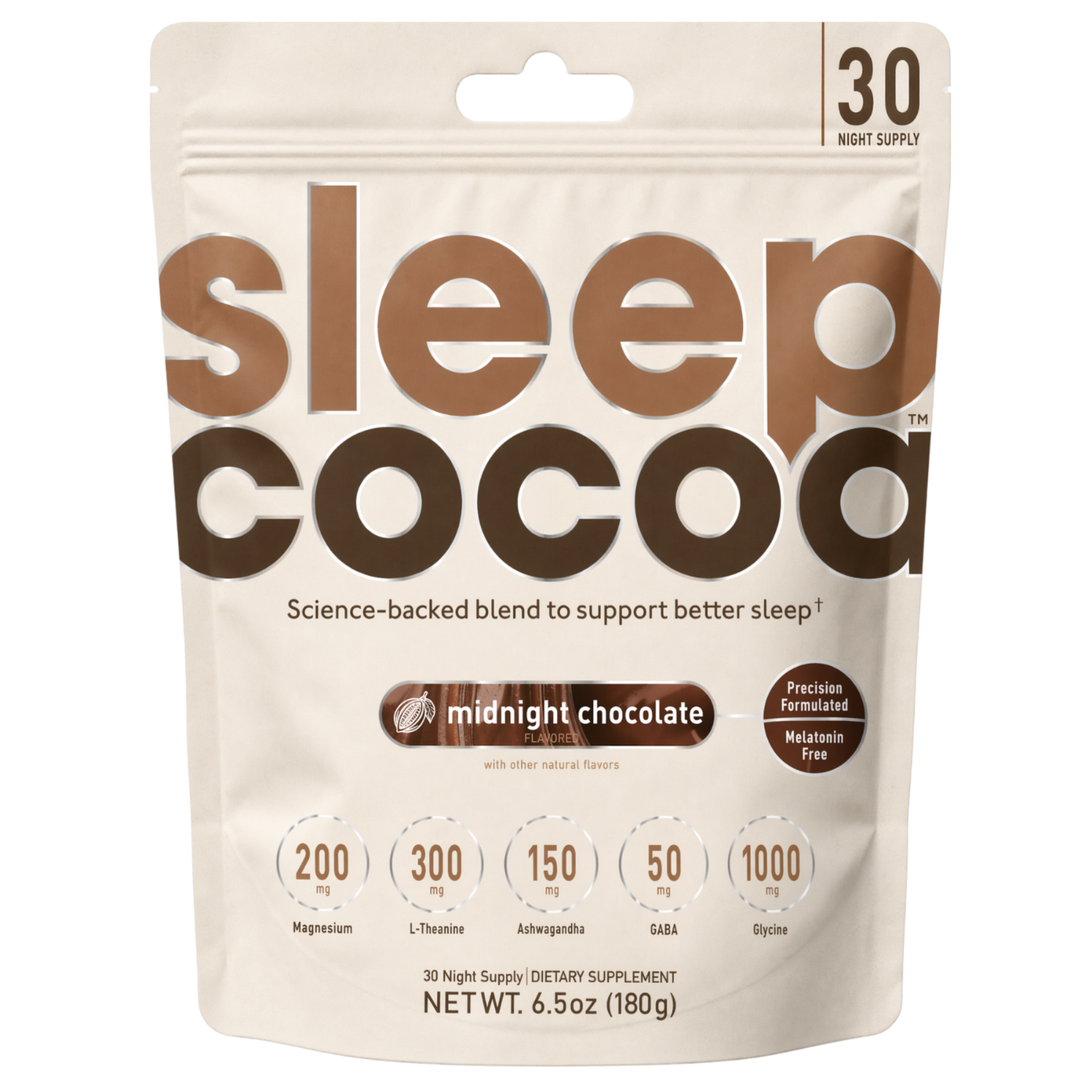
SleepCocoa makes a cocoa drink for your evening routine. Our team wrote this article, and we mention our product.
TL;DR: If you are deciding between GABA vs L-theanine for sleep, start by matching the ingredient to your main problem: a busy mind at bedtime, or physical tension and trouble staying asleep. Whichever you look at, keep your bedtime routine steady, and talk to your doctor or pharmacist first if you take medication.
Quick comparison
| Option | What people usually use it for at night | What labels and marketing usually emphasize | People often look at it when... | Main tradeoffs to think about |
|---|---|---|---|---|
| L-theanine (standalone) | Quieting a racing mind, taking the edge off everyday stress | A calm, steady feel | Thoughts keep them awake, a busy mind before bed, screen-time brain | A single ingredient does not change the rest of your routine; check the amount on the label |
| GABA (standalone) | Relaxation, physical calm | Physical calm | They feel wired in their body, tense, restless at bedtime | Responses vary a lot from person to person, and it is a common try-it-and-see ingredient |
| Combination formulas (several ingredients in one product) | One-step convenience for more than one evening goal | Varies by formula | They want a single product rather than several separate ones | More ingredients to read on the label; bring the full label to your doctor or pharmacist |
How GABA and L-theanine differ for sleep
GABA and L-theanine get grouped together because both are used for relaxation. The practical difference is the kind of wired feeling you are trying to turn down.
L-theanine often comes up first when your brain will not stop talking at night. GABA often comes up when the problem feels more physical, like tension, restlessness, or a buzzing body.
That is the simple map. The choice usually comes down to your sleep pattern, how sensitive you are to supplements, and whether you will actually take it every night.
Where combination formulas fit in this choice
Some products are not single-ingredient GABA or L-theanine products. Combination formulas put several ingredients in one product, such as magnesium glycinate, ashwagandha, glycine, and L-theanine, sometimes in a warm drink format.
If you are looking at one, read the amount of each ingredient on the supplement facts panel, check whether it adds melatonin, and look for quality details you can verify, such as third-party testing.
L-theanine for sleep
When people look at L-theanine
People often look at L-theanine when the main barrier to sleep feels mental. If you get into bed tired but alert, replay conversations, or keep planning tomorrow, that is the pattern where people usually look at theanine first.
Theanine is often described as calming rather than as something that knocks you out.
Tradeoffs to keep in mind
If your issue is frequent nighttime waking or physical restlessness, a single ingredient is only one part of the picture. Your schedule, your bedroom, and your evening habits matter too, and the American Academy of Sleep Medicine lists a consistent sleep schedule and a relaxing bedtime routine among its healthy sleep habits.
Another tradeoff is decision fatigue. With a single ingredient, you still have to build the rest of your bedtime routine yourself, timing, lights, screens, and consistency.
How L-theanine fits into a bedtime routine
Mental and physical tension often show up together at bedtime, and the ritual around what you take can matter as much as the ingredient list.
A warm mug creates a natural off-ramp from work mode. It also makes it easier to repeat the same steps nightly, and a relaxing bedtime routine is one of the basic healthy sleep habits.
If you want more context on where theanine fits, we have a longer guide here: L-theanine for sleep guide.
GABA for sleep
When people look at GABA
GABA is often considered when stress shows up in the body. Think tight shoulders, a clenched jaw, or that wired but tired feeling where you cannot get comfortable.
Some people also look at GABA after trying a few other calming options. That is also where responses can vary a lot from person to person.
Tradeoffs to keep in mind
GABA is a common example of an ingredient that may feel obvious for one person and do very little for another. That makes it harder to buy with confidence if you are already worried about wasting money.
If you take medication, this is also the point to slow down. Ask your doctor or pharmacist whether GABA (or any sleep supplement) fits your medication list and health history.
A practical way to choose based on your sleep pattern
If you have searched for which one to choose, most articles give broad pros and cons. A cleaner way is to start with the pattern you want to change, then choose the smallest step that you will actually stick with.
If your mind is the problem
- If you lie down and your thoughts speed up, L-theanine is the ingredient people usually look at first. Talk to your doctor or pharmacist before trying it if you take medication.
- If you want a repeatable routine, pair any choice with a consistent wind-down, such as a warm drink, dim lights, and devices off at least 30 minutes before bed (CDC).
If your body is the problem
- If you feel tense, restless, or physically on, GABA is often the ingredient people try first.
- If you do not want to experiment with single ingredients, multi-ingredient formulas are another category. Read each amount on the label and ask your doctor or pharmacist before using one.
If staying asleep is the problem
- If you fall asleep fine but wake up a lot, focus less on finding something stronger and more on a routine you can repeat nightly, plus ingredients you tolerate well.
- If you cannot fall asleep after about 20 minutes, the American Academy of Sleep Medicine suggests getting up for a quiet, low-light activity without electronics.
Why a bedtime ritual can matter more than a single ingredient
This is the contrarian take: if a product only fits your life when you remember to take it at the perfect time, it is not the right product for most people.
A hot cocoa bedtime ritual can help here because the act of making it slows you down. It creates a consistent cue that your day is done, and it reduces the odds that you will take something impulsively at 1:00 a.m. after an hour of scrolling.
If you are weighing capsules vs a drink, this breakdown may help: hot sleep drink vs capsules.
Medications and new supplements: talk to your doctor or pharmacist
If you take medication, approach any sleep supplement with the same care as anything else you take: bring the label to your doctor or pharmacist and ask about interactions and timing.
That applies to multi-ingredient products too, and especially if you are pregnant, nursing, managing a health condition, or already take other supplements.
How to compare options without getting overwhelmed
When you look at the supplement aisle, you will see single-ingredient GABA, single-ingredient theanine, and blended sleep formulas from many brands. The label will not tell you how your body will respond.
These are the filters that usually make the decision clearer:
- Added melatonin or not: Labels vary, so check the supplement facts panel. If you have questions about melatonin, talk to your doctor or pharmacist.
- Single ingredient vs blend: Single ingredients are simpler to troubleshoot. Blends can be easier if you want one nightly routine.
- Format: A hot drink can be a built-in bedtime ritual. Capsules are faster, but easier to forget.
- Testing: Look for quality details you can verify, such as whether a product is third-party tested.
FAQ
Which is better if I care about how I feel in the morning, GABA or L-theanine?
Morning grogginess is often why people compare these two in the first place, but an article cannot tell you how either one will affect you, because responses vary. What you can control: keep the same bed and wake time, and avoid caffeine in the afternoon or evening and alcohol before bed (CDC). Keep everything else in your routine steady so you can tell what is changing, and if you feel groggy in the morning after something you take, talk to your doctor or pharmacist.
Should I try L-theanine first if my problem is a racing mind at bedtime?
A racing mind is a specific pattern, and L-theanine is commonly chosen for it. Whether it fits you is a question for your doctor or pharmacist, especially if you take medication. If you do try something new, keep your bedtime and screen cutoff the same for a week so you are not changing five variables at once.
Should I try GABA first if I feel physically tense or restless at night?
Physical tension and restlessness often feel different than mental overthinking. GABA is often tried for body calm, but responses vary a lot person to person, so it helps to set a simple trial plan before you buy more products, and to check with your doctor or pharmacist first if you take medication.
Can I take GABA and L-theanine together?
Talk to your doctor or pharmacist before using them together, especially if you take any medication or other supplements. Bring both labels so they can see the amounts.
If I already take magnesium at night, does theanine still matter?
Magnesium and L-theanine are different ingredients. Magnesium is a mineral involved in regulating muscle and nerve function, according to the NIH Office of Dietary Supplements, and L-theanine is an amino acid. Whether adding one to the other makes sense for you is a question for your doctor or pharmacist. If you want a deeper comparison, see magnesium plus theanine for sleep.
How long should I test one option before switching?
Switching too fast is a common reason people think nothing works. Give one change enough nights to separate it from normal night-to-night variation in sleep. Whatever you choose, keep a simple note of bedtime, wake time, and night wakings so you can see a pattern, and if trouble sleeping keeps going, the CDC suggests talking to a healthcare provider.
What should I check if I am worried about how a supplement might affect me or interact with my medications?
This worry is valid, especially if you take medication or have a health condition. The clearest next step is to show your doctor or pharmacist the full supplement facts panel and ask about interactions and timing, since they can look at your exact medication list.
How to decide this week without overthinking it
Pick the option that matches your main pattern and your likely follow-through. If your brain keeps you up, theanine is the ingredient people usually look at first. If your body feels tense and restless, GABA is the more common first experiment. Either way, plan a careful trial and check with your doctor or pharmacist if you take medication.
A simple plan is easier to judge: one change, one routine, and enough time to see a pattern in how you sleep and how you wake up.
*These statements have not been evaluated by the Food and Drug Administration. This product is not intended to diagnose, treat, cure, or prevent any disease. Research cited describes individual ingredients, not SleepCocoa as a finished product, which has not been clinically tested. Talk to your doctor or pharmacist before use if you are pregnant, nursing, under 18, have a medical condition, or take any medication. Do not drive or operate machinery until you know how SleepCocoa affects you.