What to drink before bed if you wake up at 2 a.m. and your mind starts racing
Waking at 2 a.m. with racing thoughts? How to judge a bedtime drink, what to skip before bed, and a simple 14-night routine to track your wakeups.
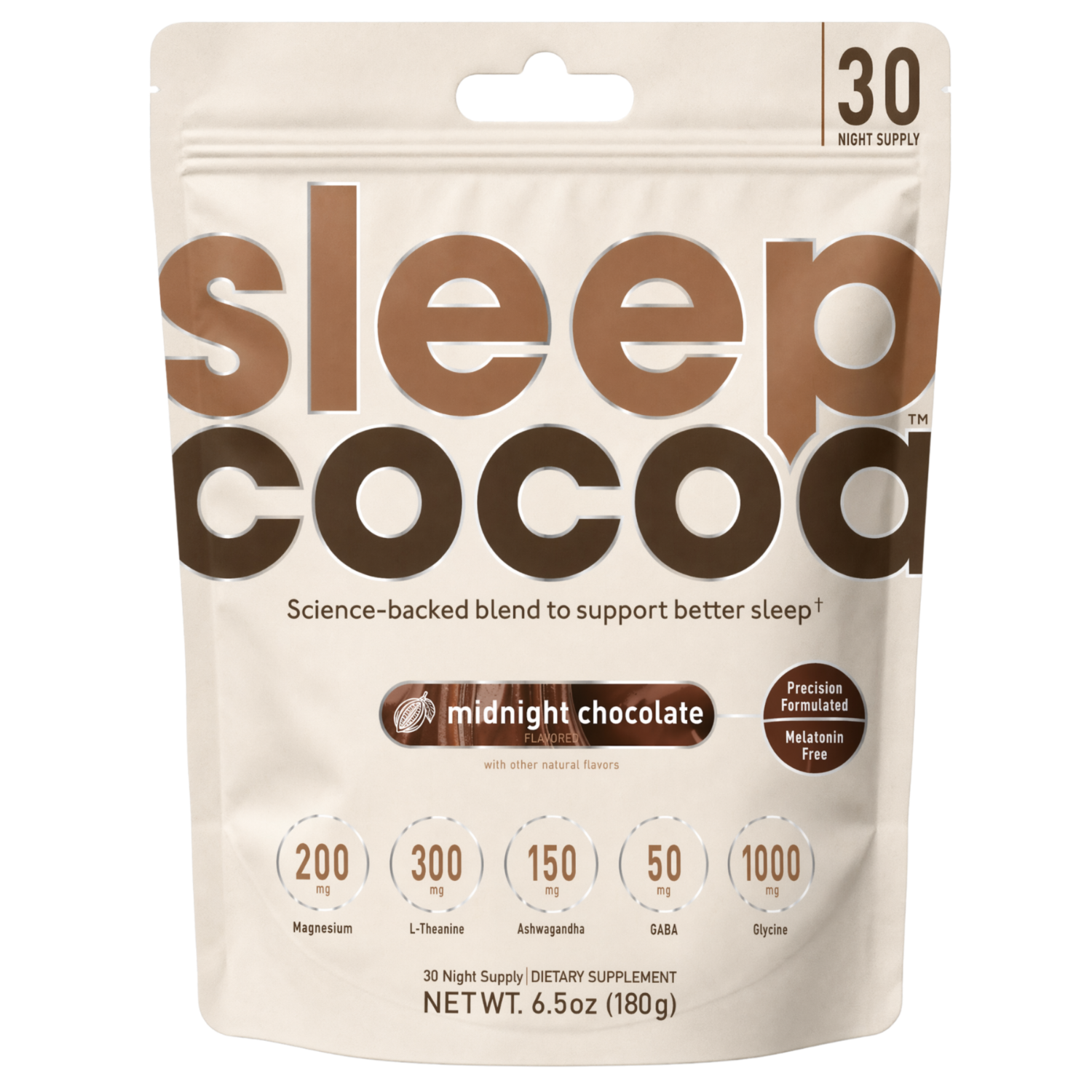
SleepCocoa makes a cocoa drink for your evening routine. Our team wrote this article, and we mention our product.
TL;DR: If you wake up at 2 a.m. with a racing mind, a good "before bed" drink is one you can repeat nightly as part of a calm wind-down, with a label you have checked for added melatonin and caffeine. Pair it with the basics: the same bed and wake time every day, devices off at least 30 minutes before bed, and no alcohol or large meals before bedtime (CDC).
Why 2 a.m. wakeups feel so mental
When people say "I woke up and my brain turned on," they usually mean two things: they woke fully enough to start thinking, and their body did not slide back into sleep on its own.
At that point, the goal is not to knock yourself out. The goal is to lower mental arousal so sleep can restart, and to do it in a way that does not set you up for morning grogginess.
What to look for in a drink if your problem is staying asleep
Most sleep content focuses on falling asleep. If your issue is waking at 2 a.m., think about the whole night, not just the first 30 minutes.
Here is a practical way to judge a drink without getting lost in hype.
Criteria that actually matter at 2 a.m.
- Added melatonin: Check the label to see whether a drink adds melatonin. If you have questions about melatonin or take other medications, talk to your doctor or pharmacist.
- Relaxation first: You are trying to reduce "mental noise," not add something that can feel heavy later.
- Repeatable ritual: A drink that fits your nightly routine is easier to keep up than something you only take on "bad nights," and a relaxing bedtime routine is one of the AASM healthy sleep habits.
- Readable label: Look at the supplement facts panel so you know what each serving contains, not just a label full of trends.
- Third-party tested: Testing is a basic quality signal. It does not check how a product interacts with your medications, so ask your doctor or pharmacist about that. (If you want a checklist, see how to choose a third-party tested sleep drink.)
What to drink before bed for racing thoughts and nighttime waking
There is no one drink that fits everyone. But some choices fit a calm routine better than others, and some are worth skipping when your problem is waking up and spiraling.
| Drink option | Why people choose it | Common downside for "staying asleep" | Who it may suit |
|---|---|---|---|
| Warm cocoa-based evening drink | A warm ritual you can repeat as part of a relaxing bedtime routine | You need consistency; it fits as a nightly bedtime ritual, not a one-off "rescue" drink | People who want a warm, repeatable wind-down cue |
| Plain warm drink (like warm water) | Warmth can feel calming and reduces the "I need to do something" itch | No specific ingredients, and the AASM suggests reducing fluids before bed, since bathroom trips can wake you | Very sensitive stomachs, or you want the lightest option |
| Caffeinated tea or chocolate drinks | Usually none for 2 a.m. wakeups | The CDC advises avoiding caffeine in the afternoon or evening, even if you "feel fine" drinking it | Avoid if your issue is middle-of-night waking |
| Alcohol nightcap | May feel relaxing at first | The CDC lists avoiding alcohol before bedtime among its healthy sleep habits | Avoid if you are trying to reduce 2 a.m. wakeups |
A contrarian take: the drink is not just the ingredients
If your mind races at 2 a.m., you are not only fighting biology. You are fighting the habit of "solving" your life in bed.
That is where a warm drink can earn its place as a ritual. If you wake up and spiral, a repeatable off-ramp can help: one simple sequence you do every night before bed, so winding down becomes a habit. The AASM lists a relaxing bedtime routine among its healthy sleep habits.
Where to start if you wake at 2 a.m. and your brain starts racing
If you want a simple plan you can stick to for two weeks, start here. Keep it boring. Boring works at 2 a.m.
Step 1: Pick one evening drink and commit nightly
Switching products every three nights makes it hard to tell what, if anything, makes a difference. Choose one option and use it the same way each night.
Before you start, read the label for added melatonin and caffeine, and talk to your doctor or pharmacist if you take medication.
Step 2: Set a "cup cutoff" that does not create bathroom wakeups
If fluids wake you up, too much liquid too close to bed can work against you. Use the smallest amount of liquid that still feels like a comforting ritual.
Keep the rest of your evening consistent so you can see whether anything changes.
Step 3: Build a 3-minute wind-down that starts before you get tired
When you wait until you feel sleepy, the racing-thought cycle is already winning. Start your bedtime ritual at the same time nightly, even if you feel "fine."
If you choose a warm drink, make the mix itself part of the routine: warm mug, mix, sip slowly, lights low. Your goal is a predictable cue for relaxation.
How to choose a bedtime hot cocoa
Not all bedtime cocoa products aim at the same thing. Some are basically dessert with a sleepy vibe.
If staying asleep is your concern, here are four filters to use when you compare labels.
- Check whether it adds melatonin, since labels differ.
- Read the supplement facts panel for what is in each serving, and bring it to your doctor or pharmacist if you take medication.
- Check third-party testing because quality control matters more when you are taking something nightly.
- Choose the format you will repeat, a nightly ritual beats a "power move" supplement you forget to take.
If you want to compare formats, we have an explainer on Hot Sleep Drink Vs Capsules.
If you want a deeper guide to what to look for, read hot cocoa with no added melatonin.
What to avoid drinking before bed when you wake in the middle of the night
Some drinks feel relaxing in the moment but work against a steady night. If you are already stuck in the 2 a.m. loop, these are the usual culprits.
- Caffeine in any form, including teas marketed as calming if they still contain caffeine. The CDC advises avoiding caffeine in the afternoon or evening.
- Alcohol as a sleep tool, the CDC lists avoiding alcohol before bedtime among its healthy sleep habits.
- Large volumes of any liquid if bathroom trips wake you up and your brain takes that chance to start working.
Addressing the two big worries: unwanted effects and medication interactions
You should be cautious with anything you take nightly. Talk to your doctor or pharmacist before adding any new supplement, especially if you take medication or have a medical condition, and bring the full label.
Third-party testing is a quality check, not a check on how a product will affect you. Only your doctor or pharmacist can advise on your specific medication list.
If you want a deeper ingredient-level overview, read sleep drink ingredients and racing thoughts.
FAQ
I keep waking up in the middle of the night, what should I look for in a bedtime drink?
This matters because a lot of products focus on bedtime, not the whole night. Check the label for added melatonin and caffeine, keep the amount of liquid small (the AASM suggests reducing fluids before bed), and use the same drink nightly as part of a relaxing bedtime routine. If you keep waking during the night, the CDC suggests talking to a healthcare provider about ongoing sleep problems.
I keep waking up at 2 a.m. and my brain starts racing, can a hot cocoa drink be part of my routine?
This question is really about lowering mental arousal without making the morning worse. A warm cocoa can be one step in a relaxing bedtime routine, which the AASM lists among healthy sleep habits; cocoa naturally contains small amounts of caffeine, so check the label. Keep the routine simple: sip slowly, lights low, and avoid grabbing your phone, since the goal is to let your mind power down again. If you want a deeper breakdown, read bedtime cocoa for racing thoughts.
What should I look for in a bedtime hot cocoa if staying asleep, not just falling asleep, is my concern?
If you wake up later at night, you need more than a cozy drink, you need a label you understand and a ritual you will repeat. Check whether it adds melatonin, read the supplement facts panel, and look for third-party testing. If you are comparing formats, choose the one you will actually take every night, because a consistent routine is one of the basic healthy sleep habits. If you are comparing mixes, see magnesium drink mixes compared.
Will a sleep drink make me feel groggy the next morning?
Morning fog is a common fear. People respond differently to different ingredients and amounts, so no article can predict how you will feel. If you feel off the next morning, talk to your doctor or pharmacist and bring the label, and talk to them before adding anything new to your evening.
Can I take a sleep drink if I am on medication?
This matters because ingredient interactions depend on your exact medication list, dose, and timing. Ask your doctor or pharmacist before adding any sleep supplement if you take medication. Bring the product label and your medication list so they can check for conflicts quickly.
Is it better to drink something at bedtime or when I wake up at 2 a.m.?
The timing matters because a drink is easiest to keep as part of a consistent bedtime routine, which the AASM lists among healthy sleep habits. If you do wake up, keep any sipping minimal so you do not create a bathroom-driven second wakeup. For any supplement, ask your doctor or pharmacist about timing.
How do I know if a sleep drink is trustworthy?
Trust is about what the brand can verify, not what the label promises. Look for third-party testing, a supplement facts panel that lists what is in each serving, and clear information about what is and is not added, such as melatonin. Third-party testing is a quality check, not proof of how a product will affect you.
A simple 14-night plan for tracking your 2 a.m. wakeups
If you want one clear next step, run a short experiment instead of searching for the "perfect" drink. Pick one evening drink you will actually use, then keep everything else steady for two weeks.
Keep a quick note of bedtime, wakeups, and how you feel in the morning. If your nights feel the same after 14 nights, that is useful data, and you can change one habit at a time from there. If trouble sleeping keeps going, the CDC suggests talking to a healthcare provider.
*These statements have not been evaluated by the Food and Drug Administration. This product is not intended to diagnose, treat, cure, or prevent any disease. Research cited describes individual ingredients, not SleepCocoa as a finished product, which has not been clinically tested. Talk to your doctor or pharmacist before use if you are pregnant, nursing, under 18, have a medical condition, or take any medication. Do not drive or operate machinery until you know how SleepCocoa affects you.